
The cost to build a concrete pool depends on its size and design, site conditions, and the work included in construction. There is no single price for every project. Excavation, equipment, decking, fencing, permits, and electrical work can all affect the estimate.
It’s easy to focus on the pool itself, but surrounding work and selected features also shape the overall project. This guide explains how to assess square-foot pricing and account for equipment, landscaping, decking, fencing, permits, and electrical work. Considering these items together gives you a clearer view of the full scope.
Key Takeaways
- Understand why a concrete pool’s installed cost depends on its size, design, and site conditions, not just the pool shell.
- Use square-foot pricing as a starting point, then consider how custom features can change the overall estimate.
- Account for equipment and landscaping choices, which can shape both the project budget and the finished backyard.
- See how decking, fencing, permits, and electrical work fit into a more complete installation plan.
How much does an inground concrete pool cost to install?
The cost to build a concrete pool depends on its design, site conditions, and included work, so there is no single installed price. Estimates can also vary across the United States because local labor, materials, permitting, and site access affect project scope.
Average Installation Costs
An average installation cost is only a planning reference, not a price that applies to every concrete pool. The final amount depends on the pool’s dimensions, depth, finish, features, and site preparation. Ask for an estimate that separates the pool structure from related work, so you can understand the complete project. Precast pools have different access needs: a crane may be needed to lift the shell into place, and limited access can affect the installation plan.
Hidden Installation and Operating Costs
Costs beyond the pool structure can include site-specific work and ongoing expenses after installation. Excavation conditions, utility conflicts, landscaping restoration, equipment, and electrical connections all affect project scope. Once the pool is filled, operating expenses include water, energy, chemicals, and routine equipment care. An estimate focused only on the pool shell may leave out work needed to complete and operate the finished pool.
Installation Timeline and Regional Variation
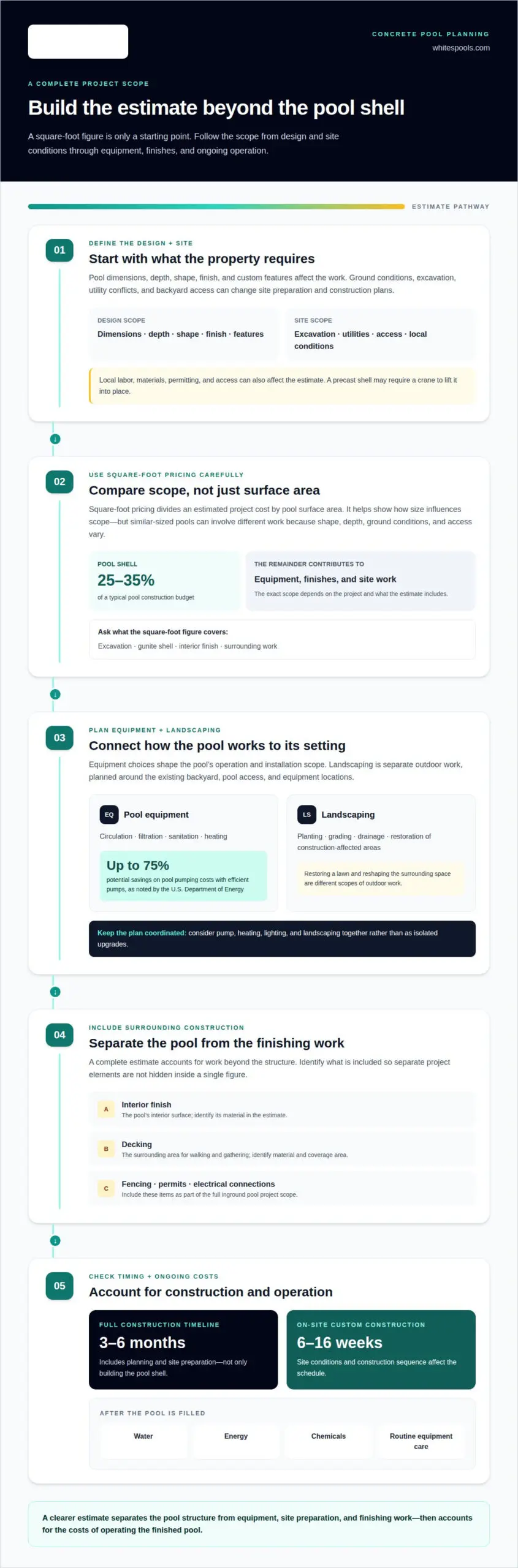
The full construction timeline includes planning and site preparation, not just the days spent building the pool shell. Concrete pool construction can take 3 to 6 months, with the schedule shaped by design complexity, site conditions, and the sequence of installation work. Regional costs also reflect local labor and material conditions, permit processes, and the property’s access for construction equipment. A narrow access route, for example, can change how materials reach the backyard.
For precast installation, crane access is a practical cost factor because the shell must be lifted into position. A complete estimate should account for the pool, equipment, site preparation, and finishing work together. The project-specific price depends on the design, excavation, access, equipment, and selected finishes.
Pool construction costs per square foot
Square-foot pricing divides an estimated project cost by the pool’s surface area, offering a broad comparison point. U.S. That range doesn’t define every concrete pool estimate: depth, shape, gunite construction, finish, and included work all affect the total. Use the measure to understand how size influences scope, not as a stand-alone quote.
Surface area alone can hide important differences. A rectangular pool and a curved design may have similar square footage but require different construction work. Depth matters too, because deeper sections affect excavation and shell requirements. Ground conditions influence site preparation, while backyard access can affect how crews bring materials and equipment to the work area.
What the square-foot estimate includes
A useful estimate separates the pool structure from the surrounding project. The shell accounts for 25-35% of a typical pool construction budget, while equipment, finishes, and site work contribute to the remainder. Have the estimate identify what the square-foot figure covers, such as excavation, the gunite shell, interior finish, or surrounding work. Otherwise, two estimates using the same unit may describe different scopes.
Per-square-foot figures provide a starting point, but the total depends on design and project scope. Pool dimensions, finish choices, and custom features influence the work involved. A natural or waterfall feature, for example, should be incorporated into the design from the start. This makes it easier to understand how the feature affects construction requirements.
Design, budget, and construction time
A professional pool builder can manage costs by aligning the design with the property and intended scope before construction begins. Clear decisions about dimensions, depth, and features reduce late design changes that can disrupt scheduling or require rework. On-site construction for custom concrete pools typically takes 6 to 16 weeks. Site conditions and the construction sequence affect the schedule, so consider timing alongside the square-foot estimate.
Additional equipment and landscaping
An inground pool needs more than a concrete shell. Circulation, filtration, sanitation, and heating equipment shape how it operates, and the equipment selected affects the installation budget and the pool’s features.
Energy efficiency is another consideration. The U.S. Department of Energy notes that some homeowners can save up to 75% on pool pumping costs with efficient pumps. That potential saving concerns pumping costs, not every operating expense. Compare the upfront equipment scope with its role in day-to-day operation.
The installed cost depends on the project setup. For a concrete pool finished in plaster, consider the equipment plan alongside the overall design. Fiberglass pools use a different construction method, so their equipment choices are not a direct measure of concrete-pool scope.
Landscaping completes the setting around the pool and can include planting, grading, drainage, or restoring areas affected by construction. Its scope depends on the existing backyard and planned layout: restoring a lawn is different from reshaping the surrounding space. Clarify which outdoor work is included to distinguish pool equipment from landscaping in the estimate. A clear plan also coordinates planting and circulation areas with pool access and equipment locations.
Consider how the pump, heating, lighting, and landscaping will work together rather than choosing each upgrade in isolation. This keeps decisions aligned with how you plan to use the pool and makes equipment and outdoor finishing costs easier to understand.
Pool decking, fencing, permits, and electrical work
Decking, permits, fencing, and electrical connections add scope beyond the pool itself. Include them in the inground pool estimate to understand the full project.
Pool Finishes and Decking
A pool finish shapes the interior surface, while decking provides the surrounding area for walking and gathering. These are separate parts of the project, so estimates should identify each material and its coverage area.
Future maintenance is separate from the initial finish and decking budget. Pool type and material choices affect the finished space’s appearance and function, so compare the surface and deck as separate estimate items.
Fencing, Permits, and Electrical Work
These items cover site requirements and connections needed to complete an inground pool installation. Permit processing before construction takes 2 to 6 weeks, depending on the municipality.
Electrical work supports pool equipment and lighting. Its scope depends on the selected equipment and the property’s existing setup. List electrical connections separately in the estimate rather than assuming they are included in the pool shell or finish. The inground pool cost reflects both construction and the site work needed to support the planned features.
For a coordinated design and construction plan, discuss your concrete pool project with a pool professional.
White’s Pools: Custom Concrete Pools
White’s Pools designs and builds custom concrete pools shaped around your property and vision. A conversation about your design choices, site conditions, and project scope can help bring your plans into focus. Depending on the design, pool options include natural and waterfall features, infinity edges, and plunge pools.
Consider the full scope, from the pool’s shape and finish to equipment and the surrounding space. White’s Pools also offers pool cleaning and maintenance for ongoing care after construction, as well as indoor pools if that option suits your home.
Contact White’s Pools to discuss a custom concrete pool for your home.
Shape a Pool Plan Around Your Home
The cost to build a concrete pool is one part of a larger decision: how you want your outdoor space to look, feel, and serve your household. Before settling on a design, consider how the pool will connect with the landscape and how you plan to use the space. An outdoor fireplace, for example, can complement a backyard gathering area beyond the pool.
A clear conversation about your vision and property can turn broad ideas into a defined pool plan. White’s Pools builds custom concrete pools and outdoor fireplaces, offering options for a cohesive outdoor setting. Pool cleaning and maintenance is also available for ongoing care after construction.
Take the next step at your own pace. Start a conversation with White’s Pools about the pool you have in mind, and move toward an outdoor space that feels distinctly yours.
Frequently Asked Questions
Does Building a Pool Increase Your Home Value?
A pool may appeal to buyers who value outdoor recreation, but it does not guarantee a higher sale price. Its effect depends on local buyer preferences, the property’s overall condition, and how well the pool fits the yard. One buyer may see a well-maintained pool as an asset, while another may factor in the upkeep.
What hidden costs should I plan for?
Plan for work beyond the pool structure, including site preparation, utility adjustments, drainage, and restoration of areas disturbed during construction. The project may also need additional landscaping or changes to keep equipment accessible for maintenance. These requirements depend on the property’s layout and existing services, so a complete scope should identify construction work and finishing tasks.
What will increase the price of a concrete pool?
A larger pool, added depth, complex shape, or custom feature can expand construction scope. Difficult ground conditions may require additional excavation, while restricted backyard access can affect how crews bring materials and equipment to the site. A premium interior finish, expansive decking, fencing, lighting, or heating adds separate decisions to the project plan and may increase the overall cost.
What’s the difference between gunite and shotcrete?
Gunite and shotcrete are both methods of applying concrete pneumatically to form a pool shell. Gunite typically uses a dry concrete mixture, with water added at the nozzle. Shotcrete is applied by spraying concrete onto the pool shell. The method affects how the construction crew handles the material, while the pool’s design, site preparation, and finish also shape the completed project.
What is the average cost to build a concrete pool in the U.S.?
There is no single average that accurately describes every concrete pool project in the United States. The cost to build a concrete pool is project-specific; design, size, excavation conditions, access, equipment, and selected finishes shape the estimate. Build your budget around the planned pool and associated site work rather than relying on a nationwide figure.
How much does a concrete pool cost per square foot?
A per-square-foot figure is a broad comparison method, not a complete project price. The estimate changes with pool depth, shape, finish, ground conditions, and what construction work the figure includes. The project-specific price is provided after a quote request, with design, site preparation, access, and included features shaping the total. Compare estimates by their scope, not by area alone.

