
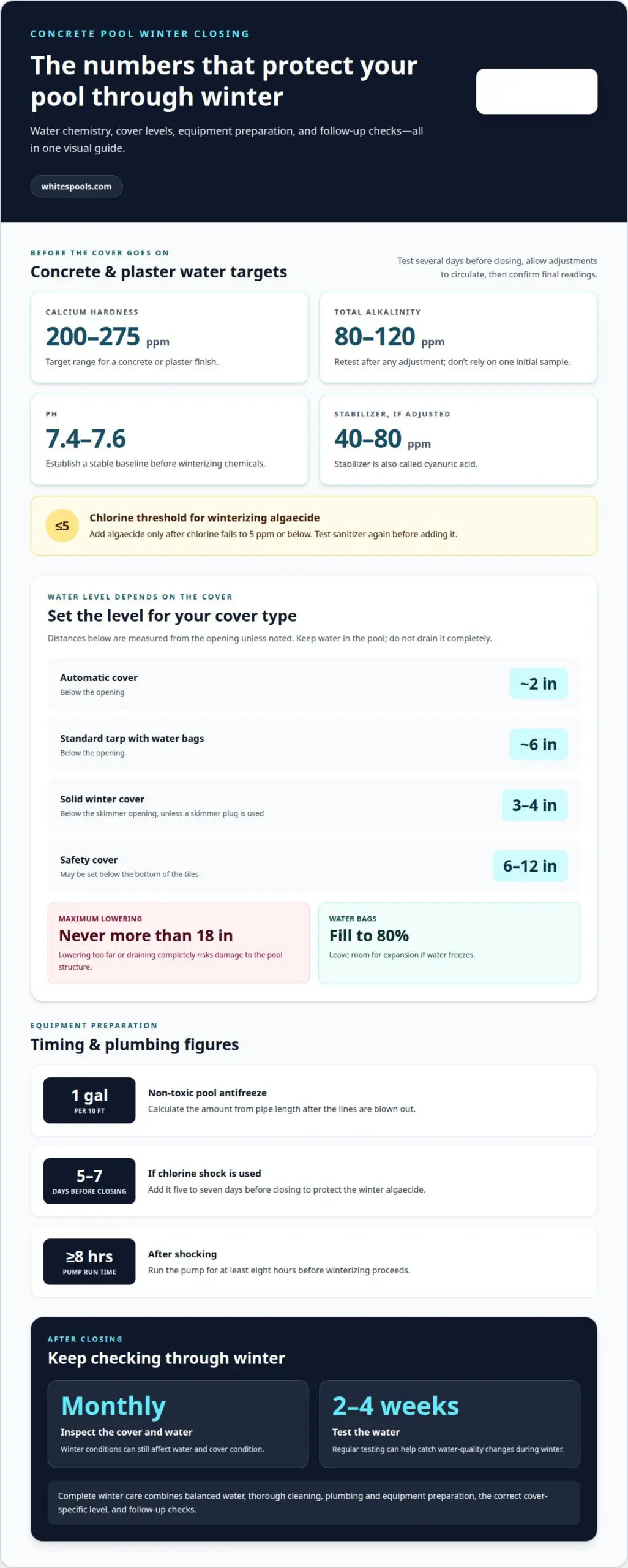
A pool cover is only one part of winterizing an inground concrete pool. A professional closing includes cleaning, balancing the water, lowering it to suit the cover, protecting the plumbing and equipment, then inspecting the pool during winter. For concrete or plaster, the water’s calcium hardness should be 200 to 275 ppm, with alkalinity at 80 to 120 ppm and pH at 7.4-7.6 before closing.
It’s reasonable to expect the pool to remain settled once it’s covered, but winter conditions can still affect water and cover condition. This guide explains how to winterize an inground concrete pool professionally, including the checks that matter after closing. You’ll learn how water chemistry and cleaning are prepared, why the right water level depends on the cover, and what inspections and water testing can help catch through winter.
Key Takeaways
- Have water balanced several days before closing so adjustments have time to take effect, and confirm the final readings before the pool is covered.
- Arrange a thorough pre-closing clean and chemical treatment so debris and water-quality issues aren’t sealed in for winter.
- Set the water level according to the cover type; the right target differs for safety, solid, and automatic covers.
- Plan winter follow-up: inspect the cover and water at least once per month, and test the water every 2-4 weeks.
How professionals balance pool water chemistry before winter closing
For inground pool plumbing, professionals use non-toxic pool antifreeze. They calculate the amount from pipe length, using one gallon per 10 feet of pipe after the lines are blown out. Knowing how to winterize an inground concrete pool professionally means coordinating chemistry checks with the full closing plan.
- Balance the water before closing. Test the water several days before closing so any adjustments have time to circulate. An early test can reveal whether pH or alkalinity needs attention, avoiding last-minute chemical changes just before the cover goes on.
- Test pH and alkalinity. The target pH is 7.4-7.6, while total alkalinity should be 80 to 120 ppm. These readings establish a stable baseline before winterizing chemicals are considered. The professional retests after adjustments rather than relying on a single initial sample.
- Account for the concrete finish. For a concrete or plaster pool, calcium hardness should be 200 to 275 ppm before winterizing. The professional uses the test result to determine whether an adjustment is needed, then allows the water to circulate so the change distributes through the pool.
- Review stabilizer and sanitizer levels. If pool stabilizer, also called cyanuric acid, is adjusted before closing, the target is 40 to 80 ppm. Winterizing algaecide is added only after chlorine falls to 5 ppm or below, so the professional tests sanitizer again before adding it.
- Circulate the water and confirm the readings. After balancing, run the system to distribute treatment throughout the pool. Coordinate the final readings with plumbing preparation and the cover you plan to use. Balanced water supports winter care, but it does not replace cleaning or equipment preparation.
Professional pool cleaning before closing
Before the cover goes on, a professional removes debris and prepares the pool and equipment for winter. For plumbing blowout, the choice between a pool air compressor and shop vac depends on line layout and the equipment’s ability to clear it; antifreeze quantity depends on pipe length.
- Clean the pool thoroughly. Remove leaves and debris from the water, skimmer, and pump basket, then brush the surfaces and vacuum settled material. Debris left behind can remain under the cover and make opening the pool more difficult. Choose a cleaner suited to the pool surface and the material being removed.
-
Professional Filter Cleaning Before Closing
Inspect the filter and clean it according to its type and condition. A clean filter supports circulation during final treatment, though sand filters may not need a thorough cleaning as part of winterizing. Check that the filter operates properly and remove its winterizing plug as specified for the equipment.
-
Professional Pump and Filter Draining and Cleaning
Have the professional prepare the pump and filter for winter by draining water from the equipment and clearing the connected plumbing. For a line blowout, the equipment choice follows the pool’s plumbing layout; the amount of non-toxic pool antifreeze is calculated at one gallon per 10 feet of pipe. The professional also clears the chlorinator and other connected equipment as part of the system preparation.
- Finish the water treatment before covering. If chlorine shock is used, it should be added five to seven days before closing to protect the winter algaecide. After shocking, the pump should run for at least eight hours before winterizing proceeds. The professional vacuums any remaining debris and confirms the water and equipment are ready before the cover is installed.
- Coordinate the work as one service. Cleaning, filter operation, and equipment preparation each contribute to a complete closing. Professional pool cleaning and maintenance brings these tasks together, including the final pool and equipment checks before winter.
How professionals set water levels for different cover types
Professionals match the water level and cover preparation to the pool’s cover, skimmer, and local freeze conditions.
- Identify the cover and gather the right supplies. Use suitable plugs for the returns and skimmer, along with the winter cover and its anchors or water bags. Fit a safety cover to its anchors; position water bags to hold a tarp cover in place.
- Set the level for the cover. For a safety cover, adjust the water level to suit the pool and its cover while avoiding unnecessary drainage. A standard tarp-and-water-bags cover calls for about 6 inches below the opening, while an automatic cover calls for about 2 inches below it. A solid winter cover can require 3-4 inches below the skimmer opening unless a skimmer plug is used.
- Protect the concrete and tile surface. The professional keeps water in the pool rather than draining it completely, since an empty pool can shift or crack. For a safety cover, the water level may be set 6-12 inches below the bottom of the tiles. The level should never be lowered more than 18 inches.
- Secure the cover against winter movement. Water bags used to hold down an inground winter cover should be filled to 80%, leaving room to expand if water freezes. For pools using air pillows, professionals position them beneath the cover to help manage pressure from freezing water.
- Account for climate and common risks. Where temperatures remain in the low 30s for weeks, winterizing helps protect plumbing and pool equipment from freeze damage. The cover type and the pool’s skimmer and tile positions guide the water-level adjustment. Draining the pool completely or lowering water more than 18 inches risks damaging the pool structure.
- Review the setup. Before closing, confirm that the return and skimmer openings are plugged, the cover is secure, and the water is at the level required for that cover. These steps help protect the pool surface and equipment during freezing weather.
Professional winter pool inspections and water testing
Winter care continues after closing. Professional inspections track the cover, water, and equipment until spring.
- Inspect the cover and pool monthly. A professional checks the cover for movement or visible damage and looks for changes in water condition. The recommended interval is once per month during winter. This routine can identify a concern before it carries into opening season.
- Test water every 2-4 weeks. Testing checks whether sanitizer remains available and whether the water needs attention. With a mesh safety cover, schedule a chemistry check in mid-spring, about a month before opening. That timing gives the pool a measured transition toward seasonal service.
- Include equipment in each inspection. The professional reviews the heater, pump area, skimmer basket, and visible return lines. Equipment with freeze protection may turn on automatically at 32 degrees. An inspection can confirm the system’s condition and identify visible changes around the equipment.
- Time closing around temperatures. In freezing climates, close when water temperature is consistently below 65°F; the recommended closing point is 55°F or below. The forecast should show at least two weeks of nights in the 40s. These temperature cues help balance algae control with preparation for freezing conditions.
- Understand what affects winterization cost. Professional winterization cost depends on the pool, cover, equipment, and work required; a quote request establishes the price. Doing it yourself means accounting for the supplies and equipment needed for the same tasks, while professional service includes coordinated closing and follow-up.
- Arrange attentive winter care. Monthly cover and water inspections, paired with water testing every 2-4 weeks, give the pool a clear maintenance rhythm. For professional pool winterization and maintenance, contact White’s Pools to discuss seasonal care for your pool.
Below 60°F, algae growth in pool water slows dramatically. Recommended calcium hardness is about 200-400 ppm. One forum member advises shocking, adding algaecide, and circulating the water for a day or two before covering.
White’s Pools: Custom Concrete Pools
White’s Pools designs and builds custom concrete pools and provides pool cleaning and maintenance to support water quality and equipment performance. For help preparing an existing pool for the off-season, its maintenance service can coordinate cleaning, water care, and equipment checks.
Turn to White’s Pools to plan a custom concrete pool or arrange ongoing pool care. Winter preparation depends on your pool’s condition, cover, and equipment, so these are useful details to consider when planning service.
Contact White’s Pools to discuss your pool and seasonal maintenance needs.
Plan for a smoother return to pool season
Planning how to winterize an inground concrete pool is also a chance to prepare for the next swimming season. Regular care can help keep the pool ready for warm weather. Consider the pool’s condition, the care it needs, and how it fits into the outdoor space you want to enjoy.
White’s Pools offers custom concrete pools, pool cleaning and maintenance, and outdoor fireplaces. Whether you’re planning a new pool or arranging care for an existing one, contact White’s Pools to discuss the next step for your property.
Contact White’s Pools to discuss your pool plans. Thoughtful planning now can help you move into the next season with a clear direction and renewed enjoyment of your outdoor space.
Frequently Asked Questions
How do professionals clean and balance pool water before closing for winter?
Clean the pool, test the water, and make any necessary adjustments before installing the cover. Assess the surface and water condition, remove debris that could remain trapped, and allow treatments to circulate before closing. For concrete pools, include calcium hardness in the water balance assessment. A final water test helps confirm the pool is ready for its winter cover.
How far below the skimmer should a professional lower the pool water for winter?
The target depends on the cover. A solid or mesh safety cover generally calls for 12 to 18 inches below the skimmer opening; a tarp-and-water-bags cover uses about 6 inches. An automatic cover uses about 2 inches, while a solid winter cover uses 3-4 inches unless a skimmer plug is fitted. Professionals also account for tile position and avoid lowering the level more than 18 inches.
How do professionals winterize pool plumbing, filter, pump, heater, and chlorinator?
Professionals clear water from the plumbing lines, then add non-toxic pool antifreeze at a rate based on pipe length. They drain the pump and filter, remove the filter’s winterizing plug, and prepare connected equipment, including the chlorinator. The heater is included in the equipment inspection, since water left in components can be vulnerable to freezing. The exact work depends on the pool’s plumbing layout and equipment configuration.

