
What if the edge that makes your pool feel limitless is also the detail that demands the most precise engineering? Successful infinity edge pool design depends on more than a striking view. The pool, catch basin, pumps, and surrounding landscape must work together as one carefully planned system.
It’s natural to wonder whether your property can support a vanishing edge, which edge style suits your vision, and how to avoid leaks or structural problems. Those questions deserve clear answers before construction begins. White’s Pools is a third-generation, family-owned company established over 75 years ago, specializing in custom concrete and infinity edge pools.
This guide explains the differences between infinity, zero, and knife edges, how terrain can shape your options, and which engineering decisions influence a durable design. You’ll also see how concrete construction and landscape planning can bring a pool into harmony with your home, while features such as outdoor fireplaces and sports courts can help create a cohesive outdoor retreat.
Key Takeaways
- Learn how sightlines and the pool’s setting create the vanishing-horizon effect, and what to consider when choosing its position.
- See why catch-basin capacity and coordinated water circulation matter for reliable infinity edge pool design.
- Compare infinity, zero, and knife-edge styles to identify the look and overflow approach that best fits your vision.
- Explore ways to make the pool part of a cohesive outdoor retreat, with features such as fireplaces and sports courts.
- Understand the ongoing care an infinity edge requires, including attention to the catch basin, equipment, and spillover surfaces.
Understanding the Fundamentals of Infinity Edge Pool Design
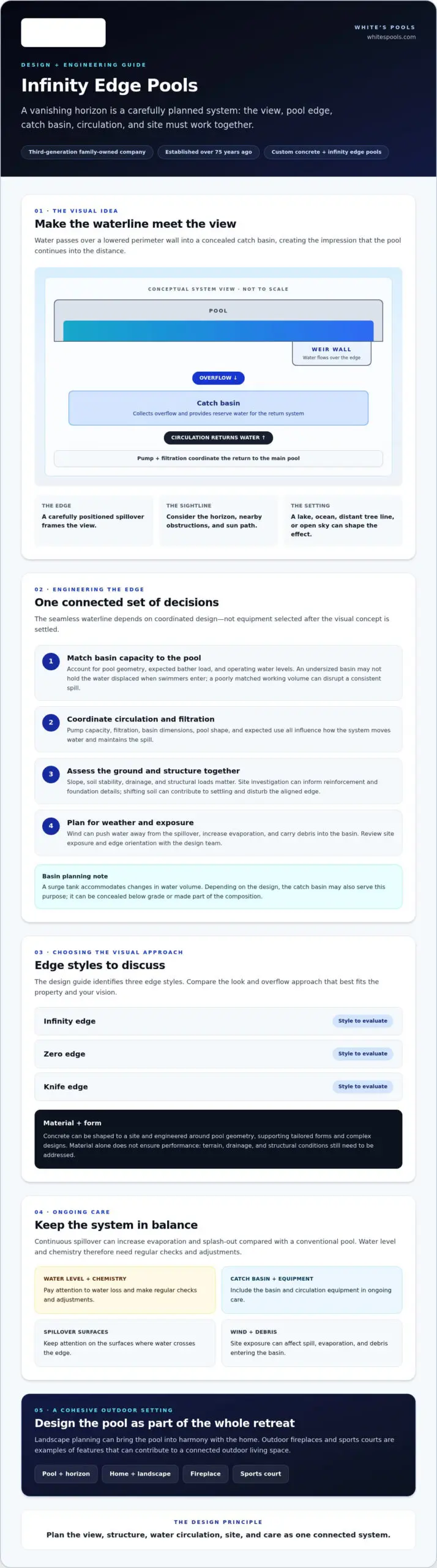
An infinity edge creates the impression that pool water continues into the distance. Water flows over a lowered perimeter wall into a concealed catch basin, then returns to the pool through its circulation system. The effect depends on both the structure and the view: a carefully placed edge can make the water appear to meet a lake, ocean, or open sky. For a foundational overview of the concept and its design principles, see Infinity pool.
Three terms help explain the system. The weir wall is the structural edge water flows over. The catch basin collects that overflow. A surge tank is a reservoir that accommodates changes in water volume; depending on the design, the catch basin may also serve this purpose. Ask how these components fit together in your proposed layout, rather than treating them as separate equipment choices.
The Visual Impact of the Horizon Line
The vanishing effect depends on sightlines. Position the spillover edge toward the view you want to frame, then consider whether nearby architecture, railings, or planting will interrupt that view. A distant tree line can suggest a natural lake, while an unobstructed sky can make the water feel open and expansive. Consider the sun’s path, too. Light affects reflections and glare, so review the view at different times of day and think about when you’ll use the space.
Infinity Pools vs. Standard Inground Designs
A traditional pool has a visible perimeter that separates the water from the yard. An infinity pool shifts that boundary: one or more edges spill into a concealed basin, which needs space and access within the overall layout. The result can feel integrated with the landscape, but the basin and equipment take planning beyond the visible pool shell.
Concrete is well suited to bespoke vanishing-edge forms because it can be shaped to the site and engineered around the pool’s geometry. It isn’t the only possible construction method, but custom concrete supports tailored shapes and complex designs. Explore the benefits and considerations of custom concrete pools when comparing materials for your project.
Engineering the Horizon: Technical Requirements for Vanishing Edges
The seamless waterline depends on a system working behind the view. Water flows over the weir into a catch basin, then a circulation setup returns it to the main pool. Pump capacity, filtration, and basin dimensions must be coordinated with the pool’s shape and expected use. In a considered infinity edge pool design, these are connected engineering decisions, not equipment choices to leave until after the visual concept is settled.
Because water continually moves across the edge, evaporation and splash-out can increase water loss compared with a conventional pool. This affects water level and chemistry, so plan for regular checks and adjustments. Wind can push water away from the spillover, increase evaporation, and carry leaves or other debris into the basin. Review the site’s exposure and the proposed edge orientation with the design team.
The Surge Tank and Catch Basin System
The catch basin receives overflow and provides a reserve of water for the return system. If it’s undersized, swimmers entering the pool can displace more water than it can hold. If its working volume is poorly matched to the circulation system, the pool may not maintain a consistent spill. A qualified designer should account for pool geometry, expected bather load, and operating water levels when determining capacity. Depending on the site, the basin can be concealed below grade or made a visible part of the composition.
Site Selection and Soil Engineering
A sloped lot can create a dramatic horizon, but it also brings structural demands. The pool shell and supporting ground must be assessed together, since unstable or shifting soil can contribute to settling and disrupt the carefully aligned edge. Geological or geotechnical investigation can help inform the design; reinforcement and foundation details should respond to actual site conditions rather than a generic plan. Dwell’s gallery of modern infinity pool designs can help you discuss how different settings shape the visual result. Engineering decisions, however, should be based on the property itself.
Concrete and gunite allow custom shapes and robust structures, but material alone doesn’t ensure performance. On challenging terrain, the design team must account for slope stability, drainage, and the loads carried by the pool and surrounding ground. White’s Pools specializes in custom concrete and infinity edge pools. For a project-specific conversation, explore White’s Pools’ infinity edge pool expertise.
Aesthetic Styles: From Knife Edge to Zero Edge Designs
These edge styles are related, but they aren’t interchangeable. The right choice depends on how much of the pool should appear to merge with its surroundings, the site layout, and the visual character you want. Clarify the style early: it affects how the overflow is built and how it meets the deck and landscape.
- Negative edge: Water spills over one or more lowered sides into a catch basin, creating the familiar vanishing effect. It’s a natural choice when you want to frame a particular view.
- Zero edge: Water sits level with the surrounding perimeter and overflows into a concealed channel or basin. The result is a mirror-like surface that can make the pool feel integrated with the deck.
- Knife edge: A refined form of perimeter overflow, where water disappears into a narrow slot for a particularly crisp, minimal appearance. It calls for precise detailing and construction.
In everyday conversation, “infinity edge” may be used broadly for pools with overflow edges. For planning, clarify whether you mean a one-sided vanishing edge, a perimeter overflow, or a narrow-slot knife edge. Ask to see how the selected detail meets the deck and where the basin or channel will sit. That distinction affects both appearance and layout.
Material Selection for the Weir Wall
Tile on the weir wall can make the spillover a deliberate design feature. Glass tile catches and reflects light, lending the edge a shimmering finish; natural stone can help the pool blend with an organic landscape. A contrasting edge material adds visual depth, while a closely matched palette creates a quieter transition. Choose pool-rated materials and confirm that the finish, grout, and installation are suitable for regular water exposure.
The water itself is part of the finish. Interior color and tile can influence how reflective the surface appears and how clearly the edge reads against the view. Review samples in the light around the proposed pool, since sun and shade can change their appearance.
Lighting the Spillover
After dark, lighting can make the edge visible without overpowering the horizon. Subtle illumination in the catch basin can reveal falling water, while underwater lights placed away from the primary sightline can help limit glare. Plan pool and landscape lighting together. If you want to change the mood for different uses, consider whether the lighting can be adjusted independently.
Thoughtful material and lighting choices bring the design together. White’s Pools offers pool tiles and custom infinity edge pools, so finishes can be considered as part of the pool’s overall look and setting.
Integrating the Infinity Pool into a Complete Outdoor Living Space
An infinity pool feels most at home when the rest of the outdoor environment supports its view and purpose. Plan the pool, terraces, planting, lighting, and gathering areas as a connected composition, rather than treating each as a separate addition. Where a barrier is needed, glass railings can preserve sightlines. Planting and changes in level can define spaces without crowding the horizon.
A broader plan can turn the pool into the centerpiece of an outdoor retreat. Place lounge areas where people can enjoy the vanishing edge, then create clear routes to active spaces such as pickleball or tennis courts. Consider how guests will move between wet and dry areas and where seating can serve more than one activity. Plan these relationships before the pool’s position fixes the layout.
Fire Features and the Evening Aesthetic
Fire and water offer a natural contrast: flame adds warmth and movement beside a reflective pool surface. An outdoor fireplace can create a destination near the pool deck, giving guests a place to gather after swimming. If considering fire bowls beside the spillover, treat placement as a design and safety decision, not just a visual flourish. Keep circulation paths clear and have the feature’s location and installation requirements reviewed by qualified professionals.
At night, use lighting to support the atmosphere without distracting from the horizon. A restrained glow around gathering areas can complement the pool’s reflections. Avoid positioning bright fixtures where they shine directly into the primary view.
Active Luxury: Sports Courts and Multi-Use Zones
A court can extend the outdoor experience beyond the water, adding an active destination to the same landscape. Plan a clear transition from the pool terrace to the playing area, with surfaces and circulation suited to each use. Changes in elevation may help distinguish wet and dry zones, but access between them should remain practical. Seating that faces both the pool and court lets guests enjoy the view or watch a game without splitting the gathering space.
White’s Pools offers infinity edge pools, outdoor fireplaces, and pickleball and tennis courts, making these features relevant to a coordinated property plan. For help planning an outdoor space that brings them together, explore White’s Pools’ outdoor living options.
Long-Term Maintenance and the White’s Pools Standard
The vanishing edge needs regular attention to keep its appearance and circulation system working as intended. Water continually moves over the weir, while wind, splash-out, and evaporation can lower the pool level or carry debris into the catch basin. Make basin cleaning and water-level checks part of the regular routine. A low water level can interrupt the smooth spillover and weaken the horizon effect.
Water movement can also leave mineral deposits on spillover tile. White buildup may be calcium scale from pool water; efflorescence is a similar-looking deposit caused by moisture carrying salts through masonry. The source matters, so identify the deposit before choosing a cleaning method. Use care with tile and grout, and ask a pool professional about suitable cleaning and water-balance practices for the materials in your pool.
The Importance of Water Level Management
An auto-fill system can help keep water near its intended operating level, reducing the need for manual top-ups. Sensors can monitor levels, but they must be correctly selected, installed, and maintained. An appropriately configured low-water sensor can alert the owner or stop a pump if the level falls too far, helping reduce the risk of dry running. Confirm how any control works with the pool’s circulation equipment.
The pumps and return system must support the designed spillover, while filters and valves need to remain in good working order. Equipment problems can affect circulation and the edge’s appearance, so investigate changes in water flow or unusual pump behavior rather than ignoring them.
Professional Maintenance for Complex Systems
Build these tasks into a consistent care routine:
- Remove leaves and debris from the catch basin before they accumulate or obstruct circulation.
- Check pool and basin water levels, and monitor water balance to help limit scale on tile.
- Have pumps, filters, and specialized valves inspected and cleaned according to the equipment and pool’s maintenance needs.
- Look for changes in the spillover, such as uneven flow, and investigate promptly.
These details are part of the long-term ownership picture for any infinity edge pool design. White’s Pools is a third-generation, family-owned company established over 75 years ago, specializing in custom concrete and infinity edge pools. When planning a project, discuss how its catch basin and circulation system will be maintained, and what routine care the finished design will require.
Bring Your Infinity Pool Vision to Life
A compelling infinity edge pool design begins with more than a beautiful view. The edge style, site conditions, catch basin, and circulation system all need to work together to create a reliable vanishing effect. Material choices, thoughtful lighting, and regular maintenance then help preserve the pool’s appearance and performance.
Consider the full setting, too. An infinity pool can anchor an outdoor retreat, with gathering spaces, fireplaces, and sports courts designed to complement the landscape. Getting these details right takes careful planning and experienced craftsmanship.
White’s Pools brings custom concrete pool construction and infinity edge pool expertise to projects, alongside pool cleaning and maintenance services. Contact White’s Pools to discuss your infinity edge pool design and plan an outdoor space shaped around your home and vision.
Frequently Asked Questions
How much more does an infinity edge pool cost compared to a standard pool?
An infinity edge pool generally costs more because it needs additional design and construction for the spillover edge, catch basin, and water-return system. The difference depends on the pool’s size and shape, site conditions, edge style, materials, and equipment. A sloped or challenging site may add structural requirements. Request a project-specific assessment that explains the edge system and site work, rather than relying on a standard-pool comparison alone.
Do infinity edge pools require more maintenance than traditional pools?
Yes, they usually need additional attention because water continually flows over the edge and the catch basin and return equipment need care. Remove leaves and debris from the basin, monitor pool water level and chemistry, and keep pumps, filters, and valves in good working order. Spillover tile may also need cleaning if mineral deposits form. A consistent maintenance routine helps protect water quality and preserve the clean visual effect.
Can you build an infinity pool on a flat backyard or does it need a slope?
You don’t need a slope to build an infinity pool. A hillside can provide a dramatic view beyond the lowered edge, but a level property can support the design if the pool, catch basin, and return system are planned to fit the site. The infinity edge pool design should account for available space, drainage, soil conditions, and sightlines. A site assessment can determine which edge configuration is practical for your property.
Are vanishing edge pools safe for families with young children?
They can be designed with family safety in mind, but an infinity edge doesn’t replace standard pool precautions. Discuss barriers, secure access, non-slip surfaces, and supervision with your pool designer, and follow applicable local safety requirements. The edge and catch basin should be incorporated into the safety plan, particularly if the pool is elevated or near a drop. No design feature replaces active adult supervision around water.
How much water is lost to evaporation in an infinity pool design?
There isn’t one reliable amount for every pool. Water loss varies with weather, wind, temperature, humidity, pool exposure, and how often water spills over the edge or splashes out. Evaporation can be more noticeable in an exposed infinity pool because moving water has greater contact with air. Track the water level over time; an unexpected or persistent drop may signal a leak or equipment issue, not just evaporation.
What happens if the power goes out? Does the catch basin overflow?
If power fails, the circulation pump stops, so water won’t return from the catch basin to the main pool until the system restarts. Whether the basin overflows depends on its available capacity, water level, and conditions when the outage occurs. Proper design accounts for water displacement and operating levels, but homeowners should ask their pool professional how their specific system behaves during a shutdown and what steps to take.
Can an infinity edge be added to an existing concrete pool during a remodel?
Sometimes, but it depends on the existing pool shell, site layout, structural condition, and room for a catch basin and return equipment. Creating a spillover edge can require substantial structural and hydraulic changes, so it shouldn’t be treated as a simple surface upgrade. Have a qualified pool professional assess the pool before planning the remodel. They can determine whether the existing structure can support the changes or whether a different approach is needed.
What are the best materials for the spillover wall to prevent staining?
No material can prevent every stain, since water chemistry, minerals, cleaning practices, and exposure all affect the finish. Select pool-rated tile or stone suited to continuous water contact, and confirm that the grout and installation are appropriate for the spillover. Glass tile offers a reflective look, while natural stone can complement an organic setting. Regular water-balance checks and prompt cleaning help limit deposits and keep the edge looking well cared for.

