
What if your pool’s water could be filtered by a living system rather than routine chemical additions? Natural swimming pools use a dedicated swimming zone and a separate biological filtration area, where millions of microorganisms, and sometimes aquatic plants, help support water quality.
Natural swimming pools offer an appealing garden-integrated design, but they require careful planning. The regeneration area can use a substantial share of the available footprint, so plan it alongside swimming space, circulation, and landscaping. Heating, waterfalls, and planting also affect how the pool functions through the seasons.
This guide explains how the closed-loop system works and the role of biological filtration. You’ll also learn how heating and water features fit into the design and how climate affects suitability, helping you weigh the trade-offs before planning a pool around your property and swimming preferences.
Key Takeaways
- Plan swimming and regeneration areas together, since the water-garden zone can take up a substantial share of the pool footprint.
- Understand how circulation, microorganisms, and aquatic plants work together to support biological filtration.
- Consider sunlight, heating, and water features as part of the design, because they shape seasonal comfort and the pool’s overall feel.
- Explore how White’s Pools’ natural and waterfall pool designs can suit a landscape and swimming vision.
What Is a Natural Swimming Pool?
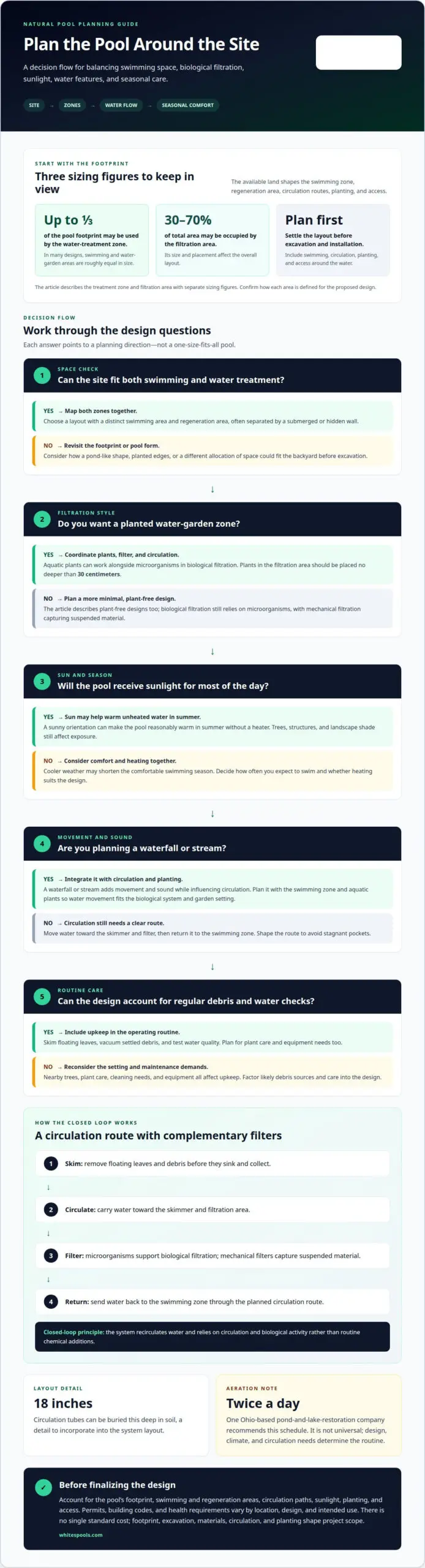
Natural swimming pools are often designed with separate areas for swimming and water treatment. That zone may require as much as one-third of the space allocated to the pool. In many designs, the swimming and water-garden areas are roughly equal in size, separated by a submerged or hidden wall. This layout keeps the swimming area distinct from the planted zone.
Begin with the available footprint. A backyard layout, for example, needs room for swimming, circulation, planting, and access around the water. A natural swimming pond can have a garden-like form, while another design might define the swimming area with planted edges. The pool’s bottom, depth, and transitions between zones also affect its appearance and use. Settle these decisions before excavation and installation.
In the United States, permits, building codes, and health requirements vary with location, design, and intended use. A design consultation can help map the proposed footprint, site conditions, swimming zone, and regeneration area before the permitting process.
Natural swimming pools have no single standard cost. The project’s footprint, excavation, materials, circulation system, and planting all affect its scope; pricing is determined after a quote request. A broad planted zone, for example, calls for a different plan than a plant-free design. Available land and construction choices also shape the work.
Homeowners may choose natural swimming pools for their garden-integrated appearance and biological filtration. Water and planting become part of the outdoor setting rather than a separate feature. Before planning, consider how much space you can devote to swimming, the experience you want, and how a regeneration zone could fit the landscape. These decisions provide a useful starting point for a tailored design.
Closed-loop systems and biological filtration
A closed loop recirculates water through filtration and back into the swimming area. The system combines biological processes with circulation and debris removal.
Natural and Mechanical Filters
Biological filtration uses millions of microorganisms, sometimes alongside aquatic plants, to support water quality without adding substances to the water mix. A mechanical filter can capture suspended material as water circulates. These approaches serve different roles: biological filtration supports the system’s water balance, while mechanical filtration removes particles. A natural pool’s filtration area may occupy 30-70% of its total area, so its size and placement affect the layout.
Unlike a traditional chlorine pool, a closed-loop natural system adds nothing to the water mix. It relies on circulation and biological activity for filtration rather than routine chemical additions.
Debris Skimming and Water Circulation
Skimming removes floating leaves and other debris before they sink and collect. Circulation carries water toward the skimmer and filter, then returns it to the swimming zone. The layout matters: position circulation paths to move water through the filtration area and avoid stagnant pockets. Skimming and biological treatment work as complementary parts of the design.
Regularly removing surface debris also limits the material that could settle. The filtration plan should account for the pool’s shape, surrounding gardens, and likely debris sources, such as nearby trees.
Plants and Pool Equipment
A planted regeneration zone can include aquatic plants, with plants in the filtration area placed no deeper than 30 centimeters. Plant roots and the biological habitat support filtration, while mechanical filters and circulation equipment move water through the system. The right arrangement depends on whether the design prioritizes a planted water garden or a more minimal swimming area.
These decisions are best coordinated during design, when the filter, plants, and circulation route can be planned together. For a landscape-led concept, natural and waterfall pool design can bring water movement and garden features into one composition.
Heating, water features, and climate suitability
Sun exposure, circulation, and seasonal conditions affect comfort in a natural pool. Plan heating and water features alongside the swimming and water-garden zones.
Heating and Climate Suitability
In a sunny climate, a pool oriented to receive sunlight for most of the day can become reasonably warm in summer without a heater. Cooler weather may shorten the comfortable swimming season, so consider how often you expect to swim and whether heating suits the design. Circulation tubes can be buried 18 inches deep in soil, which can be incorporated into the system’s layout.
Sun Exposure and Water Temperature
Sunlight helps warm unheated water, making the backyard’s exposure an important design factor. Trees, structures, and landscape shade affect how much sun reaches the pool. A waterfall or stream adds movement and sound while influencing circulation. Plan these features with the swimming zone and aquatic plants so water movement supports the biological system without overwhelming the garden setting.
Maintenance still matters. Skim floating leaves, vacuum settled debris, and test water quality as part of a routine suited to the pool’s conditions. For annual upkeep, cost depends on debris, plant care, cleaning needs, and equipment. A maintenance quote accounts for those factors; pool cleaning and maintenance can help keep circulation and water quality in view.
Water-garden zones can include floating, emergent, and underwater plants. Underwater plants add oxygen to the water, while aeration supports movement through the system. One Ohio-based pond-and-lake-restoration company recommends aerating natural pools twice a day. That is one company’s recommendation, not a universal schedule: the pool’s design, climate, and circulation needs determine its operating routine.
Climate also affects seasonal care. In winter, plants can be cut back as they would in a garden, and the pool does not need to be drained. A design that balances sunlight, a comfortable swimming area, and planted or wetland-style edges can help the pool feel connected to its surroundings throughout the seasons.
Chemical-free swimming pools
“Chemical-free” describes a water-treatment approach, not water without naturally occurring substances. A closed-loop system recirculates water without adding chemicals to its mix. Biological filtration and aquatic plants support the regeneration area, while circulation and debris removal remain part of ongoing care. The practical takeaway is that avoiding routine chemical additions doesn’t mean avoiding maintenance or attention to water quality.
A U.S. public example shows how this approach can be used beyond a private backyard. Minneapolis completed the first reported natural public swimming pool in the United States in 2015, after ten years of building. The pool recycles its water every 12 hours. A public facility has different demands from a home pool, but it illustrates how circulation and treatment can be incorporated into a constructed swimming environment.
The key decision is whether a living filtration system suits the experience you want. Aquatic plants can bring garden beauty to the regeneration zone, while circulation and skimming help manage debris. Swimming space, planting, and equipment need to be considered together. Chemical-free water still requires practical care, including cleaning and seasonal plant maintenance.
Consider the maintenance routine while planning the design. A planted regeneration area needs different care from a pool with little or no planting. In either case, circulation, debris removal, and equipment operation support the system. Set realistic expectations: a natural swimming pool can reduce reliance on routine chemical additions, but it is not a maintenance-free pond.
The clearest takeaway is to choose a design whose upkeep suits your preferences. Biological processes rely on a system planned to support them, and the swimming area and regeneration zone each have a distinct role. Decide how much planting and garden character you want, then make those priorities part of the design from the start.
White’s Pools: Natural & Waterfall Pools
White’s Pools can help shape a natural-pool concept around your property, swimming needs, and preferred landscape. Its Natural & Waterfall Pools offering suits homeowners considering water features as part of their outdoor setting. Custom Concrete Pools are another option when the design calls for a tailored concrete structure.
Bring your priorities to the planning conversation: how you want the swimming area to feel, how a regeneration zone could fit the yard, and whether a waterfall belongs in the design. For an existing pool, Pool Cleaning & Maintenance supports ongoing care. The right next step depends on whether you’re planning a new build or maintaining a pool you already have.
Contact White’s Pools to discuss your natural pool plans.
Shape a Pool Around the Way You Live
Turn a broad idea into a clear design brief. Consider how the pool should fit your outdoor space, which features matter most, and how you want the setting to feel when you aren’t swimming. These priorities help guide decisions about form, materials, and the relationship between the water and the surrounding landscape.
For a tailored project, White’s Pools offers Custom Concrete Pools alongside Natural & Waterfall Pools. An outdoor fireplace can also form part of a wider outdoor-living plan. These options let you consider the pool as part of your property’s design rather than an isolated feature. A thoughtful plan for natural swimming pools starts with the setting and the experience you want to create.
Bring your ideas and priorities together, then contact White’s Pools to discuss your pool. A considered design can make the next decisions feel clear and manageable.
Frequently Asked Questions
So how does it work?
Water travels through a treatment loop before returning to the swimming area. Biological activity helps process nutrients, while skimming and mechanical filtration remove debris and particles. Surface leaves, for example, can be caught before they sink, and circulation carries water through treatment areas. Each part has a role, so an effective system coordinates water movement, filtration, and routine cleaning.
What about algae, muck, mud, and other icky things?
Organic material can collect in planted areas, but it should not build up in the swimming zone. Skim leaves, remove settled debris, and keep circulation working as designed. Algae can grow when conditions support it, so the balance of nutrients, planting, and filtration matters. Different areas need different care: a water garden may retain natural material that should be removed from swimming areas.
What is a natural swimming pool and how does it work?
A natural swimming pool is designed to use biological treatment instead of routine chemical additions. Water circulates through a treatment system that may include plants and mechanical filtration before returning to the swimming area. Details vary by design: a homeowner might prefer a planted regeneration area or a cleaner, more structured look with less planting.
What are the main types and designs of natural swimming pools?
Designs range from garden-like swim ponds to structured pools with distinct swimming and planted zones. Some use a submerged divider between the areas; others rely more on mechanical filtration and minimize planting. The choice affects the landscape, maintenance routine, and available swimming space. Consider whether you want the pool to feel like a garden feature or a clearly defined recreation area.
What are the steps to build a natural swimming pool?
Start by defining the pool’s purpose, preferred appearance, and available site area. Then develop a plan that coordinates swimming space, regeneration, circulation, filtration, and access. Construction follows the approved design and site preparation. Once the pool is operating, establish routines for skimming, cleaning, equipment, and plants. Planning for these needs early helps align the finished pool with how you intend to use it.
How safe and hygienic are natural swimming pools for swimming?
Hygiene depends on sound design, effective circulation and filtration, and consistent maintenance. A natural approach does not remove the need to manage water quality or clean the swimming area. Prevent debris from accumulating, and maintain the equipment and biological system as intended. Natural swimming pools should suit their planned use, with ongoing care to support clean water and a comfortable swimming environment.

