
A heated pool can extend swimming beyond summer, but heat alone doesn’t guarantee comfortable use every day of the year. A pool usable 365 days a year is considered a year-round pool; achieving year-round use for a heated pool depends on retaining heat, maintaining a comfortable water temperature, and accounting for seasonal conditions.
It’s natural to focus on the heater, but a cover, wind exposure, and outdoor temperatures also affect water warmth and how well a heat pump performs. These factors matter whether you’re planning a quick swim or hoping to use the pool through colder months.
This guide explains how a pool cover helps limit heat loss, what affects water temperature, and why heat pumps produce less heat as outdoor air gets colder. You’ll also learn how seasonal conditions shape the practical swimming season and what can support comfortable pool use throughout the year.
Key Takeaways
- Use a thermal cover to help retain heat, and consider how wind exposure around the pool affects comfort.
- Plan heating around when you swim, since maintaining a preferred water temperature depends on both the heater and outdoor conditions.
- Expect a heat pump to produce less heat as the air gets colder; its output and the pool’s heat loss shape how steadily it can maintain warmth.
- Account for seasonal upkeep: autumn debris can mean more frequent cleaning, while an unused pool needs winter preparation to protect it and its equipment.
1. Improving heat retention with a pool cover
A thermal pool cover helps retain heat between swims. By reducing heat loss from the pool surface, it leaves the heating system with less warmth to replace. Covering the water after an evening swim, for example, helps preserve heat overnight. Consistent use can support efficient operation and make cooler-weather swimming more comfortable.
Make covering the pool part of your routine whenever it’s not in use. Remove the cover before swimming, then replace it once everyone is out and the surface is clear. A cover also limits evaporation, which carries heat away from the water. Its benefit depends on regular use, not simply owning one.
A pool enclosure works differently from a surface cover. It traps warmth around the pool and can help keep both the air and water warmer. This shelter can make the surrounding space more comfortable as temperatures fall and provide protection for nearby seating. It doesn’t replace covering the water when the pool is idle.
Covered lounging and dining areas add comfort around the pool. A covered patio can shelter guests from wind and rain, while nearby seating makes the space useful between swims. Placing a table or lounge area within the sheltered area lets people enjoy the outdoor setting without standing beside exposed water.
Pool covers can also help manage moisture. By limiting evaporation when the pool is unused, a cover reduces water vapor entering the surrounding air. In an enclosed pool space, uncover the pool for swimming and allow airflow afterward. A cover helps control moisture, but it doesn’t replace ventilation.
Choose a cover based on how you use the pool. Don’t use a summer cover during winter swimming: it can freeze to the water and become difficult to remove. For year-round use of a heated pool, matching the cover and enclosure to seasonal use helps retain warmth and keep the backyard practical.
2. Maintaining a comfortable water temperature
A heated pool feels comfortable when its water temperature suits your activities. A calm swim, family play, and quiet relaxation may call for different preferences. Set the heating schedule around expected use rather than heating an empty pool continuously. Timers can align heating with regular swim times and help avoid unnecessary operation. Wind and colder outdoor air also increase heat loss, so the same setting may feel different across seasons.
Permit and code requirements for heated pools vary by location and project details. Before construction or equipment changes, contact the local building department about applicable requirements. Year-round use also calls for attention to safe access. Keep the pool area clear, control unsupervised access, and avoid entering the water when icy conditions make safe entry or exit difficult.
Warm water creates better conditions for bacteria and algae, so water quality is part of temperature management. Test pH and disinfectant levels regularly, then adjust them as needed. Balanced chemistry and clean filters can reduce strain on heating equipment. Skim leaves and debris, and clean the pool to prevent contaminants from accumulating between swims. If the water turns cloudy or visible algae develops, address the water balance and filtration promptly.
Include water testing, debris removal, and filter inspection in your regular maintenance routine. Check that the filter is clean and water circulates through the heating system. During colder periods, continue testing water intended for swimming. Cold water can make bacteria and algae less active, but it doesn’t replace appropriate water care. Keep maintenance consistent as temperatures and pool use change.
For a pool planned around regular use, heated pool design can bring heating, circulation, and maintenance needs into the project conversation.
3. Heat pump performance in cold weather
An electric pool heat pump takes heat from outdoor air and transfers it to the pool water. As the weather gets colder, less heat is available, so the pump produces less heat. This can affect how quickly the water warms during a cool spring spell compared with summer. A heat pump can still support swimming, but its output varies with outdoor conditions.
Heat pumps generally warm water more slowly than gas heaters. Their strength is maintaining a steady temperature over time, rather than quickly raising the temperature of cold water. For example, a pool used regularly through spring may benefit from a consistent setting instead of heating only on swim days. This approach makes warmth more predictable, although cold weather can still limit performance.
An inverter heat pump can operate at low temperatures and adjust its output as needed. This helps match heating to changing conditions instead of running at one fixed output. Outdoor air temperature remains important when comparing heat production on a mild afternoon with that on a colder night. A suitable heating plan considers the desired water temperature, seasonal weather, and how often the pool is used.
Small leaks deserve attention because they can cause heat loss. Inspect the pool and visible equipment for signs of leaking, and address any leak promptly. When warmed water escapes, the system must heat replacement water, adding demand during colder weather. Monitoring the water level and cleaning regularly can help distinguish routine pool care from a possible leak. Include leak checks in seasonal maintenance, especially when preparing for spring or extending swimming beyond summer. Consistent heating and prompt repairs support comfortable use, though cold-weather conditions still affect the experience.
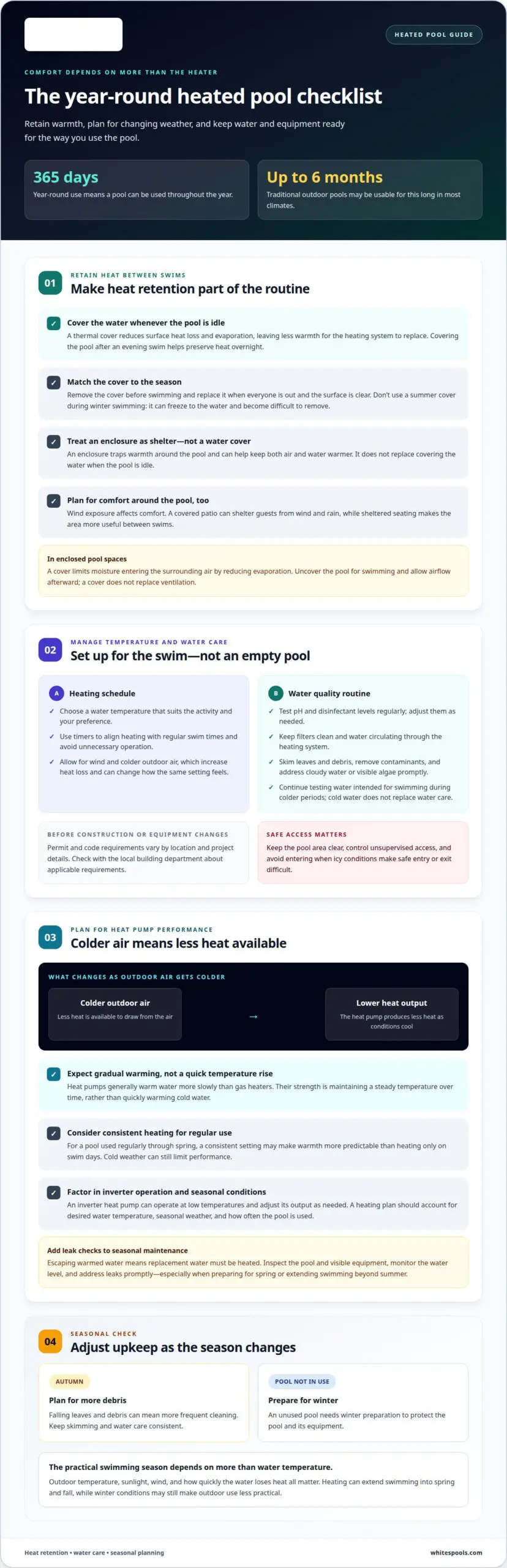
4. Seasonal limits of traditional pools
In most climates, traditional outdoor pools can be used for up to six months a year. The swimming season depends on outdoor temperatures, sunlight, wind, and how quickly the water loses heat. A heated pool can extend swimming into spring and fall, but winter conditions may still make outdoor use less practical. Consider both water warmth and the comfort of getting into and out of the pool.
An outdoor pool can be used year-round in a cold climate when heating and operating conditions support it. A heater can warm the water, while cold air and wind continue to affect comfort and heat loss. The practical ability to swim through winter depends on equipment performance, the pool’s exposure, and whether it is maintained for ongoing use.
Pool maintenance changes as leaves fall and temperatures drop. Autumn debris may require more frequent cleaning to keep the water and filtration system clear. Remove leaves and other debris before they collect, and continue monitoring water quality while the pool is open. These steps help keep the pool ready during an extended swimming season.
If you won’t swim during winter, close the pool properly rather than leaving it idle and exposed. A winterisation kit helps protect the pool and equipment from frost damage. Follow the kit’s instructions and prepare the equipment and water before cold conditions arrive. The right timing depends on local weather and when you expect to use the pool for the last time.
For homeowners deciding between winter swimming and seasonal closure, weigh expected use against cold-weather demands. A pool that stays open needs continued heating and pool maintenance; one that closes needs careful winter preparation. That decision shapes the pool’s upkeep and its ability to serve your household across each season. Plan a pool for extended seasonal use around your preferred swimming schedule.
White’s Pools
White’s Pools helps homeowners consider how pool design and ongoing care fit their plans for swimming across the seasons. If you’re planning a new pool, discuss how a custom concrete pool can suit your backyard and intended use. For more consistent swimming regardless of outdoor weather, an indoor pool offers a different setting to consider. Pool Cleaning & Maintenance supports ongoing water care and equipment performance, important parts of keeping a pool ready for use.
Bring your preferred swimming season, pool setting, and maintenance needs into the conversation. These details help shape a practical plan for how you want to use the space, whether that means extending outdoor enjoyment or swimming indoors. Contact White’s Pools to discuss your pool plans.
Shape a pool plan around the way you live
Year-round use for a heated pool starts with a clear picture of how you want your outdoor space to work. Think about when you’re most likely to swim, how the pool connects to the rest of your backyard, and whether you want the area to feel inviting beyond swim time. Those preferences can guide decisions about the pool and the atmosphere around it.
White’s Pools can help bring that vision into focus, from planning a custom concrete pool to considering practical care and outdoor features. An outdoor fireplace, for example, can create warmth and a gathering point beside the pool. The right choices depend on your property, priorities, and intended use, so start with the experience you want to create.
Contact White’s Pools to discuss your pool plans. A thoughtful design can make the space feel more connected to your home and ready for the seasons ahead.
Frequently Asked Questions
What temperature should a heated pool be for comfortable year-round swimming?
There isn’t one ideal temperature for every swimmer or activity. Choose a setting that feels comfortable for your household, then consider whether the pool is mainly for exercise, casual swimming, or relaxation. A setting that suits a gentle swim may feel different during active play. Keep the temperature consistent with your routine, and adjust it as outdoor conditions and pool use change.
How much does it cost to heat a pool year-round?
The cost of year-round use for a heated pool depends on its size, local climate, desired water temperature, heater type, and frequency of use. A larger pool takes more energy to warm, while colder weather increases heating demand. For a useful estimate, consider the pool’s dimensions and typical swimming schedule alongside the equipment’s energy source. No single figure applies to every pool.
What are the most energy-efficient ways to heat a pool?
Efficiency depends on climate, sunlight, pool use, and heat retention. In moderate climates, electric heat pumps can have lower operating costs than gas heaters. Solar heating uses sunlight and can work well in sunny regions, though cloudy conditions limit its contribution. A cover can help retain warmth, while scheduling heating around planned use avoids unnecessarily heating an unused pool.
How do pool heat pumps, gas heaters, and solar heaters compare?
Heat pumps draw warmth from outdoor air, so their output declines as air temperatures fall, though they can maintain stable water temperatures over time. Gas heaters use natural gas or propane and can raise water temperature quickly, including in colder weather, but fuel can increase operating costs. Solar heaters gradually transfer collected sunlight to the water, so their contribution depends on available sun.
How much does a pool cover reduce heat loss and heating costs?
A thermal cover helps reduce heat loss from the water, but the amount saved depends on pool size, weather, usage, and how consistently the cover is used. There isn’t one percentage or cost reduction that applies to every installation. Covering a pool after an evening swim, for example, limits how long its surface stays exposed. A cover reduces heat loss but doesn’t eliminate the need for heating.
How does climate and outdoor temperature affect year-round pool heating?
Climate shapes year-round use for a heated pool by affecting heat loss and how well some heaters replace warmth. A heat pump produces less heat as outdoor air gets colder, while a gas heater can raise water temperature in cold weather. Wind and exposure also affect heat loss. In sunny regions, solar heating can contribute more consistently, though seasonal changes in sunlight affect its performance.

