
What if the most important decision for your pool’s future isn’t its shape or size, but the thin layer of material that separates the water from the concrete? Most homeowners spend weeks picking out tiles and water features, yet they often feel completely lost when it comes to selecting the right pool finishes. It’s understandable to feel overwhelmed by the technical jargon surrounding plaster, aggregate, and pebble. You want a surface that looks like a resort-style masterpiece, but you also need to know it won’t fade under the sun or feel like sandpaper against your feet.
We agree that your investment deserves a finish that balances sophisticated aesthetics with rugged, low-maintenance durability. You shouldn’t have to choose between a stunning visual and a comfortable swimming experience. This article promises to help you identify the ideal materials to transform your custom concrete pool into a long-lasting work of art. We’ll preview the top-tier options for 2026, from the smooth elegance of polished quartz to the shimmering brilliance of glass bead infusions, ensuring your backyard remains a source of pride for generations.
Key Takeaways
- Understand how high-quality pool finishes act as both a vital waterproof membrane and the primary aesthetic driver for your water’s color and texture.
- Compare the cost-effectiveness of traditional plaster against the superior durability and chemical resistance of modern quartz and pebble aggregates.
- Discover how to achieve a resort-style look with glass bead infusions that offer a jewelry-like sparkle without sacrificing swimmer comfort.
- Learn to select the ideal finish based on your local climate’s freeze-thaw cycles and your vision for a stunning backyard aesthetic.
- Gain insight into why professional application by a seasoned expert is the most significant factor in ensuring your finish lasts for decades.
What are Pool Finishes and Why Do They Matter?
A pool finish is far more than a decorative choice. It represents the final, waterproof layer applied over a concrete shell, whether that shell is constructed of gunite or shotcrete. While the concrete provides the structural strength, it’s the finish that creates the watertight seal necessary for inground swimming pools to function properly. We often describe the pool interior as the most high-traffic room in your backyard oasis. It’s the surface your family touches every day, and it’s the primary barrier against the elements. Because it’s constantly exposed to treated water and UV rays, the right choice is essential for protecting your long-term investment in a custom concrete pool.
The Anatomy of a Concrete Pool Surface
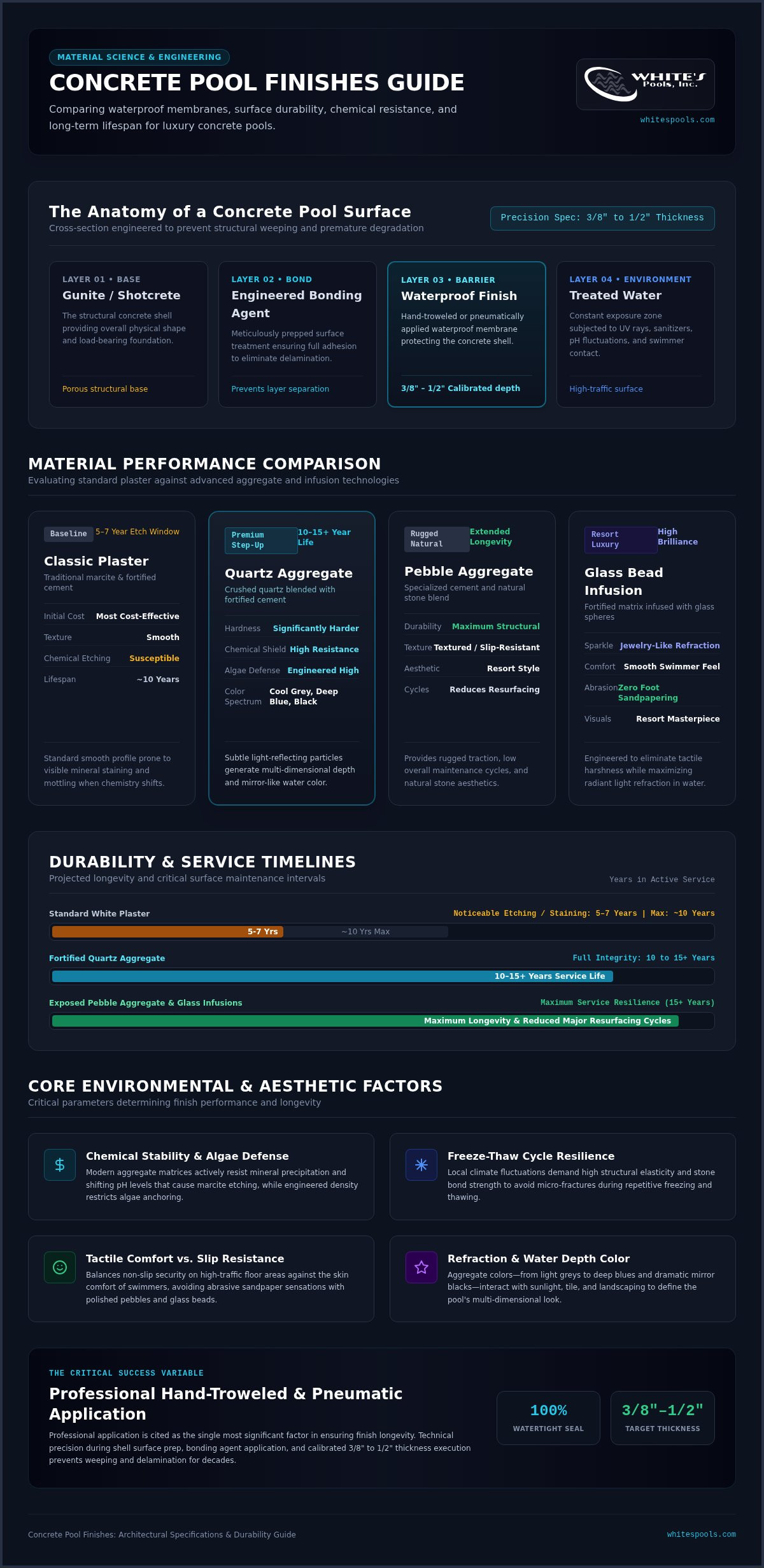
The integrity of your pool depends on the bond between the rough gunite shell and the finish material. High-end builds require a meticulous preparation process to ensure longevity. If the underlying structure isn’t expertly cleaned and treated with an engineered bonding agent, even the most expensive pool finishes can delaminate or crack. Professional installers focus on achieving a specific thickness, typically between 3/8 and 1/2 inch, using precise hand-troweling or pneumatic application techniques. This technical precision prevents water from reaching the porous concrete underneath, which could otherwise lead to structural degradation or “weeping” through the shell. It’s a craft that requires decades of experience to master.
Aesthetics vs. Functionality
Selecting a finish involves balancing how the water looks with how it feels. A material might offer a stunning deep-blue hue but feel abrasive against a swimmer’s feet. Conversely, a basic smooth surface might be comfortable but more prone to visible staining or “mottling” if water chemistry fluctuates. Modern premium materials are engineered to offer the best of both worlds, providing high algae resistance and chemical stability. When you’re finalizing your custom pool design, consider how the finish color will interact with your custom tile and surrounding landscape. The right choice doesn’t just look good; it actively resists the mineral precipitation and pH shifts that can age a pool prematurely, ensuring your pool finishes remain vibrant for years.
Comparing Standard Plaster and Modern Aggregate Finishes
For decades, classic white plaster was the industry standard for concrete pools. While it remains a popular choice for its smooth texture and initial cost-effectiveness, it often falls short in high-end projects. Standard plaster is susceptible to chemical etching and staining, which typically becomes noticeable within five to seven years. In contrast, modern pool finishes have evolved to prioritize both visual appeal and structural resilience. We’ve seen a clear shift toward materials that can withstand the rigors of modern water chemistry while maintaining a flawless appearance.
Quartz aggregate represents a significant step up from basic plaster. By blending crushed quartz with fortified cement, builders create a surface that is much harder and more resistant to the aggressive nature of pool chemicals. This transition from utility to premium performance is why luxury homeowners are moving away from traditional marcite. If you’re planning a project that demands long-term value, exploring your pool resurfacing and finish options is a critical step in the design process.
The Longevity of Quartz and Exposed Aggregates
The primary benefit of moving beyond plaster is the extended service life. While traditional surfaces might require attention after a decade, quartz aggregates are designed to last 10 to 15 years or longer. An aggregate finish is a specialized blend of cement and stone designed to provide maximum durability for your pool’s interior. This added strength protects your investment and reduces the frequency of major maintenance cycles. If you have questions about which material fits your vision, our team can help you choose a finish that stands the test of time.
Visual Depth and Shimmer
Beyond durability, modern aggregates offer a level of aesthetic sophistication that plaster simply can’t match. Light reflects off the quartz particles to create a vibrant, multi-dimensional water color. You aren’t limited to a single shade; options range from cool greys and deep blues to dramatic blacks that create a mirror-like effect on the surface. These choices allow you to coordinate your interior with the architecture of your custom concrete pools for a seamless, high-end look. This visual depth transforms a standard backyard into a custom retreat that feels both modern and timeless.
Pebble and glass bead pool finishes represent the absolute pinnacle of luxury and longevity. While quartz offers a shimmering update to traditional plaster, these materials move into the territory of bespoke art. Pebble finishes utilize natural river stones to create a rustic, organic look that mimics the beauty of a mountain stream or a coastal inlet. Beyond the aesthetics, these surfaces are incredibly practical. The varied texture and color of the stones naturally camouflage small debris and minor chemical scaling; this means your pool looks pristine even between cleaning cycles. When selecting high-end pool finishes, the choice often comes down to the desired sensory experience. There’s a unique massage feel to a pebble interior that many homeowners find therapeutic. If you prefer a smoother touch, glass bead finishes offer a silky, jewelry-like sparkle that is unmatched in the industry.
Mini-Pebble vs. Natural Pebble
Many homeowners worry that stone surfaces will be too rough on sensitive feet. This is a common myth that modern technology has solved. We often recommend mini-pebbles for clients who want the natural look without the abrasive texture. These smaller, refined stones provide a smoother surface while maintaining the durability benefits of larger aggregates. Pebble surfaces are virtually immune to common plaster ailments like pitting or significant etching. This makes them the ideal choice when creating a lagoon style pool that feels like a private sanctuary. It’s a robust solution that handles the wear and tear of a busy family pool while looking like a high-end resort.
The Brilliance of Glass Beads
Glass bead finishes are the top choice for contemporary designs and infinity-edge pools. These beads create a stunning 3D depth in the water, especially when the sun hits the surface at an angle. The light refracts through the translucent glass, producing a shimmering effect that changes throughout the day. You can even request custom color blending to match a specific backyard palette. This level of customization ensures your pool isn’t just another installation, but a one-of-a-kind masterpiece. Because glass is non-porous, it’s exceptionally resistant to algae and chemical wear. Research indicates these finishes can last up to 50 years with proper water balancing, making them a premier long-term investment for your home.
Choosing the Perfect Finish for Your Lifestyle
Selecting the right interior involves more than just looking at a sample board. You have to consider how your pool will function as a social hub for your family. Factors like water color, texture, maintenance requirements, and your overall budget all play a role in the final decision. For instance, if you plan on spending hours on a tanning ledge, a smoother finish is non-negotiable for comfort. Additionally, your geographic climate dictates the level of durability you need. In regions where freeze-thaw cycles are common, the resilience of premium pool finishes ensures the surface won’t crack or delaminate when temperatures fluctuate. It’s about finding a balance that complements your lifestyle while protecting your long-term investment. For a deeper look at the architectural principles and material innovations shaping modern luxury swimming pool design, exploring the latest trends can help you make a more informed decision.
Predicting Your Water Color
We often use the “Sky to Water” rule to help homeowners visualize the final result. Your pool finish acts as the canvas, while the sky provides the primary light source. A white or tan finish typically results in a sparkling, tropical teal water color. If you’re looking for a deep, sophisticated navy or a mirror-like black, you’ll want to choose a grey or charcoal material. Depth also plays a significant role in color intensity. A shallow plunge pool will always look lighter and more transparent than the deep end of a full-sized lap pool. Understanding these optics prevents surprises once the vessel is filled and the sun hits the water.
Integrating Outdoor Living Elements
Your pool shouldn’t exist in a vacuum. It should feel like a natural extension of your home’s architecture and landscape. We recommend coordinating your interior with other backyard features for a truly cohesive aesthetic. You might choose a pebble finish that mirrors the natural stones in your garden or select a color that highlights your poolside fireplace ideas. Using complementary pool tiles can also bridge the visual gap between the water’s edge and your stone decking. This level of detail creates a seamless transition between the pool interior and your outdoor kitchen or lounge area. If you’re ready to start building your dream retreat, contact our design team to explore our full range of custom pool finishes today.
The White’s Pools Standard: Expert Application and Legacy
Even the most premium pool finishes in the world can’t perform without expert application. While the material choice is a vital first step, the craftsmanship behind the trowel determines whether that surface lasts for five years or twenty-five. At White’s Pools, we’ve spent 75 years refining our application process to ensure every custom build meets our rigorous standards for quality and longevity. We only use high-grade, certified materials that are engineered to resist chemical wear and UV degradation. This commitment to excellence ensures your investment provides a high return through reduced maintenance costs and a stunning aesthetic that doesn’t fade over time.
Our methodical approach protects the structural integrity of your vessel. We focus on the critical bond between the gunite shell and the interior finish, ensuring a watertight seal that stands up to the elements. By prioritizing technical precision, we help you avoid the common pitfalls of delamination and staining that often plague less experienced builds. It’s about more than just a beautiful surface; it’s about the peace of mind that comes from knowing your pool was built to the highest industry standards.
The Importance of a Family-Owned Legacy
We are a third-generation, family-owned business with a legacy built on trust and award-winning design. Every project we undertake is a signature of our 75-year history, and we take that responsibility seriously. Our team understands the complex science of gunite and how it interacts with different pool finishes across various environments. This deep-rooted expertise allows us to act as a steady guide through the entire construction process. You aren’t just hiring a contractor; you’re partnering with a seasoned expert who is personally invested in your vision and the long-term success of your backyard oasis.
Next Steps for Your Custom Pool Build
Transforming your backyard into a luxury retreat starts with a professional consultation. We invite you to work with our design team to see and feel material samples in person. Seeing how different aggregates reflect light or how a mini-pebble feels against your hand is the best way to make a confident decision for your lifestyle. Once you’ve selected your ideal materials, we can schedule a comprehensive site evaluation to assess your project’s specific needs. We’re ready to help you bridge the gap between initial inspiration and a durable, elegant reality that your family will enjoy for generations to come.
Elevating Your Backyard Vision for 2026 and Beyond
Selecting the ideal interior surface is the final, most impactful step in realizing a high-end backyard retreat. As we’ve discussed, the right choice balances tactile comfort with the structural resilience needed to protect your concrete shell for the long term. Whether you are drawn to the organic charm of natural stone or the modern shimmer of glass, your choice of pool finishes will define the character and longevity of your investment. If you’re still refining your overall vision, our comprehensive guide to luxury swimming pool design in 2026 covers the architectural principles, energy regulations, and high-end features that define today’s most stunning builds.
A project of this magnitude deserves the precision that only decades of specialized experience can provide. With 75 Years of Excellence and 3rd Generation Craftsmanship, White’s Pools remains dedicated to the art of high-end construction. As Custom Concrete Specialists, we ensure that every detail of your build meets our rigorous standards for quality and aesthetic harmony. Start your luxury pool journey with White’s Pools today. We look forward to helping you create a stunning, durable sanctuary that your family will cherish for generations to come.
Frequently Asked Questions
How long do different pool finishes typically last?
Lifespan varies significantly based on the material’s chemical resistance. Traditional white plaster typically lasts between 5 and 10 years before showing signs of etching. Quartz aggregates extend that window to 15 years, while premium pebble surfaces often remain in excellent condition for 25 years or more. Glass bead and all-tile interiors represent the longest-lasting options, frequently providing 20 to 50 years of service with proper water balancing and routine care.
Will a pebble pool finish be too rough for children’s feet?
While original pebble surfaces have a distinct texture, modern mini-pebble technology is designed for a smooth, comfortable feel. These refined stones are smaller and often polished to ensure they aren’t too rough for children’s feet or sensitive skin. We find that many families actually prefer the slight grip of mini-pebbles over the slippery nature of traditional plaster, especially on steps and tanning ledges where safety is a primary concern.
Which pool finish color makes the water look the most natural?
Finishes in tan, sand, or light grey tones produce the most natural water appearance. A tan interior creates a light teal or turquoise hue reminiscent of a tropical beach. Light grey finishes mimic the cool, clear water of a mountain lake or stream. If you want a naturalistic lagoon aesthetic, darker green or charcoal tones can successfully replicate the deep, shaded water found in natural springs and forest ponds.
Can I change my pool finish during a renovation?
You can absolutely change your interior material during a renovation project. Resurfacing is the ideal time to upgrade your backyard aesthetic and improve your pool’s durability. The process involves stripping the old material and applying a specialized bonding agent to the concrete shell before the new layer is installed. This allows you to transition from basic plaster to premium pool finishes like quartz or glass bead for a completely refreshed look.
What is the most low-maintenance pool finish option?
Glass bead and pebble aggregates are the most low-maintenance options available today. These materials are chemically non-reactive and non-porous, which makes them highly resistant to algae growth and mineral scaling. Unlike traditional plaster, which requires frequent acid washing and meticulous chemical adjustments to prevent staining, these premium pool finishes hide minor debris and resist the etching caused by water chemistry imbalances, saving you significant time and effort over the years.
How does the pool finish affect the water temperature?
The color of your pool interior directly impacts how much solar energy the water absorbs. Darker finishes, such as midnight blue, charcoal, or black, act as natural solar heaters by absorbing radiation and raising the water temperature by several degrees. Lighter colors reflect sunlight, keeping the water cooler. This is a vital consideration for homeowners in different climates who want to balance their heating costs with their desired visual depth.
Is it worth the extra cost to upgrade from plaster to an aggregate finish?
Upgrading to an aggregate finish is a smart financial decision when you consider the true cost of ownership. While the initial investment is higher than standard plaster, the extended lifespan means you won’t need to resurface as often. Research indicates that pebble surfaces offer a lower annual cost over their lifecycle because they require fewer mid-cycle repairs and chemical treatments. You’re paying for long-term reliability and a much higher aesthetic standard.
How do I prevent my new pool finish from staining?
Preventing stains starts with a strict 28-day startup protocol and consistent water balancing. You should brush the surface twice daily during the initial curing window to remove plaster dust and prevent calcium buildup. Maintaining the Langelier Saturation Index (LSI) between 0.0 and +0.3 is critical for protecting the finish from etching or scaling. Regular cleaning and professional maintenance will keep the surface vibrant and free from organic or mineral discoloration.

