
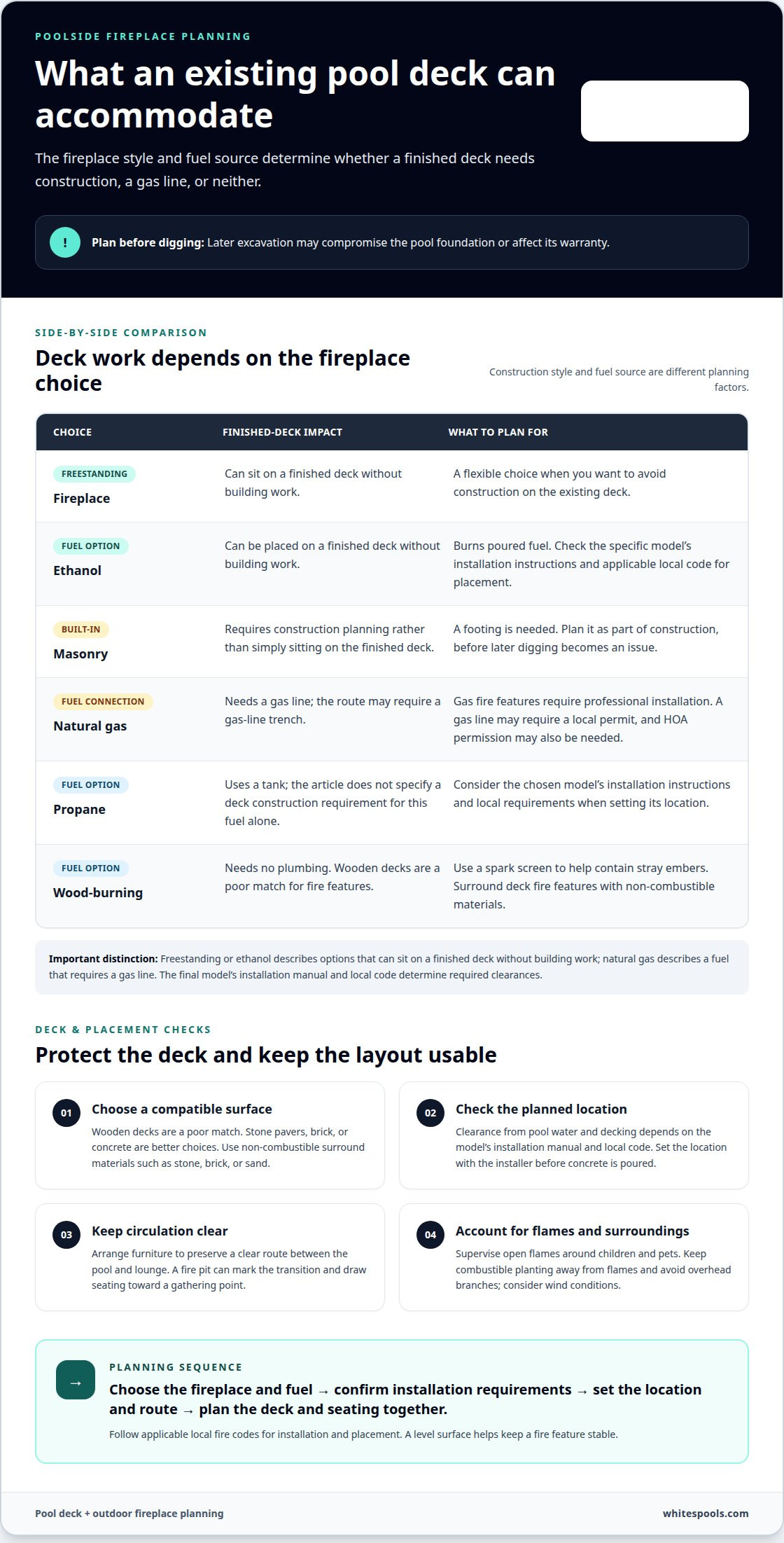
An existing pool deck may accommodate a fireplace, but the style you choose determines how much work is involved. A freestanding or ethanol fireplace can sit on a finished deck without building work. A built-in masonry fireplace needs a footing, and a natural-gas model also needs a gas line. This distinction is central to backyard pool and outdoor fireplace design, especially when the deck is already complete.
It’s natural to want a warm gathering spot without disturbing a finished pool area. The key is to match the fireplace style and placement to the deck, pool, and way you plan to use the space. This guide explains when an existing deck may work, which fuel types need a gas line, and how to arrange comfortable seating around a well-placed focal point.
Key Takeaways
- Match the fireplace fuel and construction style to your deck so you can plan for any required footing or gas-line work.
- Use a fire feature to define the transition between pool and lounge areas while keeping circulation and safety in mind.
- Choose fireplace materials and seating that feel cohesive with the backyard and make the gathering space inviting.
- Position the fire feature to complement the pool’s shape, surrounding walls, and nighttime views.
1. Does a poolside fireplace need a gas line?
Fuel choice determines whether a poolside fireplace needs a gas line. Whether a poolside fireplace needs a gas line depends on its fuel source. Propane fireplaces use a tank, ethanol models burn poured fuel, and wood-burning units need no plumbing. Gas fire features require professional installation. Consider how you’ll use the space: a natural-gas fireplace suits a fixed gathering area, while a portable fire pit offers flexibility. Each option affects the layout and installation work.
Required clearance from pool water and decking depends on the fireplace model’s installation manual and local code. Set the location with the installer before concrete is poured, so the plan accounts for the fireplace and any gas-line route. A gas line may require a permit from the local building office, and homeowners may also need HOA permission. Follow applicable local fire codes for installation and placement.
Popular fireplace ideas include a fire table in the center of poolside seating, a modern linear fireplace beside the pool, or a wood-burning feature near a pool house. A fire table can anchor the seating area and give guests a place to gather outdoors in the evening. Choose a feature to suit its main purpose, whether conversation, dining, or warmth beside the pool.
A fireplace can complement a pool, hot tub, and other fire features in one outdoor living area. Arrange the pool and hot tub for easy access, then position the fireplace or fire pit to draw people toward a lounge without blocking movement between spaces. Supervise open flames around children and pets, and consider how wind and nearby overhead branches may affect the fire.
Operating and maintenance costs depend on fuel, utility use, pool upkeep, and the cleaning each fireplace requires. Even a small backyard can fit a compact fire table or portable fireplace, with seating arranged around it instead of along a wide perimeter. In a cold climate, a fireplace can extend outdoor gatherings into cooler months, while a pool house can provide a sheltered place to enjoy the fire. For homeowners coordinating larger structural projects such as pool houses or home additions Medford NJ, integrating the design early ensures a seamless transition between indoor and outdoor spaces.
2. Can an existing pool deck take a fireplace, or does it have to be planned in?
Some fireplaces can sit on a finished pool deck, while others need construction planning. Freestanding and ethanol fireplaces can be placed without building work. Built-in masonry fireplaces need a footing, and natural-gas models need space for a gas-line trench. Account for these requirements early in your backyard pool and outdoor fireplace design, since later digging may compromise the pool foundation or affect its warranty.
Decide how the fire feature should relate to the water. A fire pit is a standalone structure, while a pool-integrated fire feature sits alongside or within the pool design. Between the pool and lounge, a fire pit can mark the transition and draw seating toward a gathering point. This can define separate uses without making the deck feel divided.
For a naturalistic setting, place a simple fire bowl among stone and planting. This combination can connect the fire, water, and landscape. Keep combustible planting away from the flames and avoid overhead branches. Level ground also helps keep a fire feature stable.
Deck material matters. Wooden decks are a poor match for fire features; stone pavers, brick, or concrete are better choices. For property owners planning durable concrete surfaces and footings built to handle outdoor features, specialist contractors like inspireconcrete.com.au illustrate how professional concreting creates strong, non-combustible foundations. Surround deck fire features with non-combustible materials such as stone, brick, or sand. Wood-burning designs also need a spark screen to help contain stray embers.
Open flames need close supervision around children and pets. Arrange furniture to preserve a clear route between the pool and lounge, even when a gas fire table becomes the center of the seating area. Landscaping, stone, and low-level lighting can tie both spaces together. For a cohesive backyard pool and outdoor fireplace design, align the materials and layout; a well-planned backyard pool and outdoor fireplace design can make the transition feel intentional. Custom pool design can help bring the pool layout into that plan.
3. How do you make outdoor fireplace seating comfortable?
Start with the fireplace surround, since its material sets the tone for the seating area. Stone and brick create a textured, rustic backdrop; stucco gives the surround a smoother look, while tile can add color or a patterned accent. Choose a finish that complements nearby pool coping, paving, or the home’s exterior.
Next, choose furniture to suit the setting and the way people will gather. Rustic wood chairs and a substantial outdoor table can complement a stone fireplace, while streamlined seating pairs well with smooth stucco and simple tile. Angle chairs toward the flame and arrange them so conversation feels natural, rather than making guests face one another across an oversized gap.
Comfort also depends on how the seating fits the outdoor space. Set a lounge beside the fireplace, then leave a clear route between the pool, furniture, and house. A built-in bench can make use of a low wall, while movable chairs let you adjust the layout for conversation or dining. Keep the fireplace as the visual center.
For a covered seating area, a pergola can provide shade above a sitting space with a wood-burning fireplace. Plan the structure and fireplace together so the overhead design, surround, and furniture feel cohesive. An alcove beside the fireplace can also keep firewood close at hand without turning the seating area into storage.
Think through installation before choosing the final finish. A masonry fireplace needs its footing planned as part of construction, while a freestanding style gives you more flexibility with the seating layout. For a polished look, repeat one material, such as brick, in a planter or low wall, then use cushions and smaller accents to soften the seating. This keeps the outdoor setting coordinated without making every surface match.
4. Fireplace placement as a backyard focal point
A fire bowl at the far end of a pool creates a clear focal point across the landscape. By day, its shape anchors the view; after sunset, the flames draw attention and invite people to linger. Orient seating toward both the fire and the water so neither feature disappears from view.
Use the pool’s geometry to guide the fireplace shape. A linear fire feature alongside a straight pool edge echoes its clean lines, while a rounded fire pit softens a rectangular layout. In a curved or naturalistic setting, a simple bowl among stone and planting can feel more integrated than a large, formal structure.
Alignment can bring separate parts of the backyard into one composition. Place the fire feature on the same visual axis as the pool, or align it with a wall, planter, or seating arrangement. A low dividing wall with a built-in, two-sided fireplace can serve both the pool deck and the lounge behind it.
Consider the nighttime view from the house and poolside seating. Position the fire where it can be seen after dark, letting the pool’s blue glow meet the flame’s amber light. In a pool house, a centrally placed fireplace gives seated guests a view of the water while creating a gathering point.
Finish the composition with lighting that supports, rather than competes with, the fire. Low-level lights around a path or planter can make the route through the landscape visible while keeping the flames prominent. Thoughtful placement creates an inviting outdoor scene for conversation and burning fireside evenings. Plan a custom pool layout that brings the water, fireplace, and seating into one cohesive design.
White’s Pools: Custom Concrete Pools
White’s Pools can help bring a custom concrete pool and outdoor fireplace together as part of one backyard vision. A coordinated plan can account for the pool, fireplace, and seating area before construction details are set. If your pool is already in place, the design conversation can focus on how an outdoor fireplace might fit the existing space.
Turn to White’s Pools when you’re ready to shape a pool project around how you want to use your outdoor space. The team also offers outdoor fireplaces, indoor pools, and pool cleaning and maintenance. Visit whitespools.com to explore the possibilities.
Shape an Outdoor Space That Feels Like Yours
The most successful backyard plans start with how you want to spend time outdoors. Picture an evening with friends, a quiet morning beside the water, or a comfortable place to gather as the seasons change. That vision can guide decisions about the pool’s shape, the fireplace’s character, and the space needed for movement and conversation.
As you refine your backyard pool and outdoor fireplace design, consider the view from inside your home as well as from the seating area. A cohesive plan should feel inviting in daylight and after dark, while fitting naturally with your landscape and home. Even a small choice, such as matching a stone finish to nearby paving, can make the setting feel considered.
When you’re ready to discuss how these ideas could work in your backyard, contact White’s Pools. Take the next step toward an outdoor space shaped around the way you want to live.
Frequently Asked Questions
Can an existing pool deck take a fireplace, or does it have to be planned in?
Yes, some fireplaces can be added to an existing deck, depending on the unit and deck surface. Before choosing one, identify where the seating, walking routes, and pool equipment are, then compare the fireplace’s installation needs with the available space. A finished deck may suit a freestanding option, while a built-in design calls for more construction planning.
Does a poolside fireplace need a gas line?
Only a natural-gas fireplace needs a gas line. Propane models use a tank, ethanol fireplaces use poured fuel, and wood-burning units need no plumbing. Choose fuel based on how you’ll use the feature: a fixed gathering spot may suit a gas fireplace, while a movable unit offers more flexibility. Gas-line work must be professionally installed.
How do you make outdoor fireplace seating comfortable?
Arrange chairs to face the fire while leaving a clear path between the pool, house, and seating. For example, angle a pair of lounge chairs toward the flames and add a small table within easy reach. Choose cushions and furniture suited to outdoor use, and coordinate their colors with the fireplace surround, nearby paving, or pool tiles.
How far does a fireplace have to sit from the water and the decking?
There isn’t one distance that applies to every fireplace. Required clearance from pool water and decking depends on the model’s installation manual and local code. Use the specific fireplace instructions to determine placement, and coordinate the location with the installer before concrete work begins. This allows you to account for the unit’s clearances before finalizing the surrounding layout.
Is it expensive to build an outdoor fireplace?
Cost depends on the design, materials, fuel type, and site work involved. A built-in masonry fireplace requires more construction than a freestanding unit, while a natural-gas design also involves gas-line installation. Stone, brick, stucco, and tile create different finishes and project requirements. Request a project-specific quote based on your chosen design and site.
What kind of fireplace can go next to a pool?
Freestanding, ethanol, propane, natural-gas, and wood-burning fireplaces are options for poolside settings. The best fit depends on the available surface, preferred fuel, and whether you want a permanent focal point or a movable feature. For example, a fire table can complement a lounge, while a built-in fireplace can create a more architectural backdrop for outdoor gatherings.

