
What if a more manageable exercise routine began just steps from home? The health benefits of a residential pool can include opportunities for low-impact movement, relaxation, and shared family activity, but they aren’t automatic. A pool is most useful when its design makes it inviting to use and its activities fit comfortably into everyday life.
If sticking with exercise is difficult, or you’re unsure whether water activity will suit your joints or abilities, look beyond swimming laps. Gentle movement, unhurried time in the water, and family play can all be part of pool use, though experiences vary. This article explores potential physical and mental well-being benefits without promising medical results, and explains how to make water activities more accessible and routine-friendly. You’ll also learn why thoughtful design, safe habits, and consistent cleaning and maintenance matter to a comfortable swimming environment. White’s Pools draws on more than 75 years of family experience designing and caring for pools, with an understanding of how planning around a household’s intended use can shape the space.
Key Takeaways
- The health benefits of a residential pool depend on how well its activities fit your routine, comfort, and abilities.
- Swimming and water-based movement can challenge your cardiovascular system and muscles at a pace that feels manageable.
- Enjoyment and time outdoors may support relaxation, but a pool isn’t a substitute for mental-health care.
- Build consistency by choosing an activity, setting a realistic routine, and adjusting as needed.
- Thoughtful design, active supervision, suitable barriers, and ongoing care all contribute to safer, more usable pool time.
How a Residential Pool Can Make Regular Movement Easier
A residential pool provides convenient access to water-based movement at home. Not having to travel to a pool or work around a facility’s schedule can make it easier to find time for activity. But ownership doesn’t automatically create a routine. Habits are more likely to last when the activity feels enjoyable, practical, and suited to your life.
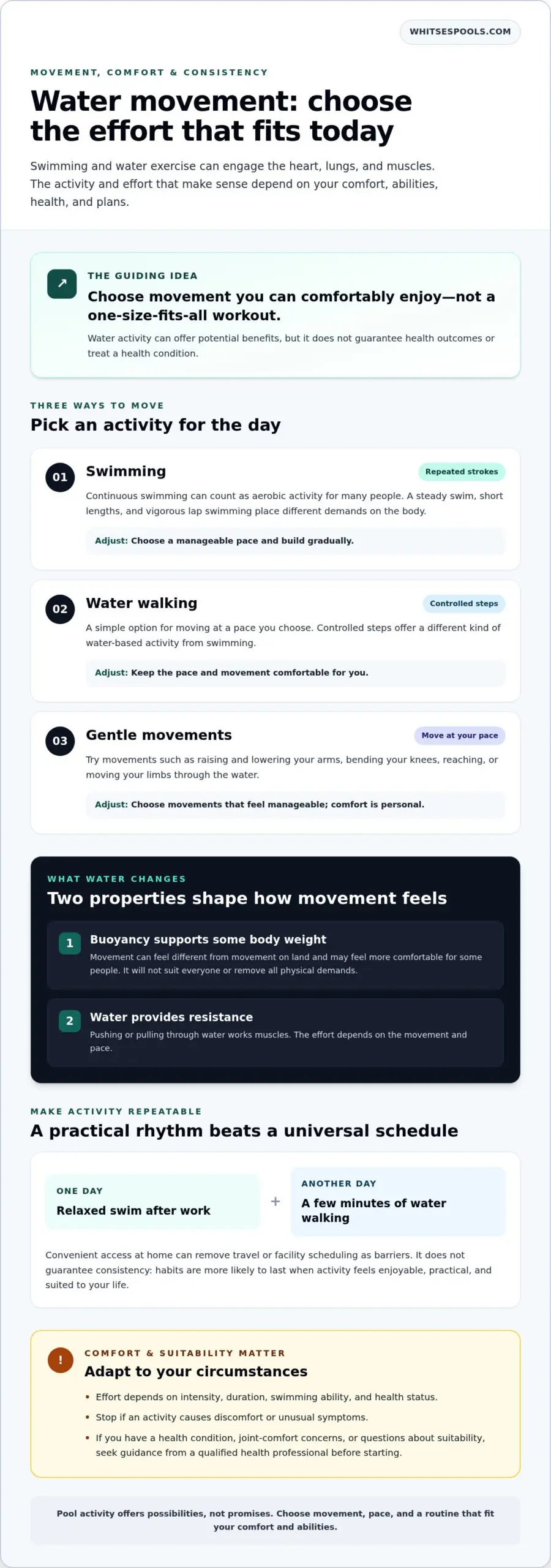
There’s more than one way to move in the water. Swimming uses repeated strokes to travel through the pool. Water walking offers a simpler option for moving at a chosen pace, while gentle movements, such as raising and lowering your arms or bending your knees, can make for a different kind of session. Choose based on your comfort and plans for the day.
Why convenient access may help a healthy routine
When travel is out of the way, a brief session may be easier to fit around work, family, or other commitments. For example, you might plan a relaxed swim after work one day and a few minutes of water walking another day. The point isn’t to follow a universal schedule, but to make activity realistic enough to repeat.
Convenience removes one possible barrier; it doesn’t guarantee consistency or determine health outcomes. The health benefits of a residential pool depend on what you do in it, your health and abilities, and how regularly you’re able to be active.
What makes water-based activity different
Buoyancy supports some of the body’s weight in water, which can make movement feel different from walking or exercising on land. That may feel more comfortable for some people, but it won’t suit everyone or remove all physical demands. Water also provides resistance as you move, so swimming, pushing through the water, or moving your limbs can challenge muscles differently than similar movements on land.
Start with an activity and pace that feel manageable, and adapt as needed. If you have a health condition, concerns about joint comfort, or questions about whether aquatic activity is appropriate, seek guidance from a qualified health professional before starting. Health benefits of swimming offers a broad overview of swimming and its potential benefits, but your own experience will depend on your circumstances and activity.
Physical Health Benefits of Swimming and Water Exercise
Swimming and other water-based activities can engage the heart, lungs, and muscles, but the effects depend on how you move and what feels appropriate for you. A steady swim may provide aerobic activity, while shorter, gentler movements offer another way to be active. These are potential benefits, not promises that pool use will prevent disease or treat a health condition.
The CDC’s guidance on water-based exercise describes aquatic activity as an option that may benefit people with certain health conditions. That doesn’t mean it’s right for everyone. Your health, ability, comfort, and activity level all shape the kind and intensity of movement that may suit you.
Can swimming support cardiovascular fitness?
For many people, continuous swimming can count as aerobic activity. Repeated strokes keep the body moving, and a pace that raises breathing and heart effort may challenge the cardiovascular system. An easy swim, a series of short lengths, and vigorous lap swimming all place different demands on the body.
Intensity, duration, swimming ability, and health status all matter. Choose a pace you can manage, and build gradually rather than assuming every swim provides the same workout. If you have a health concern or aren’t sure what level of exertion is appropriate, get advice from a qualified health professional before changing your activity.
How water exercise engages muscles and movement
Water resists movement in multiple directions, so muscles work as you push or pull through it. Swimming involves coordinated strokes and kicking; water walking focuses on controlled steps; and gentle aquatic movements can involve bending, reaching, or moving your arms through the water. Each offers a different challenge, and the effort depends on the movement and pace.
For some people, controlled movement in water may make it more comfortable to explore range of motion or flexibility. Comfort is personal, though, and water exercise isn’t a treatment for pain or reduced mobility. Choose movements that feel manageable, and stop if an activity causes discomfort or unusual symptoms.
The health benefits of a residential pool are most realistic when the pool supports activities you can comfortably enjoy, rather than a one-size-fits-all exercise plan. When considering a design, think about whether the layout and depth suit the movements you intend to do, and whether access feels practical for the people who will use it. White’s Pools designs custom residential pools around how a household wants to use its space.
Mental Well-Being, Relaxation, and Family Activity: What a Pool Can, and Cannot, Do
A residential pool can create space for enjoyable movement, quiet pauses, and time together. These experiences may contribute to a sense of well-being for some people, but they aren’t guaranteed health outcomes. A pool isn’t a treatment for anxiety, depression, or any other mental-health condition, and it shouldn’t replace professional care.
Can pool time help with stress or relaxation?
Some people may find it relaxing to float quietly, swim at an easy pace, or spend time outdoors near the water. Others may not. Enjoyment depends on personal preference, comfort, access, and the circumstances of the day. Treat pool time as a possible leisure activity, not as established treatment for stress or a reliable way to improve sleep.
Sleep and stress are influenced by many factors, so don’t assume swimming will change either one. If persistent stress, low mood, or sleep problems are affecting daily life, a pool is no substitute for speaking with a qualified health professional.
How shared pool time can support family activity
Swimming and water play can give family members a shared reason to move and enjoy time together. One person might swim while another walks in the water or joins a simple game from a comfortable depth. These are opportunities, not proof that pool ownership improves health, relationships, behavior, or sleep. Participation will depend on each person’s age, ability, interest, and comfort in the water.
Keep safety central, especially when children or anyone who needs assistance is in or near the pool. Active adult supervision matters; it shouldn’t be replaced by distractions or assumptions about swimming ability. The American Red Cross offers practical home pool safety guidelines for families to consider.
Pool design can help make shared use feel more natural, whether the household prefers space for swimming, room for gentle activity, or an inviting setting for recreation. Thoughtful planning supports everyday usability, while consistent care helps maintain a clean swimming environment. Still, the health benefits of a residential pool depend on how people choose and are able to use it. Enjoyment, comfort, and safe habits matter more than expecting the pool itself to deliver a particular mental or physical result.
How to Use a Residential Pool for Health Safely and Consistently
A useful pool routine starts with a simple sequence: choose an activity, make a realistic plan, then adjust it to your comfort and ability. You might swim when you want sustained movement, water walk for a gentler session, or use the pool for recreation. A routine should be flexible, not a test of willpower. If you have a health concern or aren’t sure which activity is suitable, seek guidance from a qualified healthcare professional.
Build a pool routine that fits your household
Think about what will make pool time easy to repeat. For example, alternate a relaxed swim with water walking, gentle movement, or family recreation, choosing based on how you feel and what fits the day. Start at a comfortable pace and adjust the activity or duration if it feels tiring or uncomfortable. The aim is to find a pattern that works for your household, not follow a schedule that suits someone else.
Consider the practical details, too: when the pool is accessible, whether the water is ready to use, and whether the space suits your intended activities. These everyday factors can make a routine more inviting, but owning a pool alone won’t establish a habit or guarantee the health benefits of a residential pool.
Make safety and water care part of healthy use
Safety needs to be part of every swim, not an afterthought. Children and inexperienced swimmers need active adult supervision, with the supervising adult focused on watching rather than distracted by other tasks. Use suitable barriers and follow applicable pool safety guidance, along with the instructions for pool equipment. The American Red Cross home pool safety guidelines offer practical considerations for safer use.
Routine cleaning and maintenance also matter. Skimming, cleaning, and caring for pool systems help keep the water clear and the swimming environment well cared for. Clear water alone doesn’t establish that a pool is safe, so follow appropriate water-care guidance and equipment instructions as part of regular upkeep.
For outdoor swimming, plan for shade where practical, keep drinking water nearby, and use sun-protection measures suited to your circumstances. These habits can make time outside more comfortable, though they don’t replace individual health advice. White’s Pools designs custom residential pools around how homeowners intend to use them. Plan a pool for your household’s activities.
Designing a Residential Pool Around Your Health and Lifestyle Goals
A pool’s usefulness starts with the activities you want it to support. If swimming for exercise is a priority, consider how the pool’s dimensions, depth, and entry will work for your preferred movement. If relaxation or family recreation matters more, the surrounding space, comfortable access, and room to gather may shape everyday use just as much as the water itself.
There’s no single layout that suits every household. Water depth affects which activities feel practical, while steps or other entry features influence how people get in and out. Circulation space and the surfaces around the pool also matter because they affect how easily people move between the water and the rest of the outdoor area. These are usability choices, not guarantees of particular health outcomes.
Match pool features to the activities you want to enjoy
Start with your household’s priorities. Swimming and water exercise may call for a layout and depth suited to the movements you plan to do. A relaxing retreat or family play area may place more emphasis on convenient access and usable space nearby. For homeowners considering a compact option, the plunge pool guide explores how a smaller residential pool can fit a home’s plans.
Think about who will use the pool, too. Different ages, abilities, and comfort levels can influence decisions about entry and surrounding space. A tailored approach connects the pool’s design to the way your household expects to use it. For more on the possibilities of a custom concrete pool, explore this custom concrete pool design guide.
Keep the pool ready for everyday use
Design is only part of making pool time practical. Planned cleaning and equipment maintenance help support consistent care and a well-cared-for swimming environment. Considering upkeep alongside intended activities makes it easier to plan how the pool will fit into daily life, not just how it will look when first completed.
White’s Pools brings more than 75 years of family experience to custom pool design and construction, along with professional pool cleaning and maintenance. The health benefits of a residential pool are most realistic when thoughtful design, everyday usability, and ongoing care work together. Explore White’s Pools and discuss a pool designed around your household’s goals.
Make Pool Time Part of a Thoughtful Home Design
A residential pool can make swimming and water-based movement more accessible, while also creating space for relaxation and family recreation. Its value depends on how well its design suits the household’s activities, abilities, and daily routine. Pool ownership alone doesn’t guarantee better health, and time in the water should complement, not replace, appropriate medical care.
The health benefits of a residential pool are most realistic when comfortable activities, responsible safety practices, and consistent water care come together. Thoughtful choices around pool layout and access can make intended uses more practical, while regular cleaning and maintenance help keep the swimming environment cared for.
White’s Pools is a family-owned, third-generation business established over 75 years ago, with experience in custom pool design and construction as well as professional pool cleaning and maintenance. Explore custom pool design with White’s Pools and take the next step toward a pool shaped around your household’s goals. A well-planned space can make room for movement, relaxation, and time together.
Frequently Asked Questions
Is swimming a good low-impact exercise?
Swimming can be a low-impact form of exercise because water supports some body weight and reduces the load of movement compared with many land-based activities. It can also provide resistance as you move your arms and legs. The effort still depends on your pace, stroke, and ability, and swimming isn’t free of physical demands. Start at a comfortable level, and seek professional guidance if you have health concerns.
Can a residential pool help reduce stress?
Pool time may feel relaxing for some people, whether they enjoy a quiet float, an easy swim, or simply spending time outdoors. Individual responses differ, and owning a pool doesn’t reliably reduce stress or treat anxiety, depression, or another mental-health condition. Think of swimming as one possible leisure activity, not a substitute for professional care. If stress is persistent or interfering with daily life, consider speaking with a qualified health professional.
How often should I swim to support my health?
There isn’t one swimming schedule that suits everyone. A realistic routine depends on your health, ability, experience, and other physical activity. You might begin with a manageable session and build gradually if it feels comfortable, rather than setting an ambitious target that’s hard to maintain. Consider recognized physical activity guidance for your age and circumstances, and ask a healthcare professional for advice if you have health concerns or are changing your activity level.
Is swimming suitable for older adults or people with joint concerns?
Swimming or gentle water movement may feel more comfortable for some older adults and people with joint concerns because buoyancy supports part of the body’s weight. It isn’t suitable for everyone, and comfort in water doesn’t guarantee that an activity is safe for a particular condition. Choose movements that feel manageable, avoid pushing through pain, and ask a healthcare professional whether swimming or water exercise is appropriate for your needs.
Can swimming help improve sleep?
Swimming shouldn’t be treated as a guaranteed way to improve sleep. Physical activity may fit into a healthy routine, but sleep is affected by many factors, and an individual response to swimming can vary. If you enjoy swimming, consider whether it works comfortably within your day and supports a routine you can maintain. Ongoing sleep problems deserve attention beyond pool use; consult a healthcare professional if they’re affecting your well-being.
Are home pools beneficial for children’s health?
A home pool can offer children opportunities for swimming, water play, and active family time, but those opportunities don’t guarantee better health. Age, ability, interest, and safe conditions shape whether pool activities are appropriate. Adult supervision must remain active and focused whenever children are in or near the water. Use suitable barriers and follow relevant pool safety guidance. A pool is a setting for activity, not a replacement for other aspects of children’s well-being.
Does owning a residential pool guarantee better health?
No. The health benefits of a residential pool depend on how it’s used, the activities a person can comfortably do, and how consistently they take part. Design and convenient access may make movement or recreation easier to fit into daily life, but ownership alone doesn’t create an exercise habit or ensure physical or mental-health outcomes. Safe use, appropriate activity, and ongoing pool care also matter. A pool should complement, not replace, healthcare advice.

