
Some of the most costly pool construction mistakes to avoid happen before the first shovel hits the ground. A design that doesn’t suit the yard, overlooked drainage needs, or unclear project specifications can create problems that are harder to resolve once construction is underway.
It’s natural to focus on the pool’s shape, finish, and features. But the decisions behind the design matter just as much. Before excavation, make sure you understand the site conditions, how the pool will be used, what the proposal includes, and how the builder will communicate at each stage.
This guide covers practical ways to spot planning, site, design, and contractor mistakes before they affect your project. You’ll learn what to ask builders, how to compare proposals, and what to document before work begins. Use these checks to set realistic expectations and develop a pool plan that fits your home and the way you want to use it.
Key Takeaways
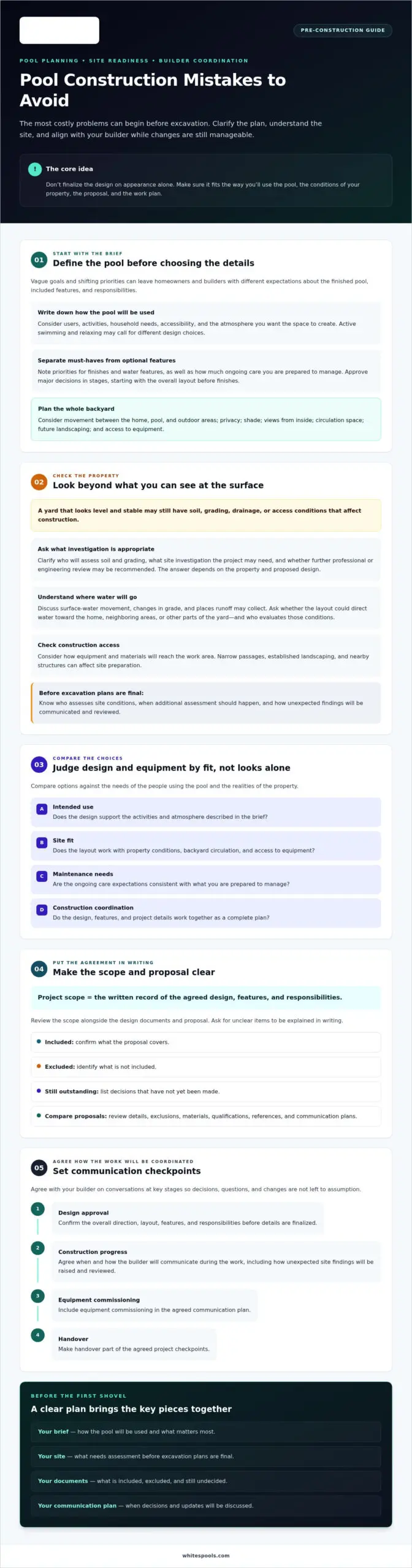
- Clarify how you’ll use the pool, which features matter most, and what the project scope includes before finalizing the design.
- Don’t assume a yard’s visible condition tells the whole story. Ask what site investigation and engineering review your project may require.
- Compare designs and equipment by intended use, site fit, maintenance needs, and construction coordination, not appearance alone.
- Use the pool construction mistakes to avoid checklist to compare proposal details, exclusions, materials, qualifications, references, and communication plans.
- Agree on conversations with your builder at key construction checkpoints, from design approval through equipment commissioning and handover.
Pool Construction Mistakes to Avoid Before the Design Is Final
Many avoidable pool problems can be addressed before construction starts. Turn early ideas into clear decisions while there’s still room to adjust the plan. Vague goals, shifting priorities, or an incomplete scope can leave homeowners and builders with different expectations about the finished pool, included features, and who is responsible for each part of the work.
A project scope is the written record of the agreed design, features, and responsibilities. Review it alongside the design documents and proposal. Ask for unclear items to be explained in writing, including what is included, what is excluded, and which decisions are still outstanding. This helps prevent assumptions from turning into disagreements once work is underway.
How an unclear pool brief leads to avoidable changes
Start by describing who will use the pool and what they’ll use it for. Consider preferred activities, household needs, accessibility, and the atmosphere you want the space to create. A pool intended for active swimming may call for different design choices than one centered on relaxing and spending time together.
Before reviewing designs, separate must-haves from optional features. Note preferences for finishes and water features, along with how much ongoing care you’re prepared to manage. Then approve major decisions in stages, such as the overall layout before selecting finishes. Confirm the direction before details are finalized. This can limit late changes that affect other parts of the plan.
Why a complete pool plan considers the whole backyard
A pool doesn’t sit apart from the rest of the property. Think about how people will move between the home, pool, and other outdoor areas. Consider privacy, shade, sightlines from inside the house, and whether the layout leaves comfortable room to circulate. Map out future landscaping and outdoor living plans early, too, so they don’t conflict with the pool layout or access to equipment.
Pool construction methods and terminology can vary, so learning the basic options may help you ask more focused questions. For a general overview of common pool construction methods, consider how each approach relates to your priorities and site. Custom concrete designs offer flexibility in shaping the pool and coordinating its features. Explore the custom concrete pool guide for more on design possibilities, then discuss how your preferred layout fits the property with your project team.
Before approving the design, make sure the brief, scope, and backyard plan agree on the pool’s layout, features, and responsibilities. That groundwork makes it easier to identify the pool construction mistakes to avoid while changes are still manageable.
Avoid Site, Soil, and Drainage Mistakes Before Excavation
A yard can look level and stable yet still present conditions that affect excavation or pool construction. The surface doesn’t reveal what lies below, how water moves across the property, or whether nearby structures could affect the work. Site conditions should be assessed before finalizing excavation plans and construction details.
Ask the project team what site investigation is appropriate for your property, who will assess soil and grading, and whether further professional or engineering review may be recommended. The answer depends on the site and proposed design, so don’t assume one soil type or drainage approach works everywhere. Resources such as pool planning mistakes can prompt useful questions, but your project team should explain what applies to your plans.
What to clarify about soil, grading, and drainage
Discuss how surface water will move around the pool and adjoining areas, and how the design accounts for changes in grade. Ask where runoff may collect and whether the layout could redirect water toward the home, neighboring areas, or other parts of the yard. Confirm who evaluates these conditions and when any additional assessment should happen, preferably before excavation plans are treated as final. Where poor drainage or shifting soil has already caused nearby slabs or pool decks to settle, visit Airlift Concrete Experts for insights on restoring uneven concrete with polyurethane foam.
Access deserves attention, too. Ask the project team to consider how construction equipment and materials can reach the work area, and whether narrow passages, established landscaping, or nearby structures could affect site preparation. Raising these questions early helps the team plan around real constraints rather than discovering them during the work.
Why excavation and structural sequencing deserve attention
Excavation can reveal conditions that weren’t clear from a surface review. Ask how unexpected findings will be communicated, who decides whether the plan needs further review, and how changes will be documented before work continues. Clear responsibilities keep decisions organized without asking homeowners to make technical judgments themselves.
Ask how concealed work will be documented before later construction stages cover it. Confirm what records or progress updates you’ll receive and when the team will discuss them with you. For broader material and build considerations, see the custom concrete pool construction guide.
These checks are among the pool construction mistakes to avoid before excavation begins. Reviewing a builder’s custom pool design-and-build experience can help you understand how the team considers a pool alongside its site.
Compare Pool Design and Equipment Choices Beyond Appearance
A design can look striking in a rendering and still be a poor fit for the way you plan to use the pool. Compare options by intended use, available space, maintenance preferences, and the construction coordination each feature requires. These practical questions help you weigh tradeoffs before choosing finishes or equipment based on appearance alone.
| Design choice | What to consider | Questions to ask |
|---|---|---|
| Custom concrete shape | How the layout supports your activities and fits the site | Which design decisions need to be finalized before construction? |
| Waterfall feature | How it affects the overall design, coordination, and ongoing care | What construction details and access should be planned for? |
| Infinity edge | How the feature relates to the setting and pool layout | What site conditions and design requirements need professional review? |
| Plunge pool | How a more compact format suits available space and intended use | Does this format meet the household’s priorities? |
Choose features that fit the project
Waterfalls, specialty edges, and other features can shape a pool’s character, but each should make sense for the property and your priorities. Ask how a feature affects construction coordination, access for future care, and the relationship between the pool and surrounding spaces. A plunge pool may suit a smaller area or a different style of use than a larger design. Explore this plunge pool guide to consider how format and available space can work together.
Plan for equipment access and future maintenance
Review equipment choices with qualified project professionals and match them to the pool design. Rather than assuming one setup works for every home, ask which equipment is proposed, how it supports the planned pool, and what routine care it requires. Keep preferences, such as equipment location, distinct from technical specifications that need professional confirmation.
Check that equipment will remain accessible after landscaping and other backyard work is complete. A location that looks discreet on a plan may be harder to reach once the surrounding area is finished. Ask the project team to show maintenance access in the design and explain the routine tasks associated with the planned features and equipment. Considering these details early is one of the pool construction mistakes to avoid, helping align the finished design with practical ownership.
Prevent Contractor, Contract, and Schedule Mistakes With Clear Checks
A polished proposal is useful only if it makes clear what the builder is committing to deliver. Compare proposals line by line, and ask each prospective builder to explain differences in scope, materials, exclusions, and communication. A brief document can leave important assumptions unresolved, even if the overall design looks similar.
Questions to ask before choosing a pool builder
Ask who coordinates design, responds to site questions, provides construction updates, and gathers homeowner approvals. Request examples of relevant completed work and, where available, references you’re permitted to contact. Verify each builder’s relevant qualifications and insurance directly, and clarify which responsibilities belong to the builder, you, or other professionals.
Use this checklist to compare proposals consistently:
- 1. Scope: Are the agreed design, features, materials, and deliverables described clearly?
- 2. Exclusions: What work isn’t included, and what may be handled by other professionals?
- 3. Materials and selections: Do the documents identify the specified materials and finishes, or are choices still outstanding?
- 4. Communication: Who is your main contact, how are updates shared, and how are questions and approvals recorded?
- 5. Schedule: Does it show project phases, dependencies, and decisions you’ll need to make along the way?
Keep scope, decisions, and changes documented
A schedule is most useful when it explains how one stage depends on another. Ask which homeowner selections or approvals are needed before work can proceed, and how a delay or unexpected condition may affect the agreed sequence. Treat the schedule as a planning document to discuss with the builder, not as a promise that every stage will proceed without change.
Keep approved drawings, specifications, finish selections, and written change records together. If you request a design change, confirm in writing what is changing, who is responsible for the related work, and whether the project sequence needs to be revised. Verbal assurances can be remembered differently later; written records give everyone a shared reference.
Clear documentation is one of the practical pool construction mistakes to avoid. Don’t sign off on a proposal until you understand its scope and how decisions will be handled. Learn more about White’s Pools’ custom pool design-and-build services.
Use Construction Checkpoints to Catch Pool Mistakes Early
Construction checkpoints work best as scheduled conversations with your builder, not as technical inspections you’re expected to perform yourself. Agree on when updates will happen, what decisions need your approval, and how questions will be answered before work moves to the next stage. If something doesn’t match the agreed plan, raise it promptly and ask for an explanation before work proceeds.
What to confirm at key stages of construction
Use each conversation to understand what’s planned next and what information or approvals are needed. Your builder can explain the work and any review that’s appropriate for the project.
- Design approval: Confirm the current approved plans, selected finishes, and locations of pool features.
- Before excavation: Review the approved plan and confirm feature locations and arrangements for site access.
- Before concealed work is covered: Ask what documentation or review the builder provides, and how you’ll receive or discuss it.
- Finish selection: Confirm the selected finish and how it corresponds to the approved design before installation.
- Equipment commissioning: Ask the project team to explain the equipment setup and what you should know about its operation.
- Handover: Request operating guidance, care instructions, relevant project documents, and clear points of contact for follow-up questions.
Keep a running list of questions and record answers or decisions in writing. If you’re unsure about a detail, ask for clarification before the next stage makes it harder to address. These conversations help you stay informed without taking on the role of the construction professional.
How an experienced pool team can simplify next steps
Coordinated design and construction can help keep decisions connected to the agreed project scope. A change to a feature or finish may affect other choices, so ask the builder to explain any implications and document approvals before proceeding. This gives everyone a shared reference as the project moves from plan to finished pool.
White’s Pools designs and builds custom concrete, infinity-edge, and indoor pools. If you’re considering one of these options, its design-and-build services may be relevant as you weigh your priorities and discuss how they relate to your property. No builder can promise that every project will unfold without questions or adjustments, but clear communication at planned checkpoints gives you a practical way to address them as they arise.
Thoughtful checkpoints are among the pool construction mistakes to avoid because they help surface questions while there’s still an opportunity to discuss the next step. You can learn more about White’s Pools as you consider your project.
Move Forward With a Pool Plan You Trust
The most useful pool construction mistakes to avoid are often the ones you can address before work begins. Define how you’ll use the pool, make sure the design fits the property, and compare proposals for clear scope, materials, responsibilities, and communication. Then set regular checkpoints with your builder so questions and decisions don’t get lost as construction moves forward.
A thoughtful plan won’t remove every uncertainty, but it gives you a stronger foundation for making informed choices. White’s Pools is a family-owned, third-generation business established over 75 years ago. Its work includes custom concrete, infinity-edge, and indoor pools. An experienced design-and-build team can help connect your vision with the needs of the project.
Ready to discuss your plans? Discuss your custom pool project with White’s Pools. With clear priorities and open communication, you can approach the process with confidence and plan a pool around your home and lifestyle.
Frequently Asked Questions
What are the most common pool construction mistakes to avoid?
Common pool construction mistakes to avoid include finalizing a design before clarifying how the pool will be used, overlooking site and drainage questions, and choosing features without considering access or ongoing care. Problems can also arise when proposals leave materials, exclusions, responsibilities, or communication unclear. Before work begins, document your priorities, ask the builder to explain the project scope, and confirm how decisions and changes will be recorded.
Can poor drainage cause problems with a new pool?
Yes, drainage that hasn’t been properly considered can affect how surface water moves around the pool and adjoining areas. A yard’s visible slope alone doesn’t establish how water will behave across the property. Ask the project team who will assess grading and drainage, whether additional professional review is appropriate, and how the plans address runoff near the pool, home, and other parts of the yard. The right approach depends on the specific site.
How do I know if a pool builder’s proposal is complete?
A complete proposal should clearly describe the agreed design, included features, materials, responsibilities, exclusions, and how communication and approvals will work. Check whether any selections or decisions are still open, and ask who handles work that isn’t included or may involve other professionals. Compare proposals using the same questions, rather than relying on a brief total or design description. Request written clarification wherever the scope or responsibilities are ambiguous.
What should I check before pool excavation begins?
Before excavation, confirm that you and the builder are referring to the current approved plan, including pool layout and feature locations. Review site access arrangements and ask whether the project team has completed the site investigation or professional review it considers appropriate. Clarify how unexpected excavation conditions will be communicated and who will decide whether further review is needed. Discuss unresolved questions before work proceeds instead of relying on assumptions.
Can I change my pool design after construction starts?
Sometimes a change may be possible, but its feasibility and effects depend on the design decision, construction stage, and project requirements. A change to a feature or finish could affect other selections, responsibilities, or the project sequence. Raise requests with the builder promptly, and ask for the implications to be explained and documented before approving them. Don’t assume a verbal conversation updates the approved plans or project scope. Get the agreed change in writing.
How can I avoid choosing pool features that are difficult to maintain?
Before selecting features, ask what routine care they require and whether the planned equipment and access support that care. A waterfall, specialty edge, or particular finish may suit your design priorities, but maintenance needs can vary with the feature and project. Ask the builder or relevant pool professional to explain the expected tasks for your proposed setup. Also check that equipment remains accessible after landscaping and other backyard work is complete.
What should happen during a pool construction handover?
At handover, ask the project team to explain how to operate the pool and its equipment, and request relevant care instructions and project documents. Confirm the points of contact for questions, and review any outstanding items or decisions that still need attention. Ask for a demonstration or explanation of routine tasks rather than assuming you’ll know how each feature works. Keep the information together so it’s easy to refer to as you begin caring for the pool.

