
What if the pool quote covers the pool, but not everything needed to complete the space around it? That’s a concern worth raising early. The hidden costs of building a pool can include site preparation, permits, equipment, finishes, landscaping, and ongoing care, depending on your property and the project’s scope.
A clear proposal is about more than the bottom line. It should show what’s included, what’s excluded, and which assumptions could affect the final project. In this guide, you’ll learn what to ask about site work, construction, finishes, and ownership expenses before signing. You’ll also see how to compare proposals, discuss unexpected site conditions, and assess how design choices shape the project. With a well-defined plan, you can make informed decisions about construction and caring for your pool over time.
Key Takeaways
- Define what counts as a hidden cost of building a pool, and check whether necessary or selected expenses appear in the written scope.
- Ask project-specific questions about excavation, equipment access, drainage, soil, groundwater, and soil removal before comparing proposals.
- Compare quotes by specifications, allowances, exclusions, and responsibilities, not price alone.
- Before signing, clarify how design changes or newly identified site conditions will be documented and handled.
- Plan beyond construction by considering the pool’s features, finishes, and ongoing care as part of your overall budget.
Hidden Costs of Building a Pool: Why the Initial Quote May Not Show the Whole Project
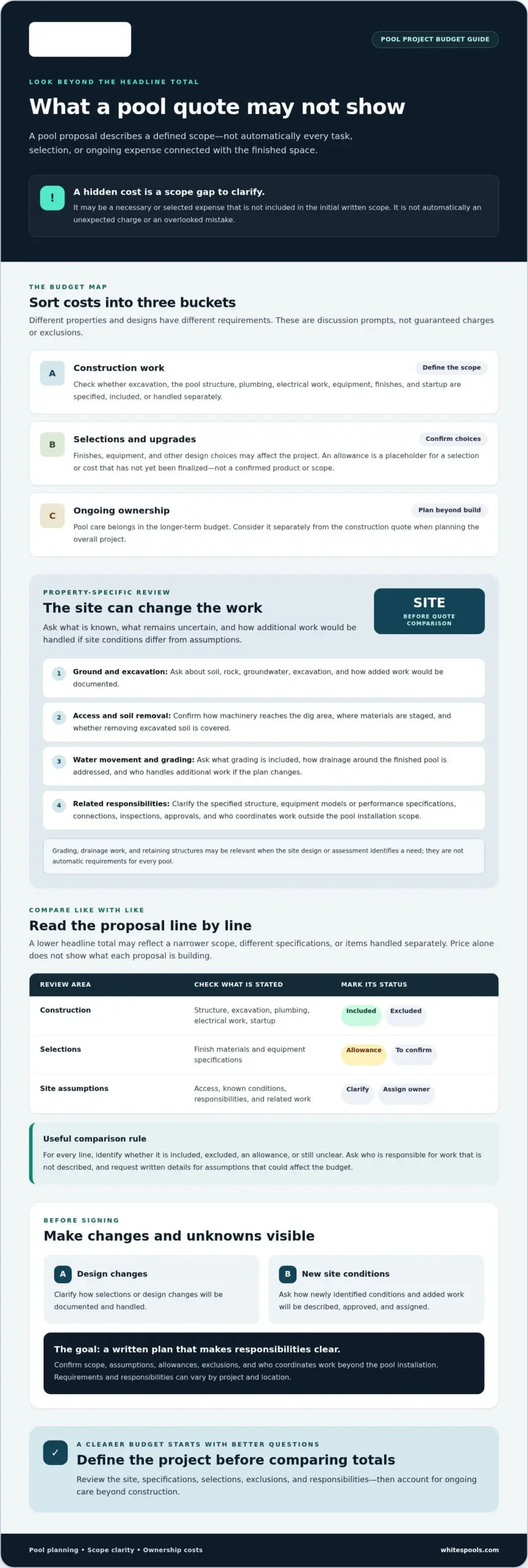
It’s reasonable to feel uncertain about the budget when a pool proposal doesn’t spell out every detail. Each property and design has different requirements, and builders may define the project scope differently. A hidden cost isn’t necessarily an unexpected charge or a sign that something was overlooked. It’s a necessary or selected expense that isn’t included in the initial written scope.
As you review a proposal, sort expenses into three groups: construction work, optional design choices or upgrades, and recurring ownership costs. A feature you choose may add to the project, while ongoing care belongs in your longer-term budget rather than the construction quote. The examples here are prompts for discussion, not universal charges or guaranteed exclusions. What applies depends on your site and agreement.
What does a pool quote usually describe?
A proposal may cover a defined set of work or include broader project responsibilities. Check whether excavation, the pool structure, finishes, equipment, and startup are itemized, listed as allowances, or left for later confirmation. An allowance is a placeholder for a selection or cost that hasn’t been finalized. It isn’t the same as a specified product or confirmed scope. Ask what happens if your final selection differs from the allowance.
Why can two pool proposals look very different?
Start by comparing what each proposal is actually building. Review dimensions, structural details, finish materials, and equipment specifications. The types of swimming pools overview provides background on pool forms and materials, but your proposals should identify the specific design and components being offered. Then compare site assumptions, since access for equipment and known conditions may affect the work required. A lower headline total may reflect a narrower scope, different specifications, or items handled separately.
Compare scope before you compare totals
Put proposals side by side and review each line. For every item, note whether it’s included, excluded, listed as an allowance, or still needs clarification. Ask who is responsible for work that isn’t described, and request written details when an assumption could affect your budget. This makes differences easier to discuss and helps you compare like with like instead of relying on the total alone.
- Construction: What structure and work are specified?
- Selections: Which finishes and equipment are confirmed?
- Assumptions: What site conditions or responsibilities are covered?
These questions make the hidden costs of building a pool easier to identify before you commit. They also give you a clearer starting point for discussing site conditions and design choices with a builder.
Site Preparation and Construction Factors That Can Change Pool-Building Costs
A pool plan has to work with the property, not just the drawing. Excavation, equipment access, soil conditions, and drainage can affect the work required, so a site-specific review is more useful than assuming every backyard presents the same challenges. Ask about these factors early to surface possible hidden costs of building a pool before they become scope changes.
How can soil, access, and drainage affect a pool project?
Ask what the builder knows about the ground and what remains uncertain. If rock or groundwater is encountered or identified, clarify how it could affect excavation and how added work would be documented. Confirm whether the proposal accounts for getting machinery to the dig area, staging materials, and removing excavated soil. Narrow access, for example, may affect which equipment can reach the site, and if complex site clearing is required, you can explore Specialised earthmoving and demolition services to understand how contractors manage challenging site preparation.
Grading, drainage work, or retaining structures may be relevant if the site design or assessment identifies a need, but they aren’t automatic requirements for every pool. Ask how the proposal addresses water movement around the finished pool, what grading is included, and who is responsible for additional work if the plan changes. The pool construction process can involve multiple stages, so clarify who coordinates work outside the pool installation scope.
Which construction and equipment details should be confirmed?
Look beyond the pool’s shape. The written proposal should make the specified structure, plumbing, electrical work, and equipment clear. Ask which equipment models or performance specifications are included, and whether connections or related work are part of the scope or handled separately. Also clarify who is responsible for arranging any required inspections or approvals. Requirements and responsibilities can vary by project and location.
Equipment choices matter after construction, too. Consider how the selected system will be operated and maintained, and ask what startup or handover guidance is included. The right setup depends on your design and preferences, so include operation and care in your planning. White’s Pools offers pool cleaning and maintenance, which you can consider as you plan for ongoing care.
For more context on construction methods, see this guide to custom concrete pool design and construction. White’s Pools is a third-generation, family-owned company established over 75 years ago. If you’re exploring a concrete pool, its custom concrete pools can help inform your questions about the project scope.
Compare Pool Quotes by Inclusions, Exclusions, and Design Choices
A useful comparison starts with the work each proposal describes, not the number at the bottom. Two quotes can reflect different pool dimensions, construction details, materials, equipment, or feature selections. Put the proposals side by side and compare the same categories. If a detail is missing or unclear, ask for a written explanation before treating it as included or excluded. Ambiguous wording is a reason to clarify, not proof that a proposal is deficient.
How do allowances and exclusions affect a pool quote?
An allowance is a budget placeholder for an item whose exact selection or final scope may not yet be settled. Check what it covers, how the final choice will be confirmed, and how a different selection may affect the written proposal. An exclusion identifies work outside the described scope. Ask what the exclusion means for your project and whether you, the builder, or another party would arrange that work.
Keep documented assumptions separate from confirmed requirements. For example, a proposal might be based on an assumption about site access, while a particular finish or equipment specification may be confirmed in writing. Ask which details are settled and which could change as selections or project conditions are clarified.
Which upgrades should be priced and specified separately?
Design choices can change both the materials and the work described in a proposal. Review lighting, water features, premium tile, and finish selections as distinct scope decisions. For each, confirm the intended specification, whether it appears in the quote, and how it will be documented if you choose it. Don’t assume a visual reference or general phrase identifies a precise material or level of finish.
Features beyond the pool should be considered separately, too. If an outdoor fireplace is part of your plans, ask whether it’s included in the pool proposal or treated as a separate feature, and clarify how related responsibilities are divided. These poolside fireplace design ideas can help you consider how the feature fits the overall space.
- Scope: What work is expressly included?
- Specifications: Which dimensions, materials, finishes, and equipment are defined?
- Allowances and exclusions: What remains undecided or outside the proposal?
- Responsibilities: Who coordinates or provides excluded work?
This comparison makes the hidden costs of building a pool easier to discuss without relying on assumptions. Once you’ve identified differences, request clear written answers and compare the proposals again based on their defined scope, not headline price alone.
Plan for Change Orders, Project Contingencies, and Pool Ownership
A well-defined proposal helps set expectations, but selections can change and site conditions may become clearer as work progresses. Before signing, ask how a change will be reviewed, priced, and documented. Knowing the process helps you understand how an adjustment affects the agreed scope before work moves forward.
What should homeowners ask before approving a change?
Make sure you understand what is changing and how it affects the overall project. A different finish selection, for example, may affect materials or related work. A newly identified condition may call for a different approach. Ask the builder to explain the proposed adjustment in writing and confirm who must approve it.
Use this pre-contract checklist to establish a clear process:
- 1. Confirm the base scope: Identify the work and selections included in the signed proposal.
- 2. List open decisions: Note any selections, allowances, or details still to be finalized.
- 3. Clarify exclusions: Ask what each exclusion means and who is responsible for arranging that work.
- 4. Agree on change documentation: Ask how changed work, materials, or selections will be described and approved before proceeding.
- 5. Check related effects: Find out whether an adjustment may affect the schedule, other work, or the final project scope.
A written change record gives everyone a shared reference. Don’t rely on a verbal understanding when a decision could alter the agreed work. Keep the updated description and approval with your project documents.
What recurring pool expenses belong in long-term planning?
Construction decisions are mostly tied to getting the pool built. Ownership brings different responsibilities, such as cleaning, water-care supplies, utilities, and routine equipment maintenance. These expenses aren’t necessarily part of the construction proposal, so consider them separately as you plan your budget.
Actual needs depend on the pool’s design, equipment, how often it’s used, and the care choices you make. Ask what operating and maintenance guidance is provided at handover, and what routine tasks you’ll need to plan for. White’s Pools offers pool cleaning and maintenance; confirm directly which services fit your needs.
Thoughtful planning won’t make every condition predictable, but it can help you prepare questions, document decisions, and set aside a project-specific contingency. White’s Pools’ construction and maintenance services can be part of your research into pool construction and ongoing care.
Build a More Predictable Pool Budget With an Experienced Builder
A more complete budget starts with a clear sequence: understand the site, define the pool design, compare written scopes, and consider ownership needs alongside construction. A builder can help identify questions to resolve and explain how design choices relate to the work described. No planning conversation can guarantee that every site condition or future change will be predictable, but clear documentation helps you make informed decisions.
What should you bring to an initial pool-planning conversation?
Bring any details that help explain your property and the pool you have in mind. A site plan or photos may be useful if available, along with your intended use, design priorities, and preferred features. If you’ve received proposals, bring them too, especially if you want to clarify differences in scope or specifications.
It also helps to prepare questions such as:
- What site information or assessments should be confirmed before plans are finalized?
- Which design and finish selections are settled, and which remain open?
- How are equipment, site work, and ongoing care addressed in the project discussion?
These details give the conversation a practical starting point without requiring you to have every decision made in advance.
How can a builder help clarify the complete project scope?
Discussing the pool structure, finishes, equipment, and site work together can reveal where assumptions need clarification. For a custom concrete pool, design decisions are closely tied to the project specifications, so ask how each choice will appear in the written scope and what remains to be confirmed. Then consider how the completed pool will be cared for, including maintenance responsibilities and services you may want to explore.
White’s Pools is a third-generation, family-owned business established over 75 years ago, with experience designing and building custom concrete pools. That background can provide context for a discussion about your vision and project questions, while site-specific details still need to be confirmed for your property. A thoughtful review can help bring the hidden costs of building a pool into view without suggesting every contingency can be anticipated.
If you’re beginning to plan, you can discuss a custom pool project with White’s Pools. Bring your ideas, questions, and any proposals you’d like to understand more clearly.
Plan Your Pool Project With Confidence
A more reliable pool budget begins with a clear picture of the full project. Look beyond the headline quote: confirm site-related assumptions, compare written scopes and specifications, and ask how changes will be documented. Then account for ownership needs, including routine care, as part of your longer-term planning.
Understanding the hidden costs of building a pool doesn’t mean every extra expense can be predicted in advance. It means asking informed questions, clarifying responsibilities, and making design decisions with a fuller view of their place in the project.
White’s Pools is a third-generation, family-owned and operated company established over 75 years ago, with experience in custom concrete pool design and construction. If you’re ready to explore your vision and discuss the scope of your project, talk with White’s Pools about planning your custom pool. Thoughtful conversations now can help you move toward your pool project with greater clarity and confidence.
Frequently Asked Questions
What are the hidden costs of building a pool?
The hidden costs of building a pool are necessary or selected expenses that aren’t clearly included in the initial written scope. Depending on the property and design, questions may involve excavation, access, soil removal, drainage, permits, finishes, equipment, or landscaping. Optional features and ongoing ownership costs, such as cleaning, supplies, and utilities, are separate budget considerations. Review each proposal’s inclusions, exclusions, allowances, and assumptions to see what applies to your project.
Does a pool quote include excavation and landscaping?
It depends on what the proposal specifically includes. Check whether excavation is described, along with soil removal, access for equipment, grading, and drainage. Landscaping and irrigation may be included, excluded, or outside the pool project scope. Because heavy digging often impacts underground lines, homeowners needing to repair or adapt their lawn watering setup can learn more about Aquamax Sprinkler Systems for professional irrigation solutions. Don’t assume either is covered because it appears in a drawing or general project description. Ask the builder to clarify in writing which tasks are included, who handles excluded work, and whether site conditions could change the scope.
Can soil conditions increase the cost of building a pool?
Yes, site conditions such as rock or groundwater may affect excavation plans and the work required, if they’re present or identified. Access limitations can also influence equipment choices and soil removal. These conditions don’t apply to every property, so ask what the builder knows about the site and what remains uncertain. Clarify how newly identified conditions would be assessed, documented, and approved before related work proceeds.
What should I compare when reviewing pool-building quotes?
Compare the written scope line by line, including pool dimensions, construction details, finishes, equipment specifications, allowances, exclusions, and responsibilities. Note whether each item is confirmed, estimated as an allowance, or not addressed. Also compare assumptions about site access and other known conditions. If a phrase is unclear, request written clarification rather than treating it as a red flag. A lower total may reflect a different scope, so don’t rank proposals by price alone.
Are pool equipment and lighting included in the construction quote?
They may be included, but the proposal should say what equipment and lighting are specified and whether installation is part of the described work. Check for clear details about the selected equipment, lighting features, and any related electrical or plumbing responsibilities. If the quote uses broad wording or leaves an item as an allowance, ask what selection it covers and how the final choice will be confirmed. Don’t assume a feature is included unless the scope states it.
What happens if unexpected conditions are found during pool construction?
The next steps depend on the contract and the condition identified. Ask the builder how the issue will be assessed, who will explain any proposed work, and how an adjustment will be recorded and approved. Before proceeding, request a written description of the change and clarification of its effects on related work, the schedule, and final scope. Establish this process before construction so you know how decisions will be handled.
What ongoing costs should I plan for after building a pool?
Plan for recurring care as well as the one-time construction project. Ongoing expenses may include cleaning, water-care supplies, utilities, and routine equipment maintenance. Actual needs depend on the pool’s design, equipment, usage, and the care approach you choose. Ask what operating guidance is provided at handover and what regular tasks to expect. White’s Pools offers pool cleaning and maintenance; confirm directly which service details suit your needs.

