
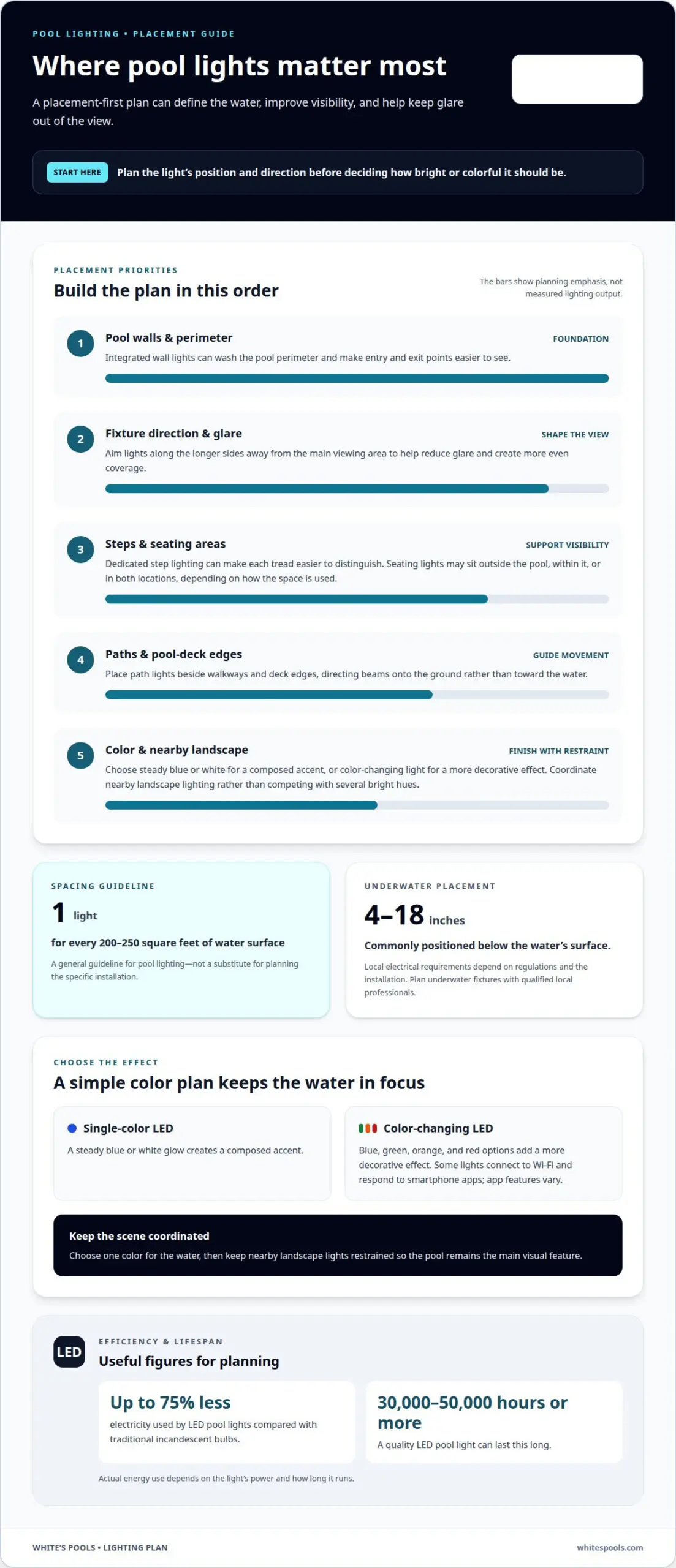
The most effective modern LED pool lighting ideas start with placement, not brightness. Integrated lights in pool walls can illuminate the perimeter and make entrance and exit points easier to see. A general guideline is one light for every 200-250 square feet of water surface, with lights along the longer sides facing away from the main viewing area to reduce glare.
It makes sense to want a pool that feels inviting after sunset without harsh light spoiling the view. Well-positioned lighting can define the water and improve visibility around steps and seating areas.
This guide explains where pool lights work best and how to plan them around pool surfaces, landscaping, and the wider outdoor design. The goal is a cohesive lighting plan, from the water’s edge to paths and nearby features.
Key Takeaways
- Position pool-wall lights to illuminate the perimeter and entry points, while directing longer-side fixtures away from the main viewing area.
- Plan lighting around pool steps, paths, and landscape features to support visibility and create a more cohesive nighttime setting.
- Use layered, diffused light to connect the pool with contemporary outdoor living spaces without relying on a few harsh, bright fixtures.
- Understand what affects lighting project costs, including the existing pool and any electrical work needed for installation.
1. Where to Place Pool Lighting?
Start with the pool walls. Integrated lights can wash the perimeter and make entry and exit points easier to see. A general guideline is one light for every 200-250 square feet of water surface. For fixtures along the longer sides, aim light away from the main viewing area to help reduce glare and create more even coverage.
Placement affects both the evening effect and visibility. Underwater lights are commonly positioned 4 to 18 inches below the water’s surface. Pool steps benefit from dedicated lighting, which can make each tread easier to distinguish. Lights near seating can sit outside the pool, within it, or in both locations, depending on how the space is used.
For backyard ambiance, choose between a single-color LED and a color-changing light. A steady blue or white glow creates a composed accent, while changing colors add a more decorative effect to a contemporary outdoor space. LED color bulbs for backyard pools are available in blue, green, orange, and red, and are made for damp locations.
Some color-changing pool lights connect to Wi-Fi and respond to smartphone apps. This makes it easy to select colors for a quiet evening or a livelier gathering. Keep scenes simple: choose one color for the water, then coordinate nearby landscape lighting rather than competing with several bright hues. App features vary, so choose controls that suit how you plan to use the pool.
In the United States, electrical requirements depend on local regulations and the installation. Plan pool-light placement and regulatory requirements with qualified local professionals, especially for underwater fixtures.
LED pool lights use up to 75% less electricity than traditional incandescent bulbs. A quality LED pool light can last 30,000 to 50,000 hours or more. Actual energy use depends on the light’s power and how long it runs, so consider both when choosing controls and colors.
2. Planning pool lighting around surfaces and landscaping
Plan landscape lighting as part of the pool’s surroundings, not as separate decoration. Start at the pool deck, then trace the routes people take to seating, garden beds, and an outdoor kitchen. Path lights can illuminate walkways and improve nighttime visibility. Their placement can also define the transition from water to lawn without flooding the backyard with light.
Surface color and texture affect the lighting. Pale paving reflects more light, while darker stone can absorb it, so a fixture that looks subtle beside light concrete may feel brighter against dark tile. Use this contrast deliberately: place a soft accent near a textured wall or planting bed, then keep nearby fixtures restrained. This creates a considered look as the landscaping changes through the seasons.
Choose the fixture by the feature it needs to illuminate. Spotlights draw attention to one focal point, such as a sculptural tree, large planter, or waterfall. Floodlights spread light across a wider area, making them useful for walls, signs, and tree canopies. For a natural waterfall pool, a focused beam can pick out moving water while preserving darker pockets around surrounding plants.
Perimeter lighting should guide movement without competing with the pool’s glow. Place path lights beside walkways and pool-deck edges, directing their beams onto the ground rather than toward the water. Lighting around paths and planting can also help keep light-attracted bugs away from the pool. For an above-ground pool, apply the same principle around its deck and access route.
Build the plan around changing views: a spotlight on a feature looks different from the patio than from the outdoor kitchen. A balanced layout combines path lights for movement, floodlights for broad coverage, and spotlights for selected details. If a waterfall is part of your vision, explore natural and waterfall pool design as part of the overall setting.
3. Integrated LED lighting for contemporary outdoor spaces
A contemporary outdoor space feels more considered when pool lighting connects with nearby living areas. Plan the water, patio, and dining zone as one scene, then give each area a distinct role. For example, let pool lights define the water and use softer fixtures to mark the route to an outdoor table. This layered approach creates atmosphere without letting one bright source dominate the view.
Choose diffused light from several fixtures instead of relying on a few intense beams. A soft glow can complement reflective water, textured paving, and nearby seating without flattening their details. At ground level, discreet lighting can outline a garden border or change in paving, making it easier to navigate after dark. Direct each light toward its intended surface, not into guests’ eyes.
String lights can add warmth above a covered patio or porch, helping connect the pool with an outdoor dining area. Keep them out of the water and away from directly above the pool, where they could create a hazard. For a grill area, LED strips can provide focused task lighting along a suitable surface. Together, these elements distinguish cooking, dining, and swimming zones.
Coordinate color and brightness throughout the space. If the pool lights change colors, keep nearby fixtures restrained so the water remains the main visual feature. A steady, warm tone near lounge seating can balance a more vivid pool scene. Avoid lighting every tree, wall, and path equally. Selective illumination creates clear focal points and preserves darker areas.
Consider how the space works after swimming, too. A dining area beside an outdoor fireplace can extend the evening, while separate pool and patio lighting lets each setting feel distinct. Set the fixtures to complement the architecture and landscape, creating a polished outdoor space that feels cohesive from the water’s edge to the seating area.
4. What is the cost to buy and install LED pool lighting in the United States?
That estimate excludes additional renovations needed to supply electricity. Use it as a planning range, not a complete project total. The final amount depends on the pool, the number of lights, and whether the project requires additional electrical work beyond the retrofit.
When reviewing an estimate, separate the fixture purchase from installation. The number of lights affects the total, while the pool’s existing setup affects the work involved. Replacing a light in an existing concrete pool, for example, differs from adding a new location that needs electricity. Additional electrical renovations can increase the project total beyond the per-light estimate.
Compare operating costs as well as the initial purchase. Incandescent pool lighting typically costs less upfront than LED, but uses more energy and has less longevity. LED pool lights use up to 75% less electricity than traditional incandescent bulbs. A quality LED pool light can last 30,000 to 50,000 hours or more. Those figures help frame long-term value, but actual energy use depends on the light and how often it runs.
Before setting a budget, define the intended layout. Decide whether the plan covers one replacement or several locations, and whether it includes a new electrical supply. Then consider whether the light type suits the desired effect, such as steady illumination or color-changing scenes. These choices shape the project scope, while any required electrical renovations can affect installation costs.
For a new pool, lighting is best considered alongside its overall design, rather than added as an afterthought. If you’re planning a pool from the ground up, discuss a custom concrete pool with White’s Pools as part of your outdoor vision.
White’s Pools
White’s Pools is a natural next step if you’re planning a new pool and want its lighting considered alongside its shape and setting. The company designs and builds custom concrete pools, giving you an opportunity to discuss how the layout can support your wider outdoor vision. Bring your preferences for nighttime ambiance, pool access, and surrounding features to the design conversation.
Lighting works best as part of a cohesive plan for the pool and outdoor space. White’s Pools designs and builds custom pools, while qualified local professionals can advise on fixture placement and applicable electrical requirements. This coordinated approach separates design decisions from electrical installation needs.
If you’re planning a pool or refining your outdoor space, contact White’s Pools to discuss your vision.
Shape the Next Chapter of Your Outdoor Space
The best modern LED pool lighting ideas support a larger vision for how you’ll use your outdoor space. Think about how you want evenings by the pool to feel, then let that guide choices about lighting, planting, seating, and the surrounding architecture. A cohesive plan can make the pool feel connected to the home rather than set apart from it.
For an existing pool, ongoing care is part of enjoying the space over time. White’s Pools offers Pool Cleaning & Maintenance to help homeowners care for their pool and its broader outdoor setting. Thoughtful choices can help create a welcoming space for quiet evenings and time with family and friends.
If you’re ready to discuss your plans, contact White’s Pools. A clear vision is a strong place to begin shaping an outdoor space you’ll enjoy.
Frequently Asked Questions
Where to Place Pool Lighting?
Choose light locations based on how people enter, move around, and view the pool. Map the route from the patio to the steps, then consider where swimmers gather and guests sit. This helps identify areas that need clear visibility and viewpoints where glare could distract. Treat the pool, deck, and approach as one connected layout instead of choosing fixture locations in isolation.
Bonus Tips: How to Use Outdoor Pool Lights to Improve Nighttime Safety?
Make the route from the house to the pool and seating areas easy to follow. Light changes in level, such as steps or deck edges, so they remain visible after dark. Direct beams onto the intended surface, not toward someone’s eyes. Avoid hanging string lights over the water or placing them in it; use appropriate outdoor lighting around nearby living areas instead.
What Types of Pool Lights are Available?
Common pool-lighting choices include LED, incandescent, and fiber-optic systems. LED lighting is energy efficient and offers color options. Incandescent lighting has a lower initial cost but is less energy efficient and has a shorter lifespan. Fiber-optic lighting offers flexibility in color and hue, typically costs more than LED or incandescent lighting, and requires less maintenance than LED. The right type depends on the desired look and project scope.
What are the latest modern LED pool lighting ideas and design trends?
A contemporary approach treats lighting as part of the full outdoor composition, not as an isolated pool feature. Modern LED pool lighting ideas can pair a calm water scene with distinct lighting for dining areas, paths, or a garden focal point. The principle is balance: coordinate color and brightness across zones, then let one feature lead. This creates a deliberate atmosphere without making every surface compete.
What types of LED pool lights are available, including nicheless, flush-mount, and floating options?
Nicheless and flush-mount describe different formats for installed pool lights, while floating lanterns are a separate decorative option. Installed fixtures are planned as part of the pool’s lighting layout; floating lanterns can add ambiance to an outdoor gathering. A decorative floating light should not replace lighting that supports visibility in the pool, on steps, or along surrounding paths.
How do white LED pool lights compare with RGB and color-changing lights?
White LED lighting gives the pool a consistent, single-color appearance, while RGB or color-changing options let the scene shift between hues. White suits a restrained design where the water and materials remain the focus. Changing colors offer more variety for different moods or gatherings. To keep the space cohesive, coordinate the pool’s color with the patio and landscape lighting.

