
A single average can hide the real answer to “What should I budget?” The average cost to maintain a concrete pool depends on more than routine cleaning. Pool size, equipment, climate, and how often the pool is used all shape ongoing expenses.
It helps to separate regular care from occasional major work. Chemicals, energy, and cleaning are recurring costs. Equipment repairs and concrete-surface work happen less often, but can still affect your budget over time.
This guide breaks down the main cost categories, distinguishes routine upkeep from periodic repairs and surface care, and shows how to build a practical budget around your pool and maintenance routine. You’ll also learn how to compare hands-on care with professional maintenance. White’s Pools provides pool cleaning and maintenance focused on water quality and equipment performance. A clear plan makes it easier to enjoy your pool while preparing for the work that keeps it operating well.
Key Takeaways
- The average cost to maintain a concrete pool varies with pool size, equipment, climate, and use. A pool-specific estimate is more useful than a one-size-fits-all average.
- Separate recurring expenses, such as chemicals, cleaning, circulation, water, and heating, from occasional repairs and surface care.
- Compare DIY upkeep with professional care by considering the time involved, consistency, and knowledge needed to monitor equipment.
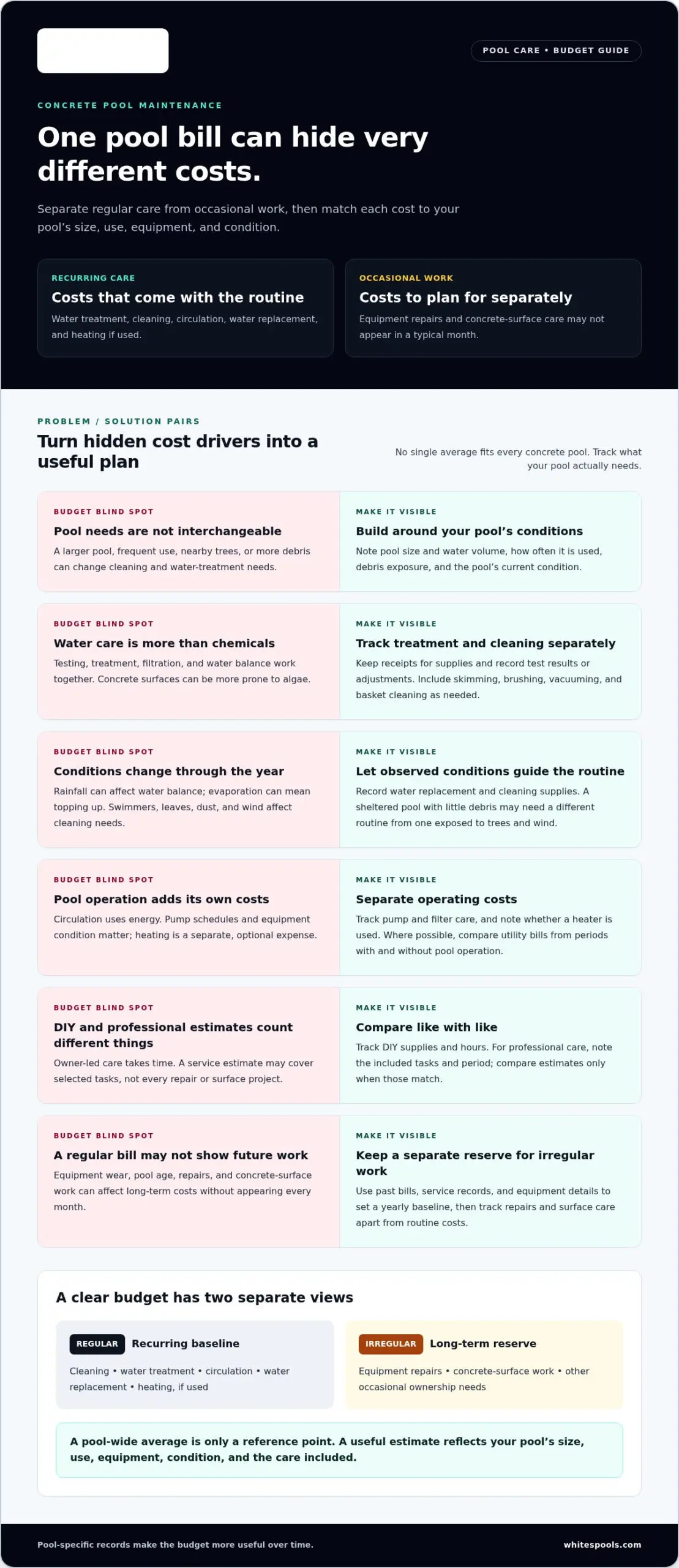
- Use past bills, service records, and equipment details to set a realistic yearly baseline, then keep a separate reserve for irregular work.
- Consistent cleaning and equipment care support water quality and reliable pool performance.
Average Cost to Maintain a Concrete Pool: What Shapes the Budget?
No single average describes every concrete pool. A compact pool used occasionally has different cleaning and operating needs from a larger pool that sees frequent activity, collects debris, or runs additional equipment. Treat the average cost to maintain a concrete pool as a starting point, not a ready-made budget for your home.
Think of maintenance in two connected categories: recurring care and occasional ownership work. Recurring expenses cover the tasks and resources needed to keep the water clean and the pool operating. Occasional costs include repairs and surface work. They may not appear in a typical month, but still belong in a long-term plan. Separating these categories shows what you pay regularly and what to prepare for over time.
Why concrete pool maintenance costs vary
Pool size and water volume affect cleaning and water-treatment needs. Use matters, too: more swimmers can mean more frequent attention, while nearby trees and other debris sources can add to skimming and cleaning. Your operating routine, including how consistently you clean and circulate the water, also affects regular maintenance.
Equipment condition and pool age change the picture. A system that needs closer attention can add maintenance tasks, while wear on an older pool may call for work beyond routine care. The pool’s current condition is as relevant to budgeting as its dimensions.
Concrete surfaces make sound water care an important part of the routine. Sanitation involves more than adding a treatment; it also includes filtration and attention to water balance. The overview of Swimming Pool Sanitation explains how these elements work together. For budgeting, account for the care needed to maintain water quality rather than treating chemicals and cleaning as interchangeable line items.
What a useful average should include
Before relying on an estimate, check what it counts. Routine cleaning, water treatment, circulation, and other operating needs belong in recurring costs. Repairs and concrete-surface work are separate, less predictable expenses. Combining everything into one figure can make regular monthly spending seem higher or leave you unprepared for periodic work.
Also distinguish owner labor from paid service. A do-it-yourself estimate may include supplies and operating expenses but leave out your time. A professional-service estimate may cover specific cleaning and maintenance tasks without including every repair or surface project. Estimates are comparable only when their included tasks and time periods match.
- Recurring care: List regular cleaning, water treatment, and pool operation separately.
- Occasional work: Track repairs and surface care apart from routine expenses.
- Labor: Note whether the estimate includes your own time, professional care, or both.
A pool-wide average is a reference point; a homeowner-specific budget reflects the pool’s size, use, equipment, condition, and included care. Keep records of the work performed and what it covered. That way, your budget can reflect your pool’s actual needs instead of relying on an average that may not fit.
Recurring Concrete Pool Maintenance Costs: Chemicals, Cleaning, and Energy
Recurring expenses are easier to understand when you track them by category instead of treating pool care as one monthly bill. Your routine may include water testing and treatment, cleaning supplies or service, circulation, water replacement, and heating if you use a pool heater. Some costs change with the season; others continue as long as the pool is running.
Chemicals, water, and cleaning
Regular water testing helps you spot changes in sanitizer and water balance, then respond before they become harder to manage. Concrete pool surfaces can be more prone to algae, so steady cleaning and attentive water care matter. The Pool Water Chemistry Guide explains key considerations such as chlorine, pH, alkalinity, and calcium hardness.
Water needs change with conditions. Rainfall can affect water balance, while evaporation may mean topping up the pool. Swimmers, leaves, dust, and other debris can also affect how often you need to skim, brush, vacuum, or clean baskets. A sheltered pool with little debris may need a different routine from one used often or exposed to trees and wind. Use observed conditions to guide the routine rather than assuming every task needs the same frequency year-round.
Pumps, filters, heating, and professional service
Circulation uses energy, and the pump schedule and equipment condition influence how much. Filters also need routine attention to keep the circulation system working as intended. Heating is a separate, optional expense. Its effect on household energy use depends on the heater, how often it runs, and your preferred water temperature. Where possible, compare utility bills from periods with and without pool operation to understand seasonal differences.
Owner-led care has no separate labor invoice, but it takes time. Track the supplies you buy and the hours spent testing, cleaning, and monitoring the system. Professional cleaning and maintenance add a service expense while helping keep care consistent and supporting water quality and equipment performance. White’s Pools provides pool cleaning and maintenance for homeowners who want experienced support as part of their care routine.
- Chemicals and testing: Keep receipts for water-treatment supplies and record test results or adjustments.
- Cleaning: Track owner-supplied tools and supplies separately from professional service visits.
- Circulation and filtration: Note pump schedules, filter-care tasks, and changes in utility bills.
- Water and heating: Record pool top-ups and seasonal energy use, especially if heating is part of your routine.
These records create a useful personal baseline for the average cost to maintain a concrete pool, without relying on a broad estimate that may not reflect your schedule or conditions. Review them over a full swimming season, since a short snapshot can miss weather-related changes or periods of heavier use. Keep your time visible alongside out-of-pocket spending so you can compare self-managed care with professional service on a like-for-like basis.
Concrete Pool Maintenance: DIY or Professional Care?
There isn’t one right way to care for every concrete pool. The best fit depends on the time you can set aside, your comfort with water testing and equipment, and the pool’s current condition. A do-it-yourself routine may reduce the need for paid visits, but still takes time and attention. Professional service can provide consistent care, but it doesn’t replace other ownership expenses such as energy use or occasional repairs.
Which routine tasks can an owner manage?
Many owners can handle regular observation and straightforward cleaning. Look for changes in water clarity, remove visible debris, brush surfaces as needed, and test the water according to the instructions for your testing method. Keep a simple log of readings, cleaning, adjustments, and anything unusual with circulation or filtration. A record helps reveal patterns that can be hard to spot from one day to the next.
- Observe: Note changes in water appearance, debris, or how the equipment sounds and operates.
- Clean: Skim and brush the pool, and keep up with routine basket and filter care appropriate to your system.
- Track: Record test results and maintenance tasks so changes are easier to recognize.
Follow product labels and equipment instructions, and avoid guessing at chemical amounts. If readings remain outside the guidance for your pool-care products, or the water changes unexpectedly, get experienced help rather than making repeated adjustments without a clear plan.
When professional pool maintenance may help
Professional care can suit owners who want a dependable routine, have limited time, or would rather leave water-quality monitoring and equipment observation to experienced pool-care professionals. Cleaning and maintenance support consistent attention to the pool’s water and operating system. A service visit can also provide another perspective on performance, though monitoring equipment does not guarantee that a repair will be avoided.
Consider an experienced assessment if water balance becomes difficult to manage, cleaning needs change despite a steady routine, or circulation and filtration seem to perform differently. Changes can have several causes, so a clear account of recent readings, weather, pool use, and equipment behavior can help inform the assessment.
Use this practical comparison to decide how to divide the work:
- Owner-led care: A good fit if you can maintain a regular routine, follow testing and equipment instructions, and keep useful records.
- Professional support: Worth considering if you need more consistency, lack time, feel unsure about water care, or notice a change you can’t explain.
- A blended approach: Handle familiar routine tasks yourself and bring in professional maintenance for ongoing care or when conditions become harder to manage.
Revisit the arrangement if your schedule, pool use, or equipment condition changes. When comparing the average cost to maintain a concrete pool, account for the time you spend on DIY tasks as well as any professional service. This gives you a more complete basis for choosing a manageable routine without assuming either approach will prevent every future expense.
How to Build a Yearly Budget for Concrete Pool Maintenance
A useful yearly budget starts with your pool’s own records, not a national average. Gather recent utility bills, receipts for care supplies, service records, and details about your pump, filter, and any heating equipment. These records show what you actually spend and help separate ongoing costs from work that may arise only occasionally.
A practical step-by-step pool budget
- List recurring expenses. Record regular purchases, cleaning costs, pool-related energy use, water additions, and professional maintenance. Use bills and receipts where available. Note owner-performed tasks separately so your time doesn’t disappear from the picture.
- Mark the timing. Label each item as monthly, seasonal, or occasional. Keep costs tied to a particular time of year visible in the annual plan, even if they don’t appear every month.
- Create separate reserve categories. Keep routine operating costs apart from equipment repairs or replacement and concrete-surface work. These less frequent expenses can be substantial, so combining them with everyday care may make your regular budget harder to interpret.
- Calculate a personal baseline. Add recurring items across the full year, then review reserve categories separately. If records are incomplete, mark estimates as provisional and refine them as bills and service records accumulate.
A simple tracking sheet can keep the categories clear without relying on broad cost ranges:
- Expense: Chemicals and testing, cleaning, energy, water, heating, professional service, equipment, or surface work.
- Timing: Monthly, seasonal, or occasional.
- Record: Bill, receipt, service note, or owner estimate.
- Notes: Pool use, equipment changes, weather conditions, or work completed.
This layout makes it easier to identify which costs support routine operation and which belong in a separate reserve. It also clarifies whether your budget includes only out-of-pocket spending or accounts for time spent on owner-led care.
How to review and adjust the budget
Check your records regularly and compare actual spending with your planned categories. Look for changes, not just totals. More frequent cleaning, different energy use, or repeated adjustments to water care can signal that your assumptions need revisiting. Update the plan after a change in pool use, equipment, or condition, and note why the budget shifted. That context will make next year’s estimate more useful.
White’s Pools provides cleaning and maintenance focused on water quality and equipment performance. For ongoing support with your pool’s care routine, explore White’s Pools cleaning and maintenance.
How White’s Pools Supports Concrete Pool Care
Once you’ve separated regular expenses from occasional repair and surface work, decide how much of the routine you want to manage yourself. The average cost to maintain a concrete pool can help frame the question, but your care plan also needs to fit your pool’s condition, your schedule, and the attention its water and equipment require.
White’s Pools provides professional pool cleaning and maintenance focused on water quality and equipment performance. For homeowners who prefer steady, experienced support, that care can be part of a practical ownership routine. White’s Pools is a family-owned and operated business in its third generation, established for over 75 years.
What ongoing pool care is designed to support
Regular cleaning helps manage debris and supports clear, well-maintained pool water. Consistent attention to water quality is an important part of caring for a concrete pool. Maintenance focused on equipment performance keeps the pool’s operating systems in view as part of the overall routine. These goals work together: a clean pool and equipment performing as intended make day-to-day ownership easier to manage.
Every pool has its own demands. Usage, surrounding debris, and changing conditions can affect the care routine, so attentive maintenance means staying aware of what the pool needs rather than relying on a one-size-fits-all assumption. Professional support may suit owners who value consistency, want help keeping up with ongoing care, or would rather spend less time managing routine pool tasks. It complements a household budget; it doesn’t remove the need to plan for energy, supplies, or occasional work.
Plan the next step for your concrete pool
Before discussing ongoing care, gather a few useful details: how you currently maintain the pool, what concerns you most, and whether you’ve noticed changes in water quality or equipment performance. You don’t need a perfect record. Even a brief description of your routine and priorities can focus the conversation on the care that matters to you.
You may want a more consistent cleaning routine, support with water-quality care, or help addressing a concern about equipment performance. Share what you’re noticing and what you’d like your routine to accomplish. White’s Pools brings the perspective of an established, family-run pool-care business to homeowners looking for practical ongoing support.
If you’re ready to discuss your concrete pool’s care priorities, contact White’s Pools about pool maintenance.
Make Your Pool-Care Plan Work for You
Your maintenance budget doesn’t need to be perfect on day one. Treat it as a working plan: note what changes through the season, keep track of your pool’s condition, and adjust your approach as your needs become clearer. The average cost to maintain a concrete pool then becomes less of an abstract figure and more of a guide for decisions about your own pool.
You don’t have to manage every task alone. White’s Pools is a family-owned, third-generation business established for over 75 years, providing professional cleaning and maintenance focused on water quality and equipment performance. To explore care that fits your pool and priorities, talk with White’s Pools about concrete pool care.
A thoughtful routine can make pool ownership feel more manageable. Keep building a care plan that supports years of enjoyment, and get in touch with White’s Pools to discuss maintenance for your concrete pool.
Frequently Asked Questions
How much does it cost to maintain a concrete pool each year?
There isn’t a reliable single yearly figure for the average cost to maintain a concrete pool without knowing its size, equipment, use, and what the service includes. Estimate your annual total by adding recurring expenses from bills and receipts, then keep occasional repairs and surface work in separate planning categories. Include seasonal items even if they don’t appear every month, and note whether your estimate counts your own labor or only paid expenses.
Is a concrete pool more expensive to maintain than other inground pools?
Not in every case. Upkeep depends on the pool’s construction, condition, equipment, and care routine. Concrete has distinct surface-care considerations, so its needs may differ from pools made with other materials, but the material alone doesn’t determine your total. For a useful comparison, consider pools with similar use and equipment, and compare the same types of routine care and periodic work rather than relying on a general label.
What are the biggest ongoing expenses for a concrete pool?
Common ongoing categories include chemicals and water care, cleaning, energy for circulation and filtration, water replenishment, and optional heating. Their relative impact varies. A heated pool has a different operating profile from an unheated one, while heavy use or frequent debris can change care needs. To find your main expense drivers, review household utility bills, receipts, and service records together, then separate pool-related spending from other household costs.
Can I maintain a concrete pool myself?
Yes, owners can manage routine care if they’re comfortable observing the pool, cleaning it, and testing water consistently. Keep a simple log of readings, tasks, and changes in water clarity or equipment behavior to help recognize when a problem may be developing. Follow pool-care product labels and store products safely. Professional maintenance is also available for cleaning, water-quality attention, and equipment performance.
How often does a concrete pool need resurfacing?
There’s no universal resurfacing interval. Timing depends on the finish, its age, how the pool is used, and its visible condition. Rough or worn areas, discoloration, or surface damage may prompt an assessment, but appearance alone may not explain the underlying condition. Treat resurfacing as a separate, condition-based planning category, and keep notes or photos over time to track changes.
What happens if I skip regular concrete pool maintenance?
Inconsistent cleaning and water-quality attention can allow debris and water-balance concerns to build and may put added strain on pool equipment. The outcome depends on the conditions and how long they continue, so a specific failure or repair can’t be predicted. If you notice a sudden change in clarity, an unusual equipment sound, or a shift in circulation, investigate promptly instead of letting the issue become part of the routine.
Does a pool maintenance estimate include repairs and resurfacing?
Not necessarily. Estimates can define their included work differently. One may cover routine cleaning, while another may also describe water care or equipment checks. Repairs, equipment replacement, and concrete-surface work are often separate planning items. Before comparing estimates, write down the tasks each one covers and the period it applies to. This makes differences easier to understand and helps prevent routine service from being mistaken for a complete ownership budget.

