
What if the pool you pictured and the pool described in your contract aren’t quite the same? A custom pool involves more than a shape and a finish. The written scope, plans, materials, equipment, schedule, and payment milestones all help define what will be built and how the project will proceed. Understanding a pool construction contract before you sign helps bring those details into focus.
It’s natural to concentrate on the design. But unclear descriptions of included work, uncertain milestones, or a vague process for approving changes can lead to confusion later. A well-organized contract connects your design decisions to the work, timing, and payments, giving you a clearer reference as construction moves forward.
In this guide, you’ll learn how to review the scope and specifications, understand schedule and payment terms, and look for a clear process for changes or unexpected site conditions. You’ll also learn what records to keep and which questions to resolve before committing. White’s Pools designs and builds custom pools, with project details shaped around each homeowner’s vision.
Key Takeaways
- Understanding a pool construction contract means checking that the written scope and attached plans reflect the pool, materials, and features you intend to build.
- Read schedule and responsibility clauses for project phases, dependencies, and who handles key tasks. Don’t assume every date is a guaranteed completion deadline.
- Compare each payment milestone with the work or deliverable it describes, and understand how proposed changes are documented and approved.
- Use a step-by-step review to check that names, selections, included work, plans, schedule, and payment terms align before signing.
- Project-specific details can make an agreement a clearer guide to your custom pool, from design intent through construction decisions.
Understanding a Pool Construction Contract Starts with the Project Scope
A pool construction contract is the written framework for the agreed project scope, design references, responsibilities, and other expectations. Understanding a pool construction contract starts with checking whether its wording and attached plans describe the pool you intend to build.
Design conversations and inspiration images help shape a vision, but they can leave room for different interpretations. A photograph might show a waterfall beside a pool without clarifying its size, location, finish, or whether it’s included in the work. The written scope should turn those ideas into clear project details. General background on construction contract types and elements can help explain how agreements set out expectations, but your pool documents should make the specific design understandable.
What should the pool project scope describe?
Start with the pool’s location and outline. The plan should identify its shape, dimensions, and placement in relation to the property. Compare those details with the written description. If the drawing shows a rectangular custom concrete pool, the scope shouldn’t describe a different shape or leave the intended dimensions unclear.
Next, separate the core pool work from selected features and items described as optional or handled separately. If the design includes a tanning ledge or waterfall, look for wording that identifies it as part of the project and shows where it belongs. Don’t assume a feature is included just because it appears in a concept image or came up in conversation. A clear description helps align expectations before work begins.
How plans and selections connect to contract language
Drawings and written selections should tell the same story. Check that the plan’s pool shape and layout match the description, then review how chosen materials and features are recorded. Pool tile, interior finish, coping, and a waterfall may each need a clear written reference. A broad phrase such as “premium tile” may not identify the selection as precisely as a specific material description or selection record attached to the agreement.
Make the comparison concrete: point to a feature on the drawing, then find the corresponding written description or selection. If the documents use different terms, or a chosen finish doesn’t appear in the paperwork, resolve that mismatch before signing and keep the updated record with the contract. White’s Pools designs custom concrete pools with features such as waterfalls and premium tile, so connecting design choices to written project details is an important part of planning. For more context on design and material considerations, explore this custom concrete pool guide.
Pool Contract Clauses to Read Closely: Schedule, Materials, and Responsibilities
Once the project scope reflects your design, read the clauses that explain how the work will be coordinated. Understanding a pool construction contract also means knowing what the schedule assumes, which selections are specified, and how responsibilities are divided. These details help you use the agreement as a practical plan, not just a collection of formal terms.
How to read the schedule and project responsibilities
Look for the stages of work and how they depend on one another. The agreement might describe design coordination, site preparation, pool construction, and finish work as separate phases. Check whether it identifies expected milestones and explains what needs to happen before the next phase can begin. A sequence is useful even if it doesn’t promise a fixed overall duration.
Then identify responsibilities. The documents should make clear which tasks belong to the builder and which require homeowner input or action. For example, a selection may need to be finalized before related work proceeds. Weather, unexpected site conditions, material availability, or approvals can also affect the planned sequence. Read how the agreement addresses delays and schedule updates rather than assuming a projected date is guaranteed. Treat a completion date as a target unless the contract expressly says otherwise.
How materials, cleanup, and exclusions should be described
Specific selections are easier to understand than broad labels. Look for descriptions of material types, finishes, equipment, and chosen features, with drawings or selection documents referenced where useful. Terms such as “premium” or “upgraded” may sound appealing but don’t explain exactly what has been selected. Compare the wording with your records so the agreement reflects the intended materials and finishes.
Look beyond the pool itself. Construction can affect the surrounding work area, so check for clear language about job-site cleanup and any restoration included in the project. If landscaping, fencing, or other outdoor work is addressed, the contract should distinguish what’s included from what isn’t. Exclusions aren’t necessarily a problem; they clarify boundaries and help prevent an assumption that adjacent work is part of the pool project when it hasn’t been described that way.
Responsibilities and contract rules can vary by state. Don’t rely on a payment, licensing, or other legal requirement presented as universal. Requirements depend on the jurisdiction. If a legal clause affects your obligations, verify it against current rules where the project is located before signing.
For a practical final read-through, trace one project element across the documents: find the selection, see where it appears in the plans, then check how the schedule and responsibilities relate to it. This cross-check can reveal vague wording while there’s still time to resolve it. Explore custom pool design and construction with White’s Pools, a family-owned, third-generation company.
Payment Milestones and Change Orders: Understand What Can Shift
Payment terms and change provisions show how the agreement responds as a custom pool project moves forward. When understanding a pool construction contract, connect each payment request to the work described and learn how adjustments are approved before they affect the project. The goal is clarity, not assuming every contract follows the same payment pattern.
How to understand a pool construction payment schedule
Review the payment schedule line by line. For each installment, identify the milestone or deliverable it refers to, then compare that description with the project phases. A progress payment should connect clearly to stated work or completed progress, rather than an unexplained date. If a milestone uses a broad label, note what project stage or evidence the wording means in practice.
Payment terms often distinguish among a deposit, progress payments, and a final payment. A deposit is an initial payment described in the agreement; progress payments are tied to stages during the project; and a final payment is associated with completion or the contract’s stated closing point. These are general descriptions, not a universal formula. Read the agreement’s definitions and timing carefully.
Payment rules can differ by state and may depend on the project’s location. Don’t treat a deposit figure or payment limit from one jurisdiction as a nationwide rule. If a legal requirement affects your payment terms, verify the current rule for the applicable jurisdiction.
What a written change order should clarify
Design decisions can evolve. You might choose a different tile, revise a finish, or request a change to a selected feature. Before approving a revision, understand how it affects the original scope and whether it may alter the sequence or timing of related work. A material substitution, for example, could require updates to the selection record and schedule.
A written change order should make the adjustment understandable to everyone involved. Look for:
- Revised work: What is being added, removed, or changed from the original agreement?
- Payment impact: How does the change affect the agreed payment terms, if at all?
- Schedule impact: Does the revision affect a milestone, dependency, or planned sequence?
- Approval record: Who approved the change, and where is that approval documented?
Written change documentation reduces misunderstandings by giving both parties one shared record of the revised work, timing, and payment implications.
Verbal conversations can help explore an idea, but they’re easy to remember differently later. Keep the signed agreement, updated selections, and approved change records together. Make sure the written revision is clear before the changed work proceeds. This creates a traceable connection between the original plan and decisions made along the way.
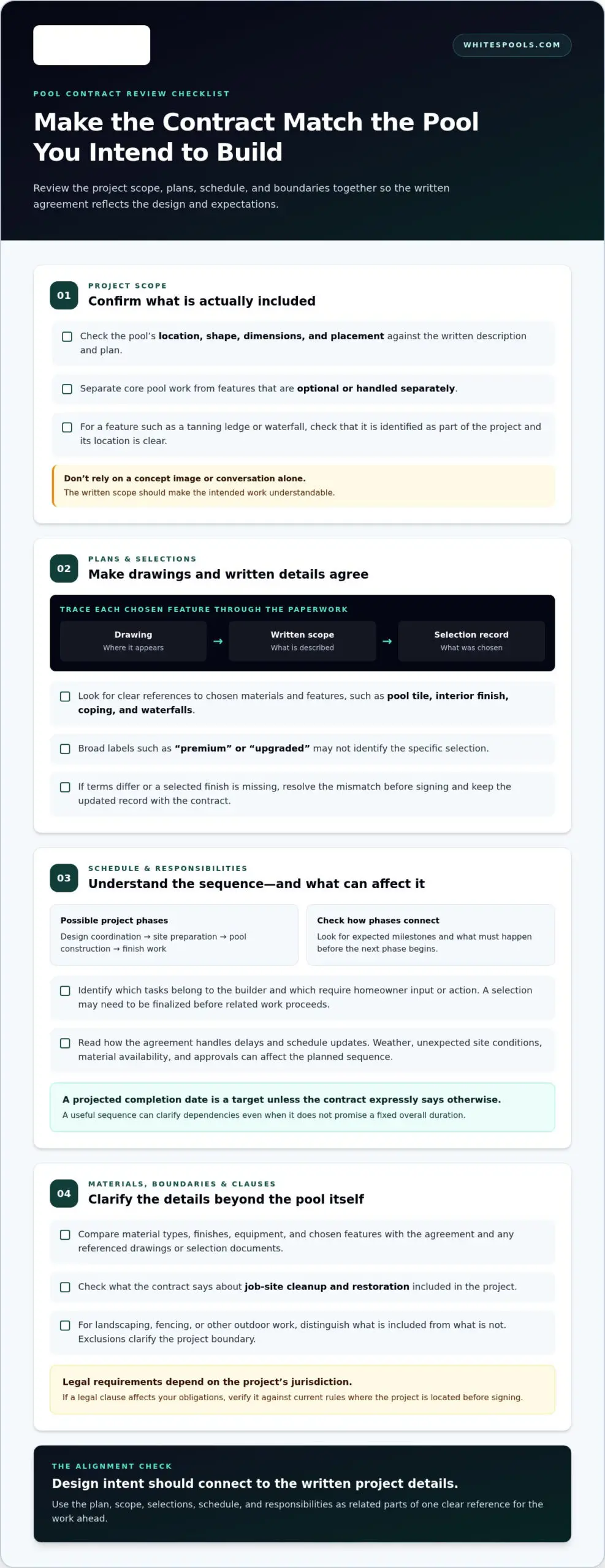
A Homeowner’s Checklist for Reviewing a Pool Construction Contract
Before signing, read the agreement as a complete project plan, not a standalone form. Understanding a pool construction contract means checking that the names, design documents, selections, responsibilities, schedule, and payment terms describe the same project. Use this review sequence to spot gaps while there’s still time to resolve them.
- Check the parties and project details. Confirm that the homeowner and contracting business are correctly identified and that the agreement describes the right property and pool project. Review the full document, including referenced attachments, rather than relying on a summary page.
- Read the plans alongside the written scope. Compare the pool’s layout and dimensions with the contract description and drawings. Look for consistency in the features shown, such as a waterfall or selected pool tile. If a plan appears to show work that the written scope doesn’t describe, note the difference for clarification.
- Match selections to the documents. Gather the records for chosen finishes, materials, and equipment, then check that they correspond with the agreement or its attachments. Descriptions such as “upgraded” may need more detail to identify the actual selection. Make sure the final paperwork reflects your choices, not an earlier draft.
- Separate included work from exclusions. Review what the agreement says the project includes, along with any work it excludes or describes separately. Consider the boundaries around related outdoor work and cleanup so assumptions don’t substitute for written terms.
- Trace schedule and payment terms. Check how the schedule describes phases and milestones, then compare each payment point with its stated project progress or deliverable. Read language about dependencies and adjustments so you understand how the agreement handles changes to the plan.
- Resolve open questions and revisions. Mark vague terms, inconsistent details, and any promise discussed but missing from the paperwork. Before signing, make sure agreed revisions appear in the final documents and that you understand how later changes will be documented.
Keep the signed agreement and its supporting records together throughout construction. A digital folder or physical job file can hold dated copies of the contract, drawings, selections, approved changes, project communications, and progress records. Use clear file names or dates so you can find the current version quickly and distinguish it from earlier drafts.
Good recordkeeping supports clear communication, but it isn’t a substitute for legal advice. Contract requirements can vary by jurisdiction. If you have a legal question about your obligations or the effect of a clause, consult a qualified legal professional familiar with the rules where the project is located.
A custom pool should reflect the design decisions you’ve made, and a careful review helps connect those decisions to the written project plan. Learn about White’s Pools’ custom pool design and construction as you shape your project.
Building with White’s Pools: Turn Your Pool Agreement into a Clear Project Plan
A generic contract can provide a framework, but it can’t capture the character of your backyard or the details that make a pool feel like yours. Understanding a pool construction contract means looking for a clear connection between the design you envision and the written description of the work. That connection gives everyone a shared reference as decisions move from concept to construction.
Connect the written agreement to the pool you envision
Start with the design intent. Is the pool meant to be a calm geometric centerpiece, an infinity-edge feature that opens toward a view, or an indoor pool designed for year-round use? These examples call for different layouts and details. The agreement and supporting plans should describe the project-specific choices, not rely on broad wording that could fit almost any pool.
Selected features matter, too. A waterfall, premium tile, or a particular finish can shape the look and feel of the completed space. The written scope should give those choices a clear place in the project documents, with descriptions that correspond to the design. A plan, selection record, and contract that use consistent terms are easier to understand than disconnected notes and images.
Project-specific clarity is more valuable than a template alone. A standard form may organize common contract topics, but the details need to reflect the actual pool, features, and work being discussed. If the design evolves, the written documents should keep pace so the agreement remains a useful reference. It shouldn’t promise an outcome or timing that the documents don’t state.
Take the next step with an experienced pool-building team
White’s Pools designs and builds custom concrete, infinity-edge, and indoor pools, with features such as waterfalls and premium tile. The family-owned, third-generation business has been established for more than 75 years and puts the homeowner’s vision at the center of the project conversation.
A thoughtful project begins with understanding what matters to you: the pool’s setting, how you hope to use it, and which design details feel essential. Those priorities can guide the conversation and help shape a project-specific plan. As the design takes form, clear written descriptions give you and the team a shared reference for the choices being made.
To explore a custom pool, discuss your project with White’s Pools. Share your vision for the outdoor space and consider how a custom pool design can bring it to life.
Take the Next Step Toward Your Pool Vision
A clear agreement is most useful when it grows from a clear vision. Before moving ahead, consider how you want the pool to fit your everyday life: a quiet place to unwind, a setting for family time, or a focal point for outdoor gatherings. Those priorities can shape the design conversation and keep decisions centered on what matters most to you.
Understanding a pool construction contract is part of making those choices with confidence. Bring your ideas, questions, and preferred features into a thoughtful discussion about the project. White’s Pools is a family-owned, third-generation custom pool design and construction company established over 75 years ago. The team can help you explore a pool that reflects your home and how you hope to enjoy it.
Start planning a custom pool with White’s Pools, and take the first step toward shaping an outdoor space that feels distinctly yours.
Frequently Asked Questions
Does a pool construction contract need to include drawings?
Drawings are valuable because they show the proposed pool’s layout and dimensions in a way that words alone may not. A plan can help you see the pool’s position and how its shape relates to the design description. Make sure the agreement identifies the drawings it relies on, so everyone refers to the same version. Whether drawings are legally required, and what they must show, depends on the project’s jurisdiction.
Can a pool construction contract change after it is signed?
Yes, the parties can document agreed revisions after signing, subject to the contract and applicable law. Selecting a different finish, for example, could change the written scope and may affect the schedule or payment terms. Record the revised work, related adjustments, and the parties’ approvals in a dated written change document. Keep it with the original agreement so you can distinguish the current plan from earlier selections and discussions.
What happens if pool construction takes longer than expected?
The agreement’s schedule and delay language help explain what happens if work takes longer than projected. A target date is not necessarily a guaranteed completion date, so read the wording carefully. The contract may describe how schedule updates are handled when weather, site conditions, approvals, or other dependencies affect progress. If an update changes an agreed milestone, keep a written record of the revised expectation and its stated reason.
Should I use a free pool construction contract template?
A free template can offer a starting structure, but it may not describe your custom pool or selected details. A form that says “pool construction” may leave out the specific finish, waterfall, equipment selection, or related work that defines your project. Treat a template as a prompt for topics to address, not proof that the agreement fits. Review applicable state requirements separately, since a generic form may not reflect them.
What records should I keep during pool construction?
Keep the signed agreement and every document that helps identify the current project plan. This can include dated drawings, material and finish selections, approved written changes, and relevant messages about decisions or schedule updates. Save progress records in the same organized file, with dates and brief labels so you can find them later. Keep original versions too, rather than replacing them, so project decisions remain traceable over time.
Are pool construction contract requirements the same in every state?
No. Legal and licensing requirements can differ based on the state and the project. Don’t assume a payment figure, required clause, or licensing rule described for one state applies across the country. For a specific legal question, review current requirements for the project’s jurisdiction or consult a qualified legal professional familiar with those rules. General contract guidance can help you review documents, but it can’t establish which rules apply to your situation.
What should I do if the written pool contract differs from the design discussed?
Pause before signing and identify the exact mismatch, such as a feature shown in the design discussion but absent from the written description. Have the relevant contract language, plan, or selection record revised so the documents consistently describe the intended project. Don’t rely on a verbal expectation to resolve a written difference. Keep the updated version and review it alongside the related drawings before signing.

