
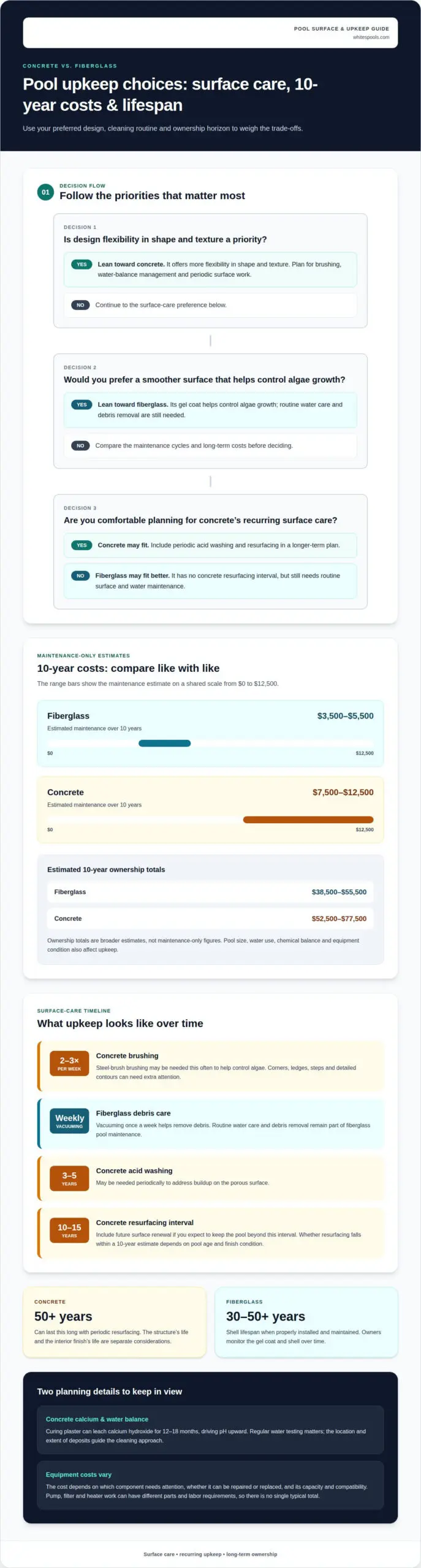
The difference in concrete vs fiberglass pool maintenance costs often comes down to surface care over time. Concrete pools may need acid washing every 3 to 5 years and complete resurfacing every 10-15 years, while a fiberglass gel coat helps control algae growth. Those upkeep differences make the surface an important part of choosing a pool for the long term.
Both options can create a beautiful backyard retreat, but their maintenance needs differ. This comparison explains how surface care, recurring upkeep, and lifespan shape ownership, helping you weigh the trade-offs against your priorities. You’ll also find a practical guide to choosing between concrete’s design flexibility and fiberglass’s smoother surface.
Key Takeaways
- Factor surface care into your routine: concrete may need regular brushing to help manage algae, while calcium buildup and water balance also affect upkeep.
- Weigh lifespan alongside maintenance: concrete can last 50 years or more with periodic resurfacing, while fiberglass shells may last 30 to 50 years or more when properly installed and maintained.
- Choose based on the care you’re comfortable with, the finish you prefer, and how long you plan to enjoy the pool.
Fiberglass vs Concrete Pool Costs: Rosebud & Central Texas
For concrete pools, resurfacing is a significant long-term expense to include in your comparison. The surface material and its condition help determine when the work is needed.
Concrete’s porous texture can hold algae and residue, so routine care also includes brushing and water-balance management. Acid washing may be needed every 3 to 5 years to address buildup. Those recurring tasks sit alongside resurfacing when you assess upkeep over time.
Equipment costs depend on which component needs attention, whether it can be repaired or must be replaced, and its capacity and compatibility. A pump, filter, or heater has different parts and labor requirements, so there is no single typical total for all equipment work.
Use this comparison to distinguish surface upkeep from other ownership factors:
| Pool option | Surface care | Resurfacing interval | Key cost factor |
|---|---|---|---|
| Concrete | Brushing, chemical balance, and periodic acid washing | Every 10-15 years | |
| Fiberglass | Gel coat surface care and routine water maintenance | No concrete resurfacing interval | Surface condition and routine upkeep |
Fiberglass gel coat helps control algae growth, while concrete allows more flexibility in shape and texture. Your choice affects the kind of surface care to plan for, not just the pool’s appearance.
For Rosebud and Central Texas homeowners, compare the expected resurfacing cycle with routine cleaning and equipment needs. Concrete pools may last 50 years or more with periodic resurfacing, so include that long horizon in your decision. Choose the surface whose upkeep and design characteristics best fit your priorities.
Algae and calcium buildup on concrete surfaces
Concrete’s porous surface can give algae more places to cling than a smooth fiberglass gel coat. Concrete pools therefore need regular brushing and sweeping to help keep algae at bay. Some guidance recommends brushing concrete with a steel brush 2 to 3 times a week. Fiberglass gel coat helps control algae growth, although routine cleaning remains part of pool care.
Shape also affects cleaning. Curved walls, steps, ledges, and detailed designs can create more corners to brush than a simple open basin. Smooth surfaces are easier to wipe than textured, porous ones, while complex contours need attention around transitions. These design choices influence cleaning time and where algae may cling.
Calcium buildup is another surface concern. Curing plaster in a concrete pool can leach calcium hydroxide for 12 to 18 months, driving pH upward. That changing water balance can contribute to scale deposits and make regular water testing important. When deposits appear, their location and extent guide the cleaning approach, since aggressive scrubbing can affect the finish.
For maintenance schedules, concrete pools need regular brushing and sweeping, with steel-brush brushing potentially needed 2 to 3 times a week to control algae. Fiberglass pools also need routine water care and debris removal; vacuuming once a week helps remove debris. Both surfaces benefit from consistent attention to water balance, but concrete’s porous finish calls for closer algae-control routines.
Keep the routine practical: remove leaves, vacuum debris, brush corners and ledges, then check water balance. A pool surrounded by dense landscaping may collect more leaves, so adjust debris removal to actual conditions. Regular surface care can also help manage maintenance costs by tackling buildup before it becomes harder to remove.
For a regular care routine, explore pool cleaning and maintenance as part of keeping pool surfaces and water in good condition.
How much does pool maintenance cost over 10 years?
A 10-year comparison of concrete vs fiberglass pool maintenance costs separates routine care from broader ownership estimates. These estimates show how surface upkeep can affect the budget beyond initial installation.
Keep those figures separate from maintenance-only estimates, since they represent a broader cost comparison. For a backyard pool, installation is only the beginning. Recurring care and major surface work shape the longer-term costs.
Concrete resurfacing may fall outside a 10-year snapshot because the interval is every 10-15 years. The pool’s age and finish condition affect whether that work enters the period being considered. If you expect to keep the pool beyond 15 years, include future surface renewal in your planning rather than treating a 10-year estimate as a lifetime budget. At White’s Pools, we often help homeowners evaluate these long-term timelines. Fiberglass gel coat helps control algae growth, influencing routine surface care.
| Pool type | 10-year maintenance estimate | Estimated 10-year ownership total |
|---|---|---|
| Fiberglass | $3,500 – $5,500 | $38,500 – $55,500 |
| Concrete | $7,500 – $12,500 | $52,500 – $77,500 |
Compare like with like: maintenance against maintenance, then ownership against ownership. If you may move before resurfacing is due, near-term care may weigh more in your decision. If the pool will remain in the ground beyond 15 years, consider future finish work, too. Pool size, water use, chemical balance, and equipment condition also affect upkeep, so material alone doesn’t determine every household’s costs.
Pool lifespan and long-term upkeep
Repair concerns vary by surface: concrete finishes may need renewal, while fiberglass owners monitor the gel coat and shell. Compare each material’s structural life with its ongoing finish-care needs.
Concrete Pool Lifespan and Upkeep
Concrete pools can last 50 years or more when maintained with periodic resurfacing. Their durable structure can support a long ownership horizon, but the interior finish is a separate wear layer. Homeowners should distinguish structural life from surface life: resurfacing renews the interior without meaning the pool’s entire structure has reached its end.
A concrete surface may show wear or discoloration over time, signaling that the finish needs assessment. Track its condition alongside routine cleaning, and plan for resurfacing as part of long-term ownership. Fiberglass pools differ because the gel coat, rather than a concrete interior, is the primary surface to monitor.
Fiberglass Pool Lifespan and Upkeep
Fiberglass pool shells are generally rated to last 25 to 30 years, while gel coat finishes are rated to last 20 to 30 years. With proper installation and maintenance, a fiberglass pool can last 30 to 50 years or more. These ranges describe different things: finish condition and structural shell lifespan aren’t the same measure.
Long-term fiberglass care involves monitoring the gel coat and shell, maintaining routine water care, and addressing visible damage. Unlike concrete’s periodic resurfacing, fiberglass upkeep focuses on the finish and shell. Either material may need repairs; the surface determines the type of maintenance involved.
Discuss your pool design priorities with long-term upkeep in mind.
White’s Pools: Custom Concrete Pools
White’s Pools designs custom concrete pools for homeowners weighing surface upkeep against made-to-order design flexibility. If concrete suits your preferred shape, finish, or backyard vision, discuss how the design can meet your priorities.
For an existing pool, White’s Pools provides pool cleaning and maintenance to support regular care, including cleaning and ongoing upkeep. Discuss your pool’s surface, cleaning routine, and desired features to consider construction choices and care needs together.
Whether you’re planning a custom concrete pool or need help with pool care, contact White’s Pools to discuss your project.
Choose the Pool That Fits Your Long-Term Plans
Consider how the pool will fit into everyday life, not just how it will look on installation day. Think about who will use it, your preferred shape and finish, and how much ongoing surface care feels manageable. These priorities help turn a comparison of concrete vs fiberglass pool maintenance costs into a decision that suits your home and plans.
If you’re considering a custom design, think about how the pool will fit into the wider backyard and which features you may want nearby. White’s Pools offers custom concrete pools, pool cleaning and maintenance, and outdoor fireplaces, helping homeowners plan pool construction and care as part of their outdoor space.
Share your priorities and questions with the team as you decide what suits your property and routine. Contact White’s Pools to discuss your pool plans and take the next step toward a backyard built around the way you want to live.
Frequently Asked Questions
Fiberglass and Concrete Pool Takeaways: Which Is Better For You?
Fiberglass may suit homeowners who prioritize a smoother surface and less demanding routine cleaning. Concrete may be a better fit when a custom shape or finish is central to the design. Consider how you’ll use the pool, which design details matter most, and how much ongoing surface care you’re comfortable handling. The better choice is the one that fits your backyard vision and maintenance preferences.
Which Swimming Pool Wins on Maintenance and Energy Efficiency?
Fiberglass generally needs less routine surface cleaning, while concrete calls for closer attention to brushing and water balance. Fiberglass pools require 30% less chlorine than other pool types to keep clean. That doesn’t establish which pool uses less energy: electricity use also depends on equipment, operating schedules, pool size, and heating choices. Compare those operating factors separately from surface maintenance when assessing efficiency.
How Long Will Each Pool Actually Last?
Concrete pools can last 50 years or more with periodic resurfacing. Fiberglass pools can last 30 to 50 years or more when properly installed and maintained. For fiberglass, shell life and finish life are different considerations: shells are generally rated for 25 to 30 years, while gel coat is rated for 20 to 30 years. Maintenance and surface renewal influence how each pool serves over time.
What are typical annual maintenance costs for a concrete pool in the United States?
This estimate covers ongoing care, while larger periodic work can affect total ownership costs separately. Resurfacing, for example, may fall outside a given year’s routine budget. Distinguish recurring expenses such as chemicals and cleaning from occasional finish work, so an annual estimate doesn’t stand in for every future cost.
What are typical annual maintenance costs for a fiberglass pool in the United States?
Routine upkeep still involves water care, cleaning, and equipment attention; the smoother gel coat helps control algae growth. Actual household spending can vary with pool use, debris, equipment condition, and care habits. Treat the annual range as a planning estimate, and keep routine expenses separate from repairs or equipment replacement.
How do chemical, cleaning, and energy costs compare for concrete and fiberglass pools?
Fiberglass pool owners routinely report chemical costs at half to two-thirds of those for a comparable concrete pool. Concrete’s porous surface requires more brushing to manage algae, which can add hands-on cleaning time. Energy costs depend on equipment and operating choices, not surface alone. Compare pump schedules, pool size, and heating use alongside chemical and cleaning needs for a fuller household estimate. Whether managing chores yourself or relying on specialists like Pool Boys for regular servicing, consistent chemical care and brushing help keep upkeep predictable.

