
A natural pool doesn’t use chlorine or salt as its primary sanitizer. Instead, it relies on biological filtration, while a conventional pool uses chemical sanitation. In a natural pool vs chlorine sanitation comparison, the main trade-off is clear: natural systems avoid routine chemical treatment but need a carefully designed regeneration zone and ecological upkeep. They may also require a higher initial investment, while avoiding chemical purchases can lower long-term operating costs.
Choosing a pool involves more than selecting a water-treatment method. Consider how each option feels to swim in, the maintenance it requires, and how construction and ongoing costs differ over time. This guide compares water clarity, filtration, upkeep, and investment to help you decide which approach better suits your property and priorities. It also explains the space a natural pool needs and how to care for its living filtration system.
Key Takeaways
- Plan for the regeneration zone as part of a natural pool’s footprint; its role in filtration also shapes the overall design.
- Compare maintenance by the tasks involved, from ecological balancing and plant care to chemical testing and treatment.
- Water appearance and feel differ: biological filtration can create a more natural swimming environment, while chlorine-treated water may irritate skin and eyes.
- Weigh construction needs alongside ongoing care to decide which pool system best fits your property, budget priorities, and preferred swimming experience.
Does a natural pool need chlorine or salt?
No. A natural swimming pool is designed to operate without routine chemical sanitation. Its biofiltration system uses aquatic plants and beneficial microorganisms to help purify the water. Chlorine pools use chemical disinfectants, while salt pools use salt-based sanitation. The natural pool vs chlorine sanitation comparison starts with this difference in how the water is treated.
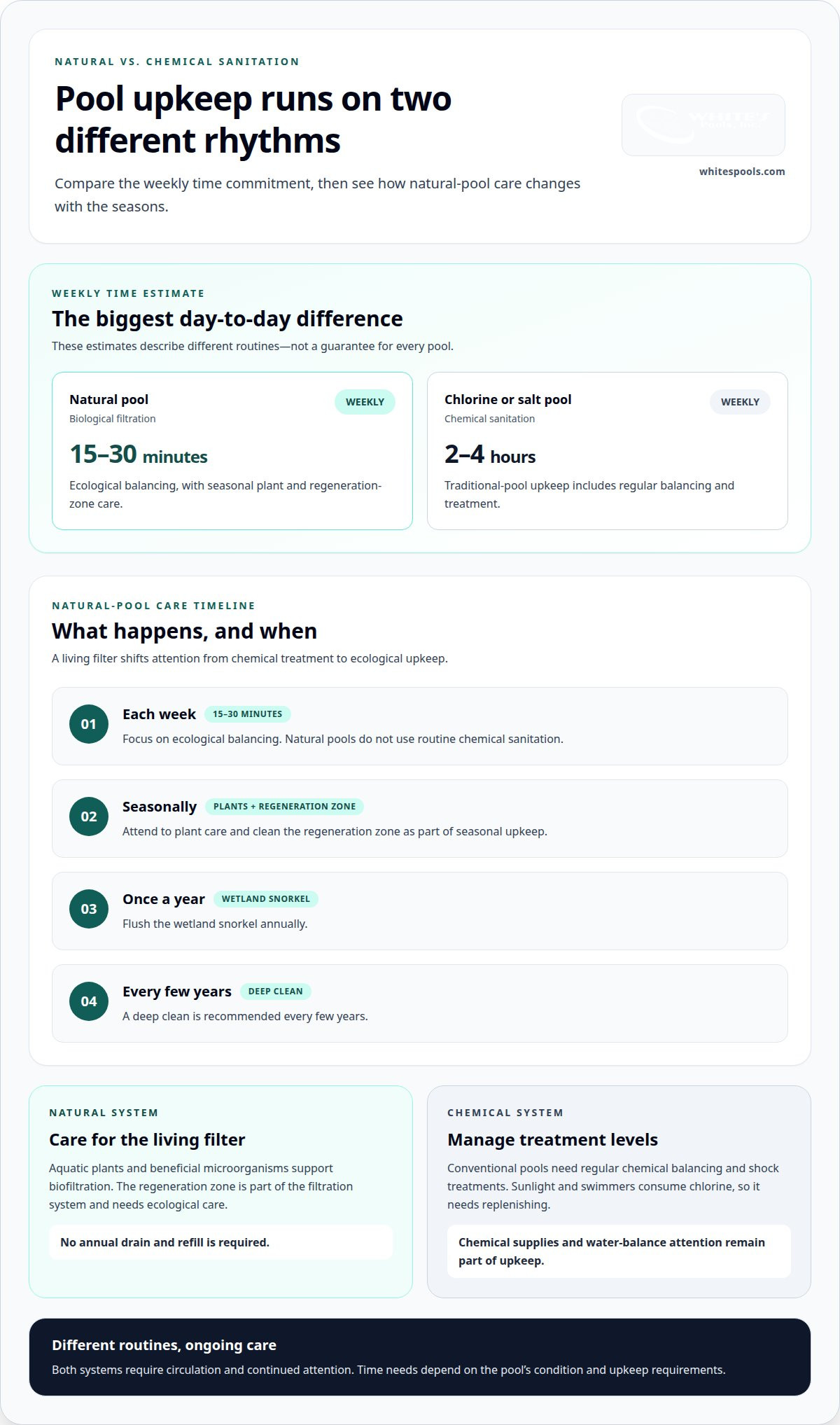
That difference shapes seasonal care. Natural pools need ecological balancing, occasional plant care, and seasonal cleaning of the regeneration zone. A deep clean is recommended every few years, and a wetland snorkel should be flushed once a year. Natural pools also don’t require an annual drain and refill.
Conventional pools follow a different routine: owners regularly balance chemicals and use shock treatments. Sunlight and swimmers consume chlorine, so it needs replenishing. Both systems still require circulation and ongoing care. The natural pool vs chlorine sanitation choice is about which maintenance routine suits you, not whether maintenance is needed.
| Pool option | Sanitation approach | Upkeep and time |
|---|---|---|
| Natural | Plants and beneficial microorganisms support biofiltration | 15-30 minutes weekly; seasonal plant and regeneration-zone care |
| Chlorine or salt | Chemical sanitation | 2-4 hours weekly for a traditional pool; regular balancing and treatment |
These weekly estimates describe different routines, not a guarantee for every pool. Natural systems avoid chemical purchases, which can reduce long-term operating costs, but their ecological areas still need care. Traditional pools require chemical supplies and attention to water balance. The time needed for either system depends on the pool’s condition and upkeep requirements.
Converting in either direction means changing the filtration and treatment design, not simply switching products. A natural system needs space for a regeneration zone, while a chemically sanitized pool uses a different treatment setup. Weigh the maintenance routine you prefer against the space and system changes involved.
Water clarity, tint, and swimming experience
Natural-pool water can look different from the bright, uniform appearance many swimmers expect. Its shade and clarity reflect the living filtration system and surrounding landscape. Aquatic plants and beneficial microorganisms help purify the water, while the regeneration zone acts as a living filter that breaks down organic matter instead of relying on chemical disinfectant. Swimmers may notice the difference in feel within about thirty seconds of entering.
Clarity depends on how the filtration areas work together. Plants contribute to the system, and microorganisms support biological purification. The regeneration zone is part of the pool’s design, not simply decoration beside the swimming area. This living approach can make the water feel more like a natural pond, and its appearance may change with the plants and surrounding landscape.
Wildlife is another distinction. Natural swimming pools can attract beneficial wildlife and contribute to local biodiversity. That may appeal if you want a garden feature connected to its surroundings, but may be less suitable if you prefer a tightly controlled, conventional pool environment. Fish aren’t required for swimming; the key feature is the habitat created by the natural system. For homeowners aiming to integrate water features into regional ecosystems, studios like Nu Scape Designs highlight how climate-tailored, low-maintenance landscape design can seamlessly complement the surrounding grounds.
Heating is a design consideration separate from filtration. A natural pool can be designed with swimming comfort in mind while its biological system continues to filter the water. The layout, water circulation, and heating equipment need to work together. Decide early whether warmer water is a priority so heating can be considered as part of the overall design.
Chlorine-treated pools can cause skin and eye irritation. This difference between natural filtration and chlorine sanitation may matter to swimmers sensitive to treated water. Neither option removes the need for appropriate supervision around children.
U.S. permit and health-code requirements depend on the property’s jurisdiction and intended use. Natural filtration alone doesn’t determine which requirements apply; the pool’s location and classification matter. A considered natural pool design brings the swimming area, regeneration zone, and landscape together from the start.
Biological filtration versus chlorine or salt sanitation
Biological filtration works through a connected ecosystem. Water moves through the regeneration zone, where aquatic plants and beneficial microorganisms support purification and help break down organic matter. Performance depends on the health of this living filter, so upkeep focuses on ecological balance and plant condition rather than adding chemical disinfectant. The natural pool vs chlorine sanitation comparison starts with this difference in treatment.
Chlorine sanitation takes a different approach: chlorine disinfects water by killing bacteria, algae, and other microorganisms. Sunlight and swimmers consume chlorine, so its level needs replenishing. Traditional pools also need regular chemical balancing and shock treatments. Salt pools use salt-based sanitation rather than biological filtration, but still require water treatment and ongoing maintenance.
Water testing and treatment depend on the system. For a natural pool, monitor the water and regeneration zone, then address plant growth or seasonal changes through ecological care. For a chlorine or salt pool, test the water routinely and adjust its treatment chemistry; chlorine pools also require balancing and shock treatment. Both systems need circulation and ongoing attention.
The practical difference is what the owner needs to manage. A natural pool’s living filter depends on the regeneration zone and plants functioning as part of the overall design. Chemical sanitation relies on managed treatment levels, with chlorine replenished as it is used. Salt sanitation also belongs to the chemically treated pool category in this comparison. Your natural pool vs chlorine sanitation decision therefore depends partly on which care routine suits you.
- Natural filtration: maintain ecological balance, care for plants, and clean the regeneration zone seasonally.
- Chlorine sanitation: test and balance the water, replenish chlorine, and use shock treatment as part of regular care.
- Salt sanitation: maintain the salt-based treatment system and monitor water condition as part of pool upkeep.
Choose by weighing the living filter and its seasonal ecological care against tested and adjusted chemical treatment. Neither approach eliminates the need for circulation or ongoing maintenance.
Natural pool construction and running costs
A natural pool often needs a higher initial investment than a traditional pool. Specialized design and ecological engineering add complexity. Its regeneration zone also takes space: it should occupy 30-50% of the total pool area. Plan the swimming area and living filter together, since changing the layout can affect excavation, materials, and construction work.
That footprint has a practical cost effect. A natural pool may need roughly 30-50% more area than its swimming surface alone. Site access, ground conditions, pool dimensions, finishes, and equipment also shape the build. Natural filtration depends on a functioning ecosystem, including plants and beneficial bacteria, so the regeneration zone is essential infrastructure, not an optional decorative extra.
Running costs follow different patterns. Natural pools don’t require chemical purchases, which can lower long-term operating costs. They still need circulation, ecological balancing, plant care, and seasonal cleaning of the regeneration zone. Traditional pools require regular water treatment and chemical balancing. Compare recurring supplies and care tasks, not just the initial construction investment.
Durability also matters in a long-term comparison. A natural swimming pool can last more than 30 years with proper maintenance. Chlorinated pools typically need major renovation every 15-20 years. These figures make maintenance and renovation planning part of the ownership decision, alongside construction scope and operating needs.
For either pool type, the price depends on the project and is provided after a quote request. Pool dimensions, site conditions, access, materials, finishes, and filtration design all affect the scope. For a useful comparison, weigh those construction factors against expected chemical purchases, seasonal care, and future renovation needs.
Takeaway: Choose a natural pool for biological filtration and potentially lower chemical-related running costs, while budgeting for specialized construction and regeneration-zone space. A conventional pool may suit a smaller footprint, but its ongoing chemical treatment and renovation needs belong in the comparison. Plan a natural pool layout around the swimming area, site, and living filter.
White’s Pools: Natural & Waterfall Pools
White’s Pools designs and builds Natural & Waterfall Pools for homeowners planning a water feature shaped around their landscape. Turn to the team when weighing a natural swimming environment against conventional sanitation and planning a pool design that reflects that choice from the start. A natural system requires its swimming area and regeneration zone to work together, so the overall layout matters as much as the finish.
White’s Pools also builds Custom Concrete Pools, a suitable option when a tailored pool structure is central to your plans. The right direction depends on the setting, available space, and swimming experience you want. Discuss your vision and practical priorities for your property with White’s Pools.
Contact White’s Pools to talk through your pool plans.
Shape Your Pool Around the Way You Live
Choosing between a natural pool and chlorine sanitation is also a choice about how you want your outdoor space to feel and function. Look beyond water treatment: consider how the pool will fit into the landscape, how you’ll use the surrounding area, and what kind of upkeep suits your routine. A clear design direction makes it easier to plan a pool that feels intentional rather than added on.
White’s Pools can help carry that vision into a broader outdoor setting with Pool Cleaning & Maintenance for ongoing care and Outdoor Fireplaces as another feature for the space. These services support different parts of enjoying and caring for your property, alongside the pool itself.
Bring your priorities, site considerations, and preferred swimming experience into the conversation. Contact White’s Pools to discuss your pool and explore a direction that fits your home. A thoughtful plan is a strong beginning, and your outdoor space can take shape around the way you want to enjoy it.
Frequently Asked Questions
Is the water in a natural swimming pond safe to swim in?
A natural swimming pond is intended for swimming when its filtration system is properly designed and maintained, but biological filtration doesn’t sterilize water. Clear-looking water alone can’t confirm its condition. After heavy leaf fall or visible changes in the water, for example, assess the pond’s condition and filtration before swimming. Keep children under the same supervision required around any pool, regardless of sanitation method.
How much does it cost to build and maintain a natural pool versus a chlorine pool?
There isn’t one useful cost figure for every project; site and design choices shape both construction and ownership costs. A natural pool, for example, needs space and construction for its regeneration zone, while a chlorine pool requires equipment for chemical treatment. Compare project scope and ongoing expenses separately, including site preparation, materials, equipment, energy, treatment supplies, maintenance, and future renovation needs.
What are typical operating costs for natural and chlorine pools, including energy and chemicals?
Natural pools avoid routine chemical purchases, but operating costs still include circulation, equipment, and ecological care. Chlorine pools add chemical supplies and water-treatment upkeep. Energy use depends on factors such as equipment, circulation time, and whether the pool is heated. To compare operating budgets fairly, separate energy from chemicals and maintenance, then account for seasonal use and heating choices.

