
DIY pool care can cover routine tasks, but you don’t have to handle every job yourself. Choosing between professional pool maintenance and DIY care comes down to your available time, confidence with water chemistry, and whether the work involves routine cleaning or equipment troubleshooting. Homeowners can skim, brush, test water, and empty baskets; persistent water problems or equipment concerns may call for professional attention.
It makes sense to want control over your pool’s care and the products used in its water. The key is knowing which jobs fit a regular home routine and which require closer attention to water balance, filters, pumps, or other equipment. This guide explains what maintenance involves, compares DIY and professional care using practical criteria, and helps you choose a routine that suits your pool and schedule.
Key Takeaways
- Build a home-care routine around water testing, surface cleaning, and regular checks of baskets and filters.
- Combine hands-on upkeep with professional support for water care or equipment concerns that are harder to diagnose.
- Match your maintenance approach to the time you can commit, your pool’s features, and your comfort with its equipment.
- Learn which service tasks can help keep pool water and equipment in good condition, and when to bring in experienced care.
What Pool Maintenance Can Homeowners Handle Themselves?
Homeowners can manage routine pool cleaning and water testing with the right supplies and a consistent schedule. The main demands are regular hands-on work, careful chemical handling, and attention to changing water conditions.
DIY Supplies, Equipment, and Chemical Costs
A basic DIY setup includes a pool skimmer, brush, vacuum, and water-testing kit. You’ll also need pool chemicals and, when needed, filter-cleaning supplies. These purchases involve upfront costs, while chemicals, test kits, and filter cleaners need regular replacement. Pool size matters too: a larger pool generally takes more chemicals and cleaning time than a smaller one.
Water Testing and Chemical Balancing
Test pool water for chlorine and pH, then monitor alkalinity, calcium hardness, and cyanuric acid (CYA). Use test results to guide chemical adjustments instead of adding chemicals by guesswork. Regular testing helps you spot changes before they contribute to cloudy water, algae, scaling, corrosion, or staining. Rainfall, temperature, swimmer use, and added water can all change what your pool needs.
Incorrect chemical handling or unbalanced water can harm swimmers and damage pool finishes or equipment. The Centers for Disease Control and Prevention (CDC) warns against adding chlorine or bromine to small kiddie pools, where splashing and spills make disinfectant amounts difficult to control.
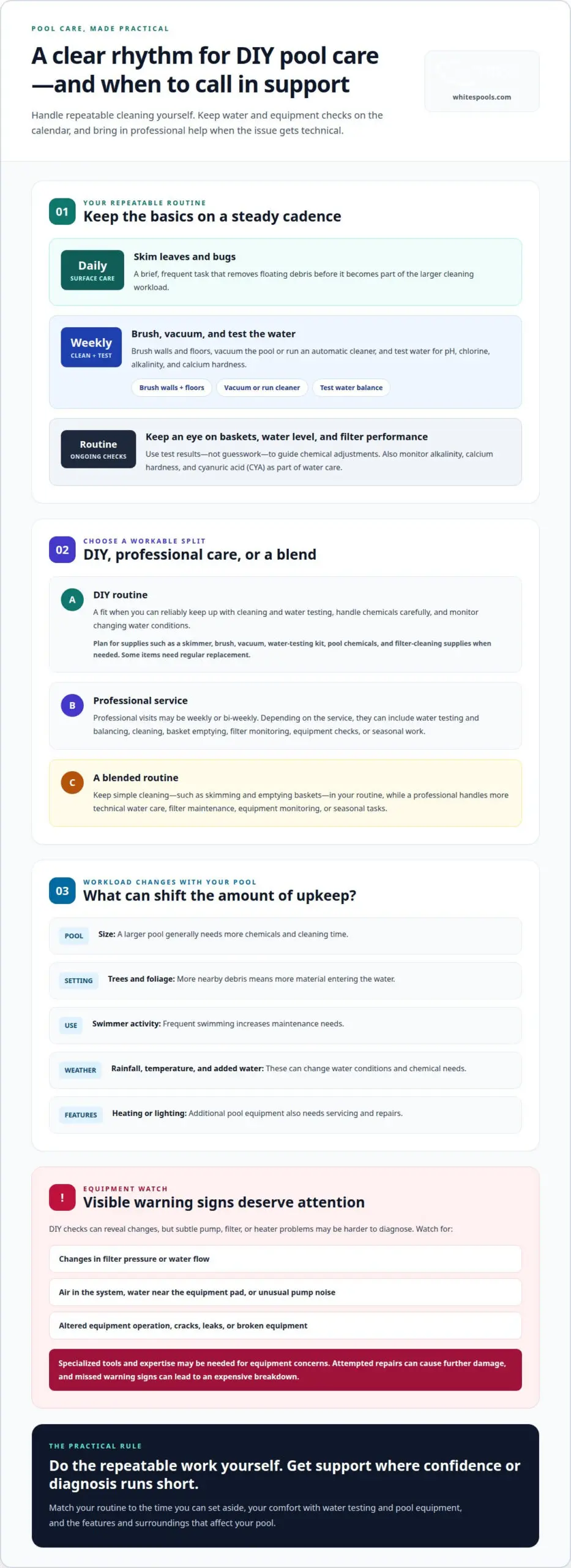
For routine cleaning, skim leaves and bugs from the surface daily, brush walls and floors weekly, and vacuum the pool or run an automatic cleaner weekly. Empty baskets, check water levels, and watch filter performance. Each task is manageable on its own, but together they require regular time and follow-through.
| DIY option | Typical task | Main commitment |
|---|---|---|
| Surface cleaning | Skim debris daily | Frequent, brief attention |
| Water care | Test and balance chemistry | Regular testing and careful adjustments |
| Full DIY routine | Clean, test, and monitor equipment | Supplies, time, and ongoing follow-through |
Choose full DIY care if you can consistently keep up with cleaning and testing.
Can I maintain my pool myself and still use a pool service?
Yes. You can handle routine cleaning while a professional pool service takes care of water quality, filter maintenance, equipment monitoring, or seasonal work. This flexible split can support steady water quality while reducing the specialized upkeep you manage yourself.
DIY Pool Maintenance Costs
DIY care avoids recurring service fees, but you’ll still spend on chemicals, testing supplies, cleaning equipment, and replacement items. Your total depends on pool size, water needs, cleaning frequency, and how much debris gets into the water. Weather, swimmer use, and added water can also change chemical needs, so supply use may vary during the season.
Professional Pool Service Costs
Professional service adds a recurring charge, influenced by pool size and maintenance frequency. Weekly or bi-weekly visits can cover water testing, chemical balancing, cleaning, basket emptying, and filter monitoring. This attention can help maintain water quality and identify issues earlier. With a combined approach, you can handle simple cleaning while professionals take care of more technical maintenance.
Equipment Breakdowns and Repair Costs
DIY checks can reveal visible changes, but subtle pump, filter, or heater problems may be harder to diagnose. Watch for changes in filter pressure or water flow, air in the system, water near the equipment pad, unusual pump noise, or altered operation. Missed warning signs can lead to an expensive breakdown. Cracks, leaks, and broken equipment may require specialized tools and expertise; attempted repairs can cause further damage.
For instance, keep skimming and emptying baskets in your routine, then use professional attention for filter maintenance or equipment concerns. This division can make upkeep more manageable without giving up a regular view of water quality. If ongoing care would help, explore pool maintenance support as part of a blended routine.
Understanding Pool Maintenance: What’s Involved?
For residential pool care, match your routine to your schedule, experience, and pool features. Skim daily, brush and vacuum weekly, and test water weekly; professional service may be weekly or bi-weekly.
Schedule, Experience, and Pool Features
Start with the time you can reliably set aside for pool care. If you’re comfortable with the filtration system, pump, heater, and chlorinator, you may prefer to handle routine checks yourself. If those systems feel unfamiliar, professional equipment monitoring can reduce the technical work on your calendar.
Pool features and surroundings also shape the workload. Trees and foliage bring more debris, while frequent swimming increases maintenance needs. Heating or lighting adds equipment that also needs servicing and repairs. A pool beside trees, used regularly, and fitted with a heater demands a different routine from an occasionally used pool in an open yard.
Cleaning, Testing, and Service Frequency
Maintenance frequency depends on the task. Skim the surface daily; brush walls and floors and vacuum weekly. Test water weekly for pH, chlorine, alkalinity, and calcium hardness. These steps provide a practical baseline, but you still need to respond to changing water conditions.
Professional visits may be weekly or bi-weekly. That schedule differs from daily surface cleaning because a service visit can combine water care, filter monitoring, and equipment checks. Heavy rainfall, warmer temperatures, added water, and swimmer use can change your pool’s needs, so watch for water-quality changes between visits.
Choose an approach by weighing your available time against your comfort with testing and equipment. If you can keep up with cleaning but aren’t confident assessing a pump or filter, split the work: handle routine brushing and debris removal, and leave technical checks to professional care.
You can also adjust the balance by season and pool use. A pool used often or surrounded by foliage calls for closer attention than one used occasionally in an open space. If your schedule changes, professional service can provide regular care during busy weeks or travel, while you handle manageable tasks when you can.
Professional pool maintenance tasks
Professional care goes beyond removing debris. A weekly visit can combine water chemistry checks, cleaning, and equipment inspection. The benefit is a coordinated review: technicians assess water condition alongside the systems that circulate and filter it, helping you spot developing issues sooner.
Water testing guides chemical balancing. A technician checks the pool water, adjusts chemicals based on its condition, and looks for signs that affect clarity, such as persistent cloudiness or algae. Cleaning can include removing debris and emptying baskets. Filter monitoring helps show whether circulation needs attention, rather than treating cloudy water as only a cleaning problem.
Equipment checks add another layer of care. A professional may inspect pumps, filters, and heaters, and note changes such as unusual pump noise, reduced water flow, or air in the system. These signs can point to equipment trouble. Identifying concerns early gives you a clearer picture of repair needs before a small issue develops into a breakdown.
- Routine visits: Maintain cleanliness, test water, balance chemistry, and monitor filters.
- Equipment oversight: Inspect pumps, filters, and heaters for changes in operation.
- Seasonal service: Prepare plumbing and equipment during opening or closing, manage water levels, and ready the water for the season.
Opening and closing a pool involve more than removing or putting on a cover. Seasonal preparation can include cleaning, adjusting water chemistry, inspecting equipment, and preparing plumbing components. The work depends on the pool’s needs and the season. Service records can also help you track observations and maintenance over time.
Professional attention is especially useful when water clarity remains poor, algae persists, or equipment behaves differently. Those symptoms can involve chemistry, filtration, or mechanical issues, so a broader assessment helps connect the signs to the likely maintenance need. For coordinated pool care, schedule professional pool maintenance.
White’s Pools: Pool Cleaning & Maintenance
White’s Pools provides Pool Cleaning & Maintenance to support water quality and equipment performance over time. It can be a practical next step when regular testing, cleaning, or equipment monitoring no longer fits your schedule, or when you want experienced care alongside the tasks you handle yourself.
A blended routine lets you manage the upkeep that suits you while professional service supports consistent care. If you’re weighing DIY against ongoing assistance, consider which tasks take the most time and where expert attention would help. Contact White’s Pools to discuss pool cleaning and maintenance for your pool.
Choose a Pool-Care Routine That Fits Your Life
The professional pool maintenance vs DIY decision doesn’t have to be permanent. Your routine can change as pool use, travel, weather, or your comfort with equipment changes. Set a sustainable baseline, then decide which parts of upkeep you want to handle yourself and where ongoing professional care would make your schedule easier.
Consider your next swimming season. If you expect more use or your calendar is already full, plan ahead for support that would make pool care manageable. If you prefer doing routine work yourself, professional help can still complement those tasks. The right balance is one that fits your pool and leaves you confident about its ongoing care.
White’s Pools offers Pool Cleaning & Maintenance for homeowners considering professional support. Explore pool maintenance with White’s Pools and take a considered next step toward a routine that works for you.
Frequently Asked Questions
Final Thoughts: Which Pool Care Option Is Right for You?
Choose an approach you can sustain alongside your pool’s needs. The choice between professional pool maintenance and DIY care often comes down to how much time you can set aside and how comfortable you are handling water chemistry and equipment. For example, if you travel frequently, you might manage simple upkeep while arranging regular professional attention for tasks that can’t wait.
What Does a Professional Pool Service Do Differently?
A professional service can assess several clues together instead of treating each symptom in isolation. For example, a change in water clarity alongside reduced flow can point to circulation or filtration, not just surface cleaning. A technician can also identify repair needs and provide maintenance records, giving you a clearer reference if a concern returns or conditions change.
When Should You Call a Professional?
Seek professional attention if cloudy or discolored water persists despite your care, algae keeps returning, or equipment shows changes such as unusual noise or reduced flow. These signs can involve water balance, filtration, or a mechanical issue. Leave electrical or gas-related repairs to appropriately qualified professionals, particularly where local rules require it, rather than attempting work without suitable expertise.
What does professional pool maintenance typically include?
A routine visit typically covers water testing and chemical balancing, pool cleaning, basket emptying, filter monitoring, and equipment checks. The technician can also note repair needs or changes in performance. For example, if water flow has changed since the previous visit, that observation can guide a closer look at circulation equipment and help shape the next maintenance steps.
What pool maintenance tasks can homeowners safely do themselves?
Homeowners can handle basic upkeep such as removing surface debris, brushing pool surfaces, emptying baskets, and testing water with an appropriate kit. Follow product label directions when handling pool chemicals, and store supplies securely. For small kiddie pools, the Centers for Disease Control and Prevention (CDC) advises against adding chlorine or bromine because splashing and spills make disinfectant amounts difficult to control.
How much does professional pool maintenance cost per month in the United States?
Monthly costs depend on pool size, pool type, and maintenance frequency. Natural, chlorinated, and saltwater pools can have different care needs, while a larger pool generally requires more upkeep. White’s Pools provides pricing after a quote request, based on the pool and service requested; these factors shape the overall scope of care.

