
A pool construction ROI calculator for 2026 is a planning tool, not a contractor bid: estimates are typically within 15–25% of a final bid. That gap matters because a calculator can’t account for your yard’s soil, access, utilities, code requirements, or finish selections. Treat the result as a useful starting point, not a precise forecast.
It’s reasonable to want a clear picture of the investment before deciding how a pool should fit your home and plans. A calculator can help organize the major costs, but its value depends on understanding what it includes and what may change the estimate.
This guide explains how calculator estimates work, which design and site factors affect construction and decking costs, and how maintenance, utilities, and repairs shape ownership expenses. You’ll also learn how to compare the estimate with your priorities and make a more informed decision about the pool you want to build.
Key Takeaways
- Use an online estimate to shape an early budget, then account for site conditions and project details that can change the final figure.
- Compare pool options by looking beyond the shell: depth, equipment, finishes, permits, and regional factors all influence the build.
- Estimate the deck area around the pool, and remember that a simple rectangular calculation may not fit freeform designs or larger patios.
- Plan for ongoing care as well as construction, including energy use, routine maintenance, and potential equipment or surface repairs.
How accurate is an online pool cost calculator?
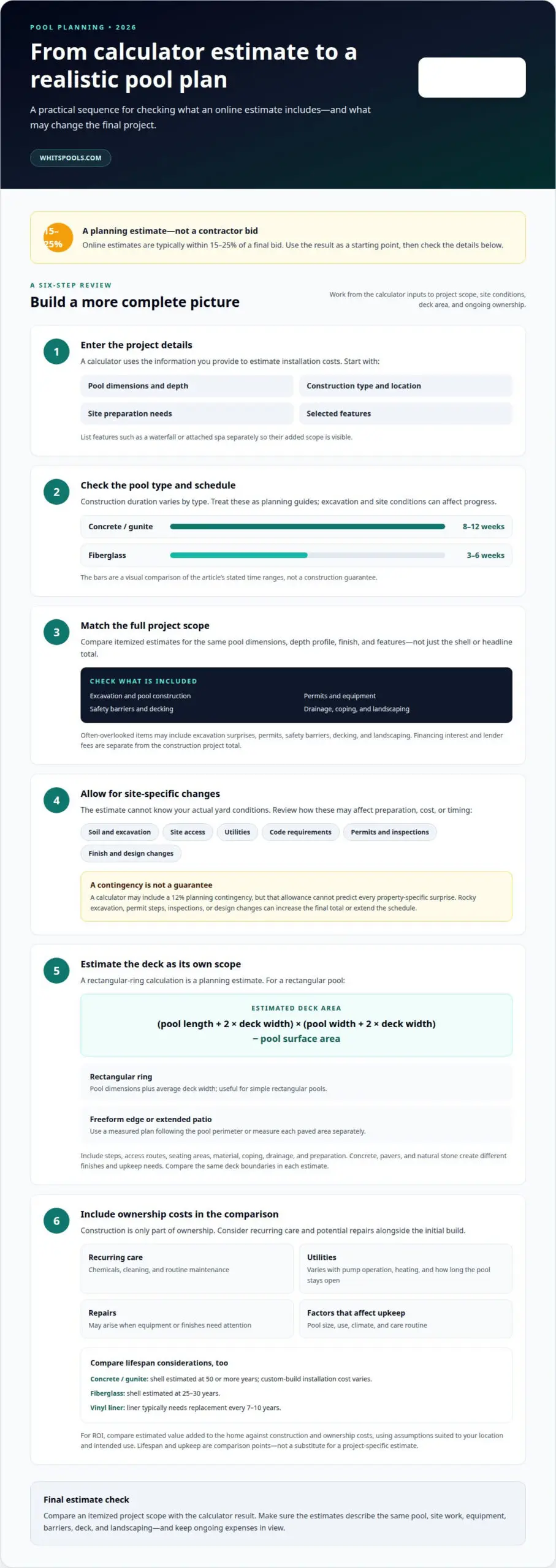
An online pool cost calculator is a planning estimate, not a contractor bid; estimates are typically within 15–25% of a final bid. Pool construction can take 8–12 weeks for concrete or gunite and 3–6 weeks for fiberglass, with excavation conditions, site access, permits, inspections, and finish choices affecting timing and costs.
Often-Overlooked Costs
Construction totals can exclude excavation surprises, permits, safety barriers, decking, and landscaping. Financing interest and lender fees are separate from the construction project total.
Pool type affects both the initial estimate and long-term maintenance. Use broad U.S. installation ranges as comparison points, not project quotes:
| Pool type | Typical installation estimate | Key lifespan consideration |
|---|---|---|
| Concrete or gunite | Varies with the custom build | Shell estimated at 50 or more years |
| Fiberglass | Shell estimated at 25–30 years | |
| Vinyl liner | Liner typically needs replacement every 7–10 years |
Compare the installed scope and expected upkeep, not just the shell estimate.
Contingency and Construction Delays
A calculator may include a 12% planning contingency, but that allowance cannot predict every property-specific surprise. Its estimate cannot account for your actual yard, soil, access, utilities, code requirements, or finish selections. Rocky excavation, permit steps, inspections, and changes to the planned design can extend the schedule or increase the final project total.
Construction timelines differ by pool type: concrete or gunite builds typically take 8–12 weeks, while fiberglass builds take 3–6 weeks. Treat those durations as planning guides, since excavation and site conditions can affect progress. Compare an itemized project scope with the calculator result, including decking, barriers, equipment, and landscaping, before judging whether the estimate reflects the full build.
What factors determine your pool’s cost?
The pool construction ROI calculator 2026 helps compare installation scope, but the result depends on what you include.
Estimator Inputs and Outputs
Enter pool dimensions, depth, construction type, location, site preparation, and selected features. A pool construction ROI calculator 2026 uses those inputs to estimate installation costs, but it won’t determine resale value by itself. For ROI, compare the estimated value added to your home against construction and ownership costs, using assumptions suited to your location and intended use.
Site and Location Factors
Ground conditions and site access can change excavation and preparation needs, while regional pricing affects labor and materials. Features such as waterfalls or an attached spa also change the scope, so list them separately in the estimate.
Equipment and Installation Costs
Equipment adds distinct line items beyond the shell. The installation estimate should identify equipment, drainage, barriers, coping, and landscaping responsibilities. That lets you compare proposals based on matching work rather than headline totals.
Full-Project Cost Estimates
A full-project estimate combines excavation, pool construction, permits, equipment, safety barriers, decking, and landscaping. Compare estimates for the same dimensions, depth profile, finish, and features. This makes the projected inground pool cost more useful for planning ownership.
Decking materials and estimated deck area
A pool deck affects both usable outdoor space and the overall project estimate.
Many calculators estimate a rectangular deck ring using the pool dimensions and an average deck width. For a rectangular pool, calculate the outer rectangle, then subtract the pool’s surface area: (pool length + twice the deck width) × (pool width + twice the deck width), minus pool area. This is a planning estimate, not a measured layout.
| Deck layout | Area estimate approach | Best use |
|---|---|---|
| Rectangular ring | Pool dimensions plus average deck width | Simple rectangular pools |
| Freeform edge | Measured plan following the pool perimeter | Curved pool shapes |
| Extended patio | Separate measurement of each paved area | Large entertaining spaces |
Material selection affects the look and upkeep of the surrounding space. Concrete, pavers, and natural stone create different finishes, while coping provides the transition at the pool edge. A fiberglass pool’s shell type does not determine deck area; the pool’s shape, perimeter, and chosen walking space do. Include steps, access routes, and seating areas in the plan.
Use a calculator’s deck figure as a ballpark, then compare it with a contractor’s measured scope. A freeform design or extensive patio needs a separate measured plan because a rectangular-ring estimate may miss its true area—home improvement specialists such as Acadiana Patios & Construction often emphasize that integrated paved areas and patio structures require exact layout measurements. Check that estimates describe the same deck boundaries, material, coping, drainage, and included preparation. Otherwise, differences in pool costs may reflect different project scopes, not a more accurate inground pool cost. For ground pools, separate the pool footprint from adjoining deck space before comparing totals.
Ongoing maintenance, utilities, and repairs
Construction is only part of ownership. Chemicals, energy, cleaning, and repairs continue after installation, so include these operating needs in your long-term estimate alongside the initial build.
Annual Operating Expenses
Annual operating expenses cover recurring care, while repairs arise when equipment or finishes need attention. These are general upkeep estimates, not construction costs. Pool size, use, climate, and care routine affect the work required and the chemicals consumed.
Utilities and Repair Costs
Utilities vary with pump operation, heating, and how long the pool stays open. Average U.S. A heater can increase energy use, especially when maintaining warmer water.
Cleaning supplies are another recurring consideration. Chemicals help maintain water balance, while skimming, brushing, and filter care remove debris and support circulation. The amount used depends on pool volume, swimmer load, weather, and water conditions. Track chemical purchases and filter upkeep separately from energy use to show where regular ownership expenses go.
Pool type also shapes long-term planning. Concrete or gunite pools have different surface-care needs from fiberglass pools, while a heater adds a utility consideration regardless of shell material. Add expected equipment replacement to the ownership timeline instead of treating installation as the only major expense. Review the estimate annually and update it when use or equipment changes.
For ongoing care, explore pool cleaning and maintenance as part of your ownership plan.
White’s Pools
White’s Pools can help turn a preliminary estimate into a clear plan for your property, from pool design and construction to ongoing care. If you’re weighing how pool type, features, decking, and maintenance fit your budget, a project-focused discussion can connect those choices to your priorities. White’s Pools designs and builds custom concrete and indoor pools, and provides pool cleaning and maintenance. The company is a natural next step when you’re moving beyond calculator figures toward a pool plan or seeking care after installation. Share what you’re considering and where you are in the planning process. Contact White’s Pools to discuss your pool project.
Shape a pool plan around how you’ll live
A pool’s value isn’t only a future resale figure. It also comes from how thoughtfully the design fits your home, outdoor space, and everyday routines. Use a pool construction ROI calculator for 2026 as one planning reference, then consider which features will make the space genuinely useful to you.
White’s Pools can help translate your priorities into a considered outdoor plan, with Custom Concrete Pools, Pool Cleaning & Maintenance, and Outdoor Fireplaces among its offerings. Think about how the pool will connect with the rest of your yard, how you expect to care for it, and which details matter most to your household. These decisions give a project discussion a clear starting point beyond the calculator’s figures.
When you’re ready to explore a design that fits your home and plans, contact White’s Pools to discuss your pool. Take the next step with a vision that feels right for your space.
Frequently Asked Questions
How much should I reserve for unexpected pool costs?
Use the calculator’s 12% planning contingency as a starting reserve, then tailor the buffer to site uncertainty. It can help absorb changes from excavation, access, utility connections, or finish decisions. Keep it separate from planned extras such as decking and barriers, so contingency funds don’t become the budget for features already chosen. Revisit the reserve if the project scope changes.
What other costs should you budget for?
Plan beyond the pool shell for fencing, hardscaping, landscaping, and accessories. Pool owners may need to budget 25–40% beyond a builder’s quote for these items—coordinating with an experienced site and landscape contractor like Green Earth, LC can help clarify these expenses early on. Also account for permits, utility work, and financing interest or lender fees, which aren’t included in the construction project total. Separating each item helps reveal whether estimates cover the same scope.
What is the average cost to build an in-ground pool in the U.S. in 2026?
There is no single useful average for every U.S. in-ground pool because project scope varies. Pool type, size, site preparation, regional conditions, permits, equipment, and decking all affect the total. Treat a calculator result as an early planning figure, then compare it with an itemized estimate covering the same features and responsibilities. Include financing costs separately when planning the full investment.
How much does pool construction add to home value and resale ROI?
Estimates place pool-related home-value increases at 5–8% in warm climates and 0–3% in cold climates. Estimated ROI ranges are 33–53% in warm climates and 0–20% in cold climates. These measures aren’t interchangeable: added home value is not the same as net return after construction and ownership expenses. Local resale demand and the property’s fit matter too.
How can I calculate pool construction ROI using cost, home value, and annual expenses?
Estimate ROI as (pool-related increase in resale value minus total pool investment) divided by total pool investment, then multiply by 100. Include construction and related project costs, plus annual operating expenses multiplied by your planned ownership years. For resale value, estimate the difference between the home’s value with the pool and its value without one. Keep assumptions consistent.
How do pool construction costs vary by pool type, size, materials, and region?
Pool type and material affect installation scope and future care. Concrete, fiberglass, and vinyl pools have different construction and maintenance needs. A larger pool or deeper profile generally requires more work and materials than a smaller, shallower design. Regional labor and site conditions also shape estimates. Compare options using matching dimensions, features, equipment, and project responsibilities.

