
The finish that looks most beautiful in a small sample may create a very different effect across an entire pool. That’s why dark bottom vs light bottom pool aesthetics are about more than choosing a shade: water depth, sunlight, and the colors around the pool all influence the final look.
Light interiors tend to create a bright, classic feel, while dark interiors can give water a deeper, more reflective appearance. Neither is automatically the better choice. To decide, consider the atmosphere you want, the materials around the pool, and the views you’ll see most often from your home and outdoor living areas.
This guide compares how dark and light finishes shape water color and mood, then offers practical ways to evaluate samples in context. Pool shape, sunlight, and surrounding materials all affect the finished impression, so it helps to consider them together when planning a custom concrete pool. White’s Pools designs and builds custom pools, bringing finish, form, and setting into one design.
Key Takeaways
- Compare the brighter feel of light interiors with the deeper, more reflective mood of dark finishes to identify the atmosphere you want.
- Account for sunlight, water depth, and nearby surfaces, which can make a finish look different in the pool than it does in a sample.
- Use dark bottom vs light bottom pool aesthetics to assess which option complements your home’s architecture, landscape, and desired focal point.
- View finish samples beside your home, deck, coping, and landscape materials, and compare them in both sun and shade if both conditions occur.
- Consider interior color alongside pool shape, tile, and surrounding details as part of a cohesive custom concrete pool design.
Dark vs. Light Pool Bottoms: How Each Changes the Water’s Look
A light pool bottom generally gives the water a brighter, more open appearance, while a dark bottom tends to create a deeper, more reflective mood. These are tendencies, not guaranteed results. The finish is only one part of the picture: water depth, sunlight, the sky, and nearby materials all affect the color you see from the patio or poolside.
| Visual quality | Light interior | Dark interior |
|---|---|---|
| Brightness | Often reads as fresh and luminous | Can feel subdued, rich, or reflective |
| Visual depth | May make the water feel open and inviting | Can suggest greater depth and stillness |
| Atmosphere | Airy, relaxed, and classic | Dramatic, polished, or lagoon-like |
| Design compatibility | Pairs naturally with pale, coastal, or understated palettes | Can complement bold architecture and richly toned landscapes |
The pool interior doesn’t simply “paint” the water a single color. Light interacts with the water and reflects the sky and surrounding surfaces, while depth and finish affect the overall impression. As background, the intrinsic color of water is connected to how light is absorbed and scattered. In a backyard, that effect combines with the pool’s interior and surroundings, so a small sample may not look exactly like the finished water.
What a light pool bottom tends to evoke
Lighter interiors can make a pool feel bright, open, and fresh, lending an easygoing quality to the backyard. They may suit airy architecture, pale paving, restrained planting, or a coastal-inspired palette. The effect isn’t limited to one shade of blue. Sunlight, water depth, and the colors of coping and decking can all shift what you perceive. Compare the finish with those elements instead of judging it by itself.
What a dark pool bottom tends to evoke
Darker interiors can suggest a dramatic, reflective surface with a more intimate, lagoon-like character. They may sit comfortably alongside strong architectural lines, deep-toned stone, or a landscape with rich greens. The setting matters: the water can look different in bright sun, shade, or reflected greenery. Don’t assume a dark sample will create the same impression in every backyard.
That’s the heart of dark bottom vs light bottom pool aesthetics: interior color helps set the pool’s visual character, but it works in partnership with light, depth, and design. “A pool finish doesn’t just change the water’s color; it helps shape the character of the entire backyard.”
Why Sunlight, Depth, and Surroundings Change Pool Water Color
Perceived pool-water color comes from the combined visual effect of the interior finish, available light, water depth, and the surfaces around the pool. The finish matters, but it doesn’t produce the same result in every backyard. Light interacts with the water, which also reflects parts of the sky and nearby surroundings. Even the home’s exterior or a stretch of pale paving can influence the overall impression.
A photograph or showroom sample can help you compare options, but it can’t guarantee an identical appearance in your finished pool. Photos may be taken under different lighting, and a small sample can’t show how the finish will look across a broad surface or at varying depths. When considering the dark bottom vs light bottom pool aesthetics you have in mind, assess the full setting along with the material color.
Perceived pool-water color is shaped by the interior finish, sunlight, depth, viewing angle, water movement, and the colors reflected from the surrounding space.
How natural light and viewing conditions affect the finish
Direct sunlight can make the pool look brighter and bring out reflections. In shade, the same interior may appear more subdued, while changing daylight can shift the balance over the course of the day. Your viewing position matters, too. Looking across the surface from the deck may give a different impression than looking down from a window or standing near the water.
Water movement adds another layer. Ripples catch and break up reflections, while still water can show a more continuous reflection of the sky or nearby structures. When comparing photos or finish references, look for examples taken in lighting similar to the planned pool setting. A sunny image may not represent a shaded courtyard, and the reverse is true as well.
How pool depth and landscape colors shape the result
Depth and interior tone work together visually. A finish viewed through a shallow area may seem different from the same finish beneath deeper water, but there’s no single color outcome that applies to every pool. Pool shape and the way the water meets surrounding surfaces also affect what catches the eye. Consider the whole composition, not just the center of the pool.
Look at the deck, coping, stone, planting, and home exterior as parts of the palette. Pale paving beside a darker interior can create strong contrast; deep-toned stone or dense greenery may reinforce a more grounded, natural mood. These relationships are part of planning a custom concrete pool. Explore custom pool design with White’s Pools to bring finish, form, and setting together.
Dark or Light Pool Bottom: Which Aesthetic Fits Your Backyard?
Choose a finish by picturing the role you want the pool to play in the backyard. Should it feel bright and integrated with a pale patio, or stand out as a darker, more dramatic focal point? The home’s architecture, landscape, and surrounding materials help answer that question. A finish that feels harmonious beside one home might compete with the colors and lines of another.
Think about the views from places you use often, such as a lounge area, dining space, or window facing the yard. The pool should feel connected to those sightlines, not selected as an isolated color swatch. This makes the dark bottom vs light bottom pool aesthetics comparison more useful: you’re weighing how each option supports the atmosphere and composition of your outdoor space.
When a lighter interior may suit the design
A lighter interior may suit a homeowner seeking a bright, visually open setting. It can work naturally with pale decking, light stone, and a restrained palette where the pool is meant to feel calm and integrated. Contrast doesn’t have to come from a dark bottom. Pool tiles or coping can add definition around the water while preserving an airy impression. Consider whether those accents echo details already present in the home.
When a darker interior may suit the design
A darker interior can be a strong fit if you want the pool to add depth, contrast, or a dramatic focal point. Dark architecture, natural stone, and richly toned planting may complement that direction, especially in a naturalistic backyard design. But a dark finish can compete with other bold elements if the whole space is already visually busy. Decide which feature should draw the eye first.
Use this decision matrix to connect your design priority with a starting direction. It’s a guide, not a rule: the surrounding palette and viewing conditions can change how the finished design reads.
- Bright, open atmosphere: Consider a lighter interior, particularly alongside pale paving and a simple palette.
- Dramatic contrast: Consider a darker interior when the pool should stand out against lighter surroundings or reinforce bold architecture.
- Naturalistic retreat: Explore how a deeper-toned interior might sit with stone and layered planting, while keeping the landscape cohesive.
- Understated integration: Compare either finish with the home and deck colors, then choose the option that feels connected rather than attention-grabbing.
Neither direction is universally better. A dark finish may look considered beside deep-toned architecture, yet feel imposing against an otherwise pale, minimal setting. A light finish may blend beautifully with a quiet palette, but lack the contrast you want for a focal point. Pool shape, tile accents, and coping also contribute to the final composition, so assess the interior as one choice within the complete design.
Before settling on an aesthetic, name the feeling you want the backyard to have and identify which existing features should guide the palette. This gives you a clearer basis for comparing options and shaping a custom concrete pool design around your home, landscape, and preferred atmosphere.
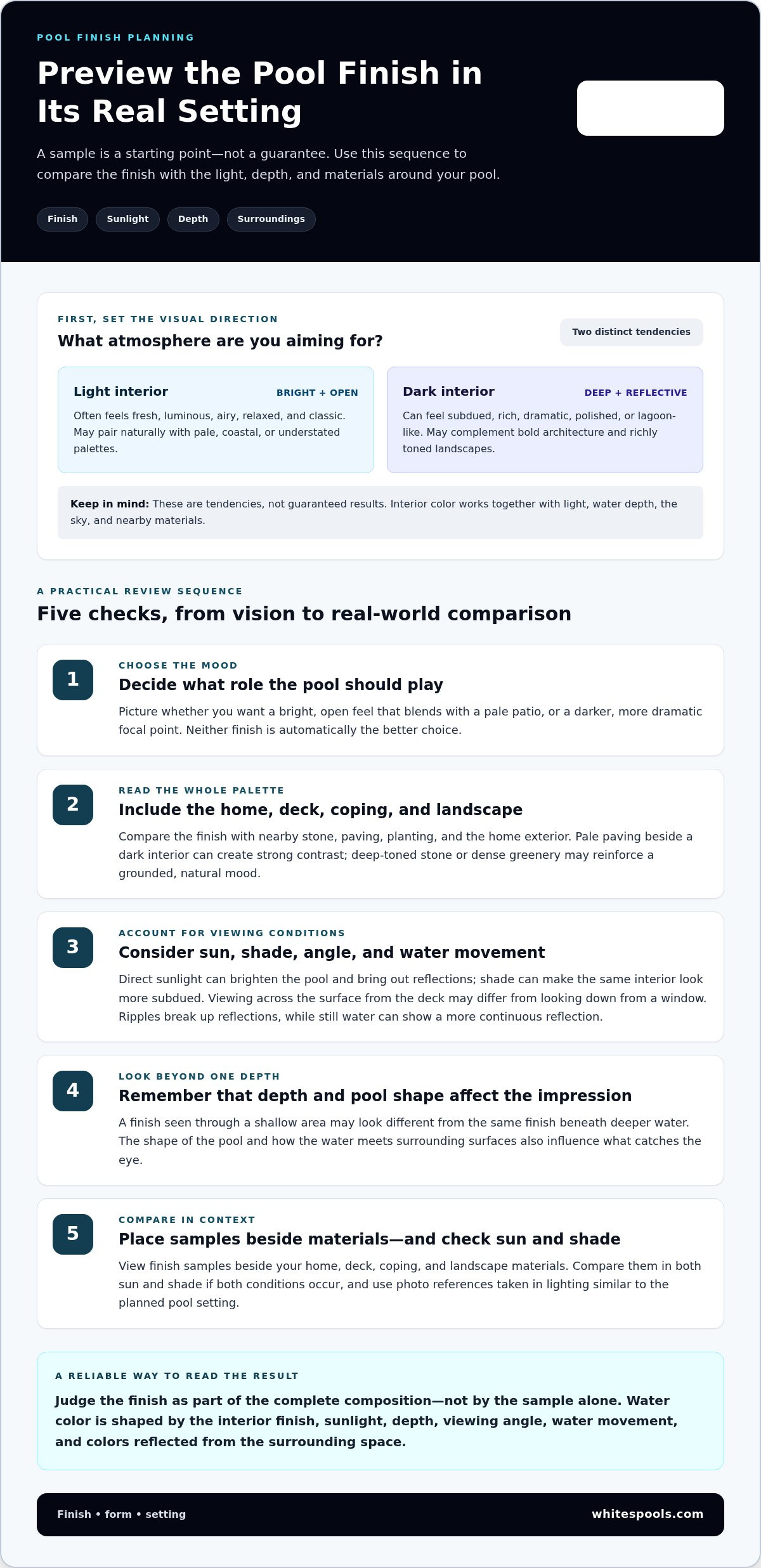
How to Preview and Choose a Pool Bottom Color with Confidence
Start with the backyard mood you want, not the color of a sample. A finish should make sense beside the home, landscape, and pool design, so judge it as part of the complete setting. This process can turn a broad preference, such as “bright and calm” or “deep and dramatic,” into a considered design direction.
- Describe the atmosphere. Write down a few words for how you want the space to feel. This gives you a clear standard for comparing dark bottom vs light bottom pool aesthetics, rather than choosing a shade simply because it looks appealing on its own.
- Gather complete-setting references. Save images that show the water alongside coping, deck, home exterior, and planting. Sort them by mood, such as bright and calm or deep and dramatic, and note which surrounding materials recur in the images you prefer.
- Compare samples with your palette. Place finish samples beside the actual or planned exterior, deck, coping, stone, and landscape materials. Look for harmony as well as contrast. A finish may complement one element but feel disconnected from the overall palette.
- Review similar project settings. Choose reference images with lighting, architecture, and landscape features close to your own. An isolated pool photo may be inspiring, but a complete view makes it easier to judge how the water relates to the backyard.
- Consider the pool as a whole. Think about how interior color will work with the pool’s shape and surrounding features, including tile accents and outdoor living areas. White’s Pools can bring these elements together in a custom pool design.
Build a visual reference for the complete pool setting
Include more than close-ups of water. A useful reference shows how the finish sits with the coping, paving, house, and planting, because those relationships help define the mood. For broader context on how finish selection fits into a custom concrete pool, the ideas in The Ultimate Guide to Custom Concrete Pools: Design, Longevity, and Luxury can help you consider the design as a connected whole.
Compare samples in context before finalizing the look
Look at samples beside the materials planned for your backyard, and compare them in sunny and shaded conditions if both occur at the property. Notice whether your preferred effect holds together or shifts with the light. Bring your references and preferences into a design discussion so the finish supports your custom pool’s shape, setting, and overall vision.
White’s Pools designs and builds custom concrete pools, bringing the interior finish into the wider design conversation. Discuss your custom pool vision with White’s Pools and explore how the finish can work with the rest of your outdoor design.
Bring Your Dark or Light Pool Vision into a Custom Design
Your pool’s interior color is one choice within a larger design, not a decision made in isolation. The finish direction should relate to the pool’s shape, tile details, coping, water features, and the way the pool meets the home and landscape. A light interior might support an open, relaxed setting, while a dark one could reinforce a more dramatic focal point. The best fit is the one that works with the full vision for your backyard.
Approach dark bottom vs light bottom pool aesthetics as part of a coordinated custom concrete pool design. White’s Pools designs and builds custom pools, using a family-owned, third-generation team to bring homeowners’ visions into a pool shaped for its setting.
Coordinate the interior with the complete outdoor environment
Consider how the finish will look alongside the pool’s geometry and the details that frame it. Tile can introduce an accent or echo colors elsewhere in the yard, while coping helps define the pool’s edge. Water features add movement and sound, and nearby outdoor living elements, such as a fireplace or seating area, influence how the pool fits into the overall composition. The goal is visual cohesion, with each element contributing to the atmosphere you want.
For example, a restrained palette might use a lighter interior, simple coping, and subtle tile accents to keep the pool integrated with its surroundings. A more expressive plan could pair a darker interior with strong geometric lines and complementary outdoor features. These are starting points, not formulas. Let the proportions, materials, and sightlines of your space guide the final design.
Turn a preferred aesthetic into a custom pool plan
Bring together three parts of your vision: the mood you want, the colors and materials already present, and the setting where the pool will sit. “Bright and calm,” paired with pale stone and a light home exterior, tells a different design story than “deep and dramatic,” paired with rich planting and darker architectural details. Sharing those preferences gives the design conversation a clear foundation.
From there, consider the interior finish alongside pool shape, tiling, coping, and features that connect the pool to the rest of the backyard. White’s Pools brings custom design-and-build experience to these decisions, with the home and landscape in view. You don’t need every detail finalized to begin. A mood, a few material references, and the features you value most can help express the direction you have in mind.
Ready to shape those ideas into a pool that feels at home in your outdoor space? Discuss your custom pool vision with White’s Pools.
Shape the Pool Around the Way You Want to Feel
Before choosing a finish, picture the experience you want the backyard to create. Perhaps the pool should feel like a quiet extension of the home, or become a striking centerpiece for gathering and entertaining. That sense of purpose can guide the decisions that follow, from interior color to pool shape and the details that connect the water with its surroundings.
There’s no single right answer to dark bottom vs light bottom pool aesthetics. The right direction is the one that feels at home with your architecture, landscape, and personal vision. As you move from inspiration to a real design, bring the colors and materials you’re drawn to into the conversation. A thoughtful custom concrete pool design can turn those preferences into a cohesive outdoor setting.
White’s Pools is a family-owned, third-generation business with more than 75 years in business, designing and building custom concrete pools. Discuss your custom pool vision with White’s Pools and take the next step toward a backyard that feels distinctly yours.
Frequently Asked Questions
Does a dark pool bottom make the water look darker?
Usually, a dark interior can make the water appear deeper or more subdued, but the effect varies with lighting and the pool’s surroundings. A shaded pool beside dark stone, for example, may feel more enclosed than the same finish in an open, sunny yard. Look at the pool from the main seating area and from above, since the view can change how prominent the dark surface appears.
Will a light pool bottom always make pool water look blue?
No, a light bottom doesn’t guarantee blue-looking water. The water may appear brighter, but its visible color also responds to the sky, shade, nearby materials, and the finish itself. Reflected greenery, for example, can lend a different cast than a view framed by pale paving and open sky. If a particular impression matters to you, compare complete pool images in similar settings rather than relying on a color label alone.
Does a dark pool bottom make the pool feel warmer?
A darker finish may absorb more sunlight, which can contribute to warming, but it doesn’t determine water temperature by itself. Sun exposure, wind, climate, and pool conditions also play a part, so there’s no single temperature change to expect from color alone. If warmth is a priority, treat finish shade as one design consideration, not a substitute for planning the pool’s broader environment and intended use.
Is a dark pool bottom harder to keep looking clean?
It can be harder to spot some debris against a dark surface, while pale debris may stand out more clearly on a light bottom. A light interior can make leaves or small particles easier to notice during a quick visual check. Dark finishes may also make dark-colored growth less obvious. Choose with the visual cues you prefer in mind, and remember that appearance doesn’t replace regular pool cleaning and care.
Can pool lights change how a dark or light bottom looks at night?
Yes, pool lighting can change the nighttime impression of either finish by adding illumination and reflections to the water. A light interior may appear more luminous under the same setting, while a dark one may retain a more dramatic feel. The result depends on light placement, surrounding darkness, and water movement. Consider evening views from the house and outdoor seating areas, not just the pool’s appearance during daylight.
Can you combine dark and light finishes in one custom pool design?
A custom design can bring contrasting tones together through choices such as the main interior finish, tile accents, and details around steps or ledges. For instance, a restrained overall palette might use a contrasting tile band to define an edge without making every surface compete for attention. Decide where you want contrast and keep it connected to the pool’s shape and surrounding materials.
How do I choose a pool bottom color that complements my home?
Start with the home’s lasting exterior elements, such as roof, siding, stone, and trim, then compare them with the deck and landscape palette. The dark bottom vs light bottom pool aesthetics choice should support the feeling you want, not simply match one surface. Gather samples or reference images and view them near those materials. Notice which combination feels cohesive from the rooms and outdoor areas where you’ll see the pool most.

