
What should you check before your first swim? When equipment instructions are scattered and care routines are unfamiliar, it can be hard to know where to begin. A practical new pool owner checklist gives you a clear plan for understanding your pool, building safe habits, and noticing changes early.
It’s natural to feel excited about a new pool and cautious about caring for a major investment. Start by gathering handover records, learning what each piece of equipment does, and noting care instructions for your specific pool. Then set up routines for water checks, cleaning, and safe swimming, following your pool and equipment guidance rather than relying on guesswork.
This guide covers what to record during handover, how to learn your equipment, and how to build recurring care into your routine. It also explains which changes to note and when professional pool cleaning and maintenance can support consistent water care and equipment attention.
Key Takeaways
- Use handover to create an easy-to-update record of your pool’s dimensions, finish, features, and equipment details.
- Learn what the circulation, filtration, and water-treatment systems do before setting a routine. Don’t change controls you don’t understand.
- Use the new pool owner checklist as a starting point, then tailor visual checks, water testing, cleaning, and equipment observations to your pool’s manuals and conditions.
- Track changes in water appearance, flow, sounds, or equipment behavior so you can recognize when an issue needs professional attention.
- Keep a simple care log and consider professional pool cleaning and maintenance for consistent water care and equipment attention.
New Pool Owner Checklist: What to Record at Handover
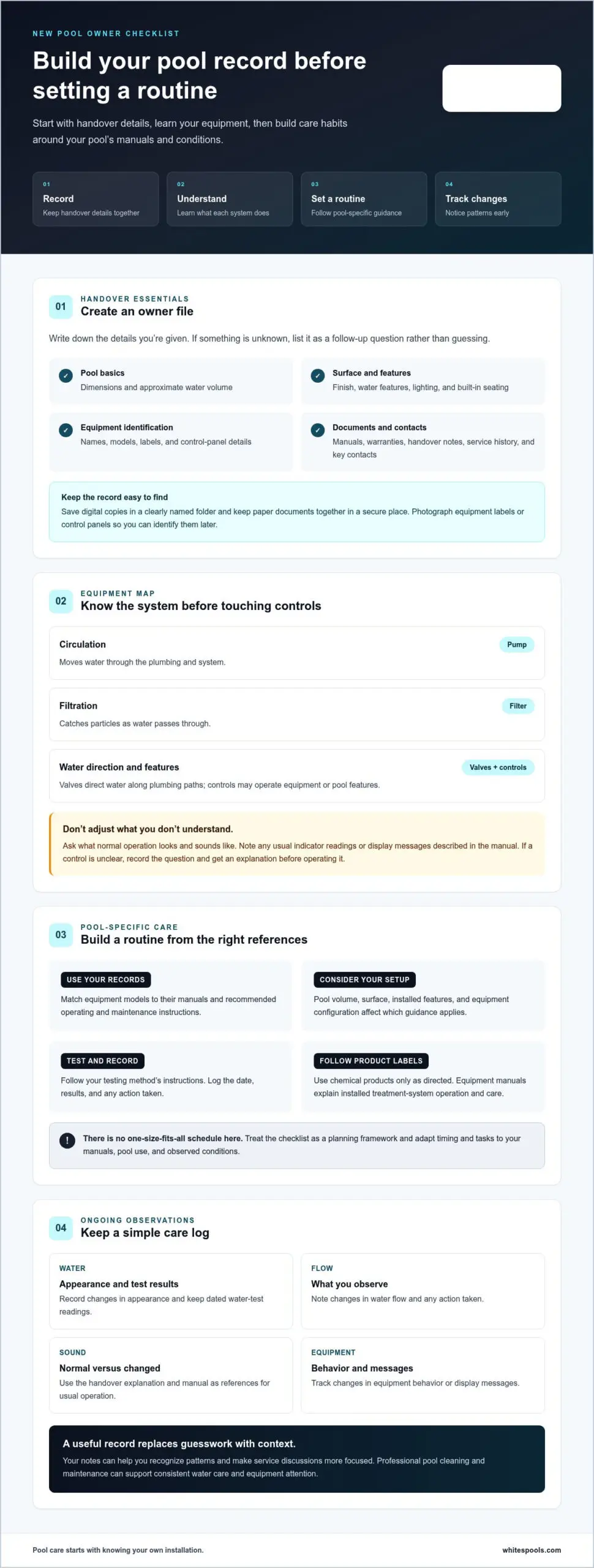
Handover is your chance to collect information that will make pool ownership easier, not a test of how much technical detail you can memorize. Take notes, gather documents, and photograph equipment labels or control panels so you can identify them later. Review the details at your own pace and use them to build a care routine suited to your pool.
Accurate pool records make future care more informed and less dependent on guesswork. Start an owner file, digital or printed, and keep it somewhere easy to find. A general swimming pool overview can explain pool types and construction, but your handover documents are the reference for your specific installation.
Build a pool and equipment record
Make an inventory of the pool and its circulation equipment, and keep related paperwork together. Record the details you’re given. If something is unknown, note it as a follow-up question rather than guessing.
- Pool dimensions and approximate water volume
- Surface or finish, plus installed features
- Equipment names, models, and label information
- Manuals, warranty documents, and handover notes
- Available service history and key contacts
Save digital copies in a clearly named folder and keep paper documents in one secure place. Add any questions that remain after the walkthrough, such as what a control does or which manual explains a feature. A written list helps make future service discussions focused and useful.
Understand what the pool was built to include
Record the details that shape how your pool is used and cared for. Note its surface, water features, lighting, and any operating instructions provided during handover. If you own a custom concrete pool, keep construction and finish information with your other records. These details give future care discussions a clear starting point and preserve context about the original design.
- Describe features in plain language, such as a waterfall, lighting, or built-in seating.
- Keep operating instructions with the relevant feature’s manual.
- Note care guidance specific to the surface or installed equipment.
A custom concrete pool guide may also help you understand broader design and construction considerations. Keep your project documents close at hand, since they record the materials and features selected for your pool. With an owner file in place, you’ll have a useful reference as you learn the equipment and establish regular care.
Learn Your Pool’s Equipment Before Setting a Routine
Before deciding what to check each day or week, learn how your pool’s systems work together. Circulation moves water through the plumbing, filtration captures debris, and water-treatment equipment helps manage water care. The right operating instructions and maintenance intervals depend on your pool’s volume, features, and equipment configuration.
Use the manuals and handover materials for your installed equipment as your primary references. A routine that suits one pool may not suit another, so avoid applying a universal schedule or changing settings based on guesswork. Understanding each component is a practical next step in your new pool owner checklist.
Identify circulation and filtration components
Use your pool records to locate the pump, filter, valves, and visible control panel. The pump moves water through the system, and the filter catches particles as water passes through it. Valves direct water along different plumbing paths, while controls may operate equipment or features. Together, these components circulate and filter pool water.
During handover, ask for a plain-language explanation of what normal operation looks and sounds like. Note any usual indicator readings, display messages, or sounds described in the manual. Don’t turn unfamiliar valves or change a control setting just to see what happens. If a control’s purpose isn’t clear, write down the question and get an explanation before operating it.
Know the basics of water care
Water testing helps you monitor water balance and notice when readings differ from the guidance for your pool. Follow the instructions for your testing method, and use chemical products only as directed on their labels. Equipment manuals may also explain how an installed treatment system operates and what care it requires.
Routine testing checks your water, but it doesn’t replace equipment manuals or product instructions. Record test results, the date, and any action taken. A simple log makes patterns easier to spot and gives you useful context if you need help interpreting a change.
Match the routine to your installation
Before building a schedule, identify your equipment model and find its recommended operating and maintenance instructions. Your pool’s approximate volume and installed features matter too. A water feature, lighting system, or other specialized equipment may have its own operating guidance. Use your records to match each instruction to the right component instead of relying on generic advice.
Start by observing normal operation and learning where the controls are. Leave unfamiliar adjustments to someone who understands the system. For consistent support with water care and equipment attention, professional pool cleaning and maintenance can be part of your care plan.
Create a Safe, Repeatable New Pool Owner Checklist
A dependable routine makes pool care easier to manage and helps you notice changes. Use the sample below as a planning framework, not a universal service schedule. Adapt the timing and tasks to your equipment manuals, pool use, and observed conditions. A pool used more often or exposed to extra debris may need a different routine from one used less frequently.
Routine observation helps you spot changes, but it doesn’t diagnose or repair equipment. If something seems unusual, record what you see and avoid adjusting unfamiliar controls. This distinction helps you care for the pool while recognizing when a qualified professional should assess a concern.
Set up a routine that fits the pool
Use daily, weekly, and periodic categories to organize care, not as fixed instructions. Follow the guidance for your pool and equipment, and adjust your plan when use or conditions change. A brief log of checks, test results, cleaning, and maintenance can reveal patterns and help keep tasks on track.
- Daily or before swimming: Look over the water and pool area. Note visible debris, unusual appearance, or anything that could affect safe access. Check that the area is ready for use and that children are supervised.
- At the frequency in your instructions: Test the water using the method recommended for your pool, and record the results. Follow testing-product directions and the guidance for any treatment system. Don’t add chemicals based on a guess or another pool’s routine.
- As part of regular cleaning: Remove visible debris and clean the pool as appropriate for its surface and features. Follow the relevant pool-care and equipment instructions, especially if you’re unfamiliar with a tool or cleaning method.
- During equipment checks: Observe the indicators and operation you learned about at handover. Record changes in flow, sound, or display messages instead of attempting a repair or changing an unfamiliar setting.
- Periodically: Review your log, manuals, and maintenance notes. Revisit the routine after changes in pool use or conditions, and note questions that need professional attention.
Put household safety checks on the list
Make safe access part of the routine. Check that barriers and gates are secure, keep the pool area clear of avoidable hazards, and maintain attentive supervision whenever children are near the water. Follow applicable local safety requirements, since details can vary by location and pool.
Make sure household users know the pool’s safety expectations, how to get help in an emergency, and where emergency equipment is kept. Keep those locations clear and accessible. A checklist supports good habits, but it doesn’t replace active supervision or the safety measures appropriate to your household and pool. Keep the routine visible and straightforward so everyone understands their part.
Respond to Weather Changes and Early Warning Signs
Your routine should respond to conditions around the pool, not just the calendar. Rain, wind, heat, falling leaves, and a change in swimmer numbers can affect debris, water appearance, and the attention your pool needs. After significant weather or heavier-than-usual use, look over the pool and equipment before returning to your usual routine. Follow your manuals for any operating adjustments.
Adjust checks when conditions change
After a storm, check whether debris has collected, the water looks different, or the equipment appears to be operating as usual. Wind can blow in leaves and other material, while heavy rain can coincide with changes worth noticing. These are reasons to check, not proof that a specific problem has occurred. Follow your pool’s instructions for seasonal operation or shutdown, since procedures depend on the installed system and local conditions.
Make your observations specific. Instead of writing “pool looks off,” note what changed, when you noticed it, and whether it followed weather or increased use. A clear record makes it easier to describe a concern if you need professional guidance.
Know when an observation needs attention
Use your new pool owner checklist to track visible changes without trying to diagnose their cause. Watch for:
- Water that looks unusually cloudy, discolored, or different from its normal appearance
- Flow that appears weaker, stronger, or otherwise unlike its usual pattern
- New or changing sounds from operating equipment
- Displays, indicators, or equipment behavior that differ from what the manual describes
- A change that continues after you’ve noted it, or returns under similar conditions
Record the date, what you observed, and relevant context, such as recent weather or a change in pool use. Compare what you see with the equipment instructions, but don’t open equipment housings or attempt unfamiliar electrical or mechanical repairs. If a control or component is unclear, pause and arrange qualified help rather than experimenting.
Some situations need a different response from routine follow-up. If you notice a potential electrical hazard, damaged equipment, or another immediate risk, keep people away from the affected area and don’t operate or handle the equipment. Seek appropriate professional assistance. For a non-urgent question, your notes and manuals can help make a service discussion clear and productive.
Weather-related changes can be easy to miss once care becomes routine. White’s Pools provides professional pool cleaning and maintenance to support consistent water care and equipment attention.
Plan Ongoing Pool Care With the Right Support
There’s no single right way to manage pool care. Some owners prefer to handle routine observations, testing, and straightforward cleaning themselves. Others value professional support for consistent water care and equipment attention. Your available time, confidence with the pool’s instructions, and the complexity of its features can help you choose an approach that feels manageable.
Start with the responsibilities you understand and can complete safely. Follow the manuals for testing, cleaning, and equipment care, and leave unfamiliar adjustments or repairs to qualified professionals. A blended approach can work too: manage basic checks yourself while arranging professional cleaning and maintenance for ongoing support. The goal is a reliable plan, not more tasks than you can realistically maintain.
Choose a manageable approach to regular care
Consider how much time you can set aside and which tasks you’re comfortable performing according to your pool’s instructions. You might manage a straightforward routine yourself or prefer professional help with water care and equipment attention. Either way, track the work completed and follow guidance for your specific pool rather than relying on a generic schedule.
Professional maintenance can provide consistent attention without requiring you to manage every care detail alone. It can also help when a question persists or you’re uncertain how to interpret an observation. Pool care is ongoing, so choose an arrangement that supports regular attention and follows the equipment’s instructions.
Keep a useful care record
A brief log connects routine observations with completed work and future needs. Keep entries practical and easy to scan, especially if you share pool care with another household member or arrange professional service.
- Record completed cleaning and maintenance tasks.
- Note water test results and any follow-up action.
- Describe changes in the pool or equipment, including when they appeared.
- List upcoming maintenance reminders and questions to discuss.
Keep this record and the relevant manuals handy for service discussions. Clear notes provide a shared reference and make it easier to explain what you’ve observed without relying on memory alone.
Make the next step straightforward
You don’t need every answer before deciding how to care for your pool. A clear record, a routine you can sustain, and professional support when needed can make ownership more manageable. White’s Pools is a family-owned, third-generation business established over 75 years ago, bringing longstanding experience to pool care.
Explore White’s Pools’ pool cleaning and maintenance services to see how professional support can fit into your ongoing care plan.
Build Confidence One Season at a Time
Your first season doesn’t need to feel effortless from day one. Confidence builds as you get familiar with your pool, learn what’s normal, and adjust your routine to its instructions and conditions. Keep your new pool owner checklist somewhere easy to revisit, and treat it as a working guide, not a test you have to pass.
Choose one useful next step today: organize your care notes, review an equipment manual, or decide which parts of regular upkeep you’d prefer to manage with support. Revisit your plan when pool use or conditions change. If others in your household help with care, agree on what to record and where to leave updates. A shared, practical approach helps keep pool care consistent without making it feel like a burden.
If professional help would make ongoing care more manageable, explore White’s Pools’ cleaning and maintenance services. Take the season one step at a time and let your confidence grow with each routine you establish.
Frequently Asked Questions
Can I swim in a new pool as soon as it is filled?
No. Filling the pool doesn’t confirm that the water is ready for swimming. Follow the pool’s startup instructions, test and balance the water as directed, and observe any waiting period stated on product labels. The right steps depend on the pool and its treatment system. Keep swimmers out until the water and equipment meet the applicable instructions, and don’t rely on clear-looking water alone to judge readiness.
How often should I test my pool water?
There isn’t one testing schedule that suits every pool. Frequency can depend on pool use, weather, the treatment system, and care instructions for your installation. Follow your pool professional’s startup guidance and the testing product directions, then record results so you can compare readings over time. If results remain outside the recommended range, or you’re unsure how to interpret them, seek qualified guidance before making treatment changes.
What happens if my pool pump makes an unusual noise?
Note when the noise started and whether circulation, display indicators, or other visible equipment behavior changed at the same time. Check the manual for relevant guidance, but don’t open the pump or try an unfamiliar repair. If the sound persists, operation seems abnormal, or you notice a safety concern, keep clear of the equipment and arrange a qualified assessment rather than guessing at the cause.
Do I need to cover my pool when it is not in use?
A suitable cover may help limit debris and restrict access, but the best choice depends on your pool setup and household safety priorities. Follow the cover manufacturer’s instructions for use, storage, and care. A cover should never replace active supervision or secure access to the pool area. When weighing cover options, consider how the cover fits your regular pool use and safety plan.
Can I add pool chemicals at the same time?
Don’t assume pool chemicals can be mixed or added together. Read each product label and follow the pool’s treatment instructions for the specified sequence and method. If directions aren’t clear, don’t combine products; seek qualified guidance first. Keep chemicals stored securely, away from children and pets, and follow the manufacturer’s handling and safety directions. Careful label reading is an essential part of a new pool owner checklist.
What should I do if my pool water suddenly looks cloudy?
Pause swimming until you can assess whether the pool is safe to use. Note when the cloudiness appeared, recent weather or pool use, and any available test results. You can check familiar indicators, but don’t open equipment or diagnose the cause by appearance alone. Cloudiness can have different causes. If it persists, worsens, or affects safe use, follow your pool-specific instructions and seek professional assessment before swimming.

