
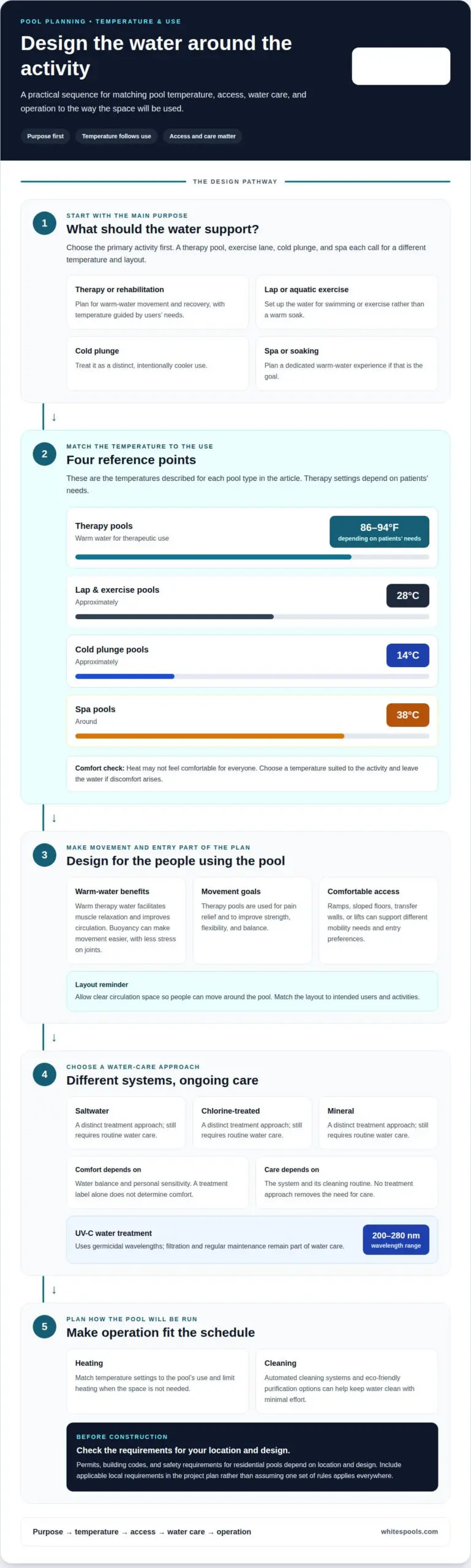
A pool can look serene yet feel uncomfortable when the water, lighting, and surroundings work against one another. Designing a pool for relaxation and wellness means bringing these elements together around how you want to use the space. For therapy pools, water is typically kept at 86-94°F, depending on patients’ needs.
A calming pool is about more than a warm soak. Thoughtful design can make room for quiet recovery, gentle movement, or unhurried time with family, while helping the setting feel comfortable and connected to its surroundings.
Temperature, lighting, water features, and natural materials all influence a pool’s feel and function. Consider how these choices work together to create an inviting space for everyday relaxation and wellness.
Key Takeaways
- Plan water temperature around the pool’s primary use so the space supports relaxation, gentle movement, or exercise.
- Use adjustable lighting to shape the atmosphere from daytime swimming to quieter evenings.
- Consider how a dedicated hydromassage area can add a restorative option without making it the focus of the whole pool.
- Bring the setting together with natural textures, planting, and comfortable places to pause beside the water.
Controlled water temperature
Match water temperature to the pool’s main purpose. Therapy pools are typically kept at 86-94°F, depending on patients’ needs. Lap and exercise pools are maintained at approximately 28 degrees Celsius, while cold plunge pools are kept at approximately 14 degrees Celsius. Spa pools are maintained at around 38 degrees Celsius.
Warm therapy water facilitates muscle relaxation and improves circulation. Buoyancy also makes movement easier, allowing rehabilitative exercises with less stress on joints. Therapy pools are used for pain relief and to improve strength, flexibility, and balance. For aquatic exercise, a ramp and sloped floor can accommodate different mobility ranges and water-level preferences.
Saltwater, chlorine-treated, and mineral pools use different treatment approaches, but all need routine water care. Comfort depends on water balance and personal sensitivity; maintenance needs depend on the system and its cleaning routine. A treatment label alone does not determine comfort or remove the need for care.
For energy-conscious heating and treatment, match temperature settings to the pool’s use and limit heating when the space isn’t needed. Automated cleaning systems and eco-friendly purification options can help keep water clean with minimal effort. UV-C germicidal water treatment uses wavelengths from 200-280 nanometers; filtration and regular maintenance remain part of water care.
Permits, building codes, and safety requirements for residential pools depend on location and design. Include applicable local requirements in the project plan before construction, rather than assuming one set of rules applies across the United States.
Plan for comfortable access as well as water temperature. A therapy-focused design may include features such as a transfer wall or lift to support entry and exit. Ramps and sloped floors can help accommodate different mobility needs, while clear circulation space makes it easier to move around the pool.
Swimming and warm-water activity can support movement, strength, flexibility, and balance. Heat may not feel comfortable for everyone, so choose a temperature suited to the planned activity and leave the water if discomfort arises. For therapeutic use, the pool’s temperature and layout shape how the water supports movement.
Dimmable lighting and chromotherapy
Pool lighting shapes the feel of the water and surrounding space after sunset. Warm, ambient light can create a soothing atmosphere, while LED lights can extend use of the pool area after dark. Dimming lets you shift from brighter illumination for swimming to a softer setting for quiet time beside the water. Plan lighting for the pool, steps, and seating together instead of treating the water as the only focal point.
Chromotherapy uses colored light as an atmospheric design feature. Dimmable LED lighting and pool chromotherapy can support a relaxing environment, giving the space a different character as the light changes. Keep the effect cohesive: choose a restrained palette that complements the pool finish and landscape, then use gentle transitions rather than competing colors. The aim is a composed setting, not a display that distracts from the water.
Pool heating, lighting, filtration, and ongoing maintenance costs depend on pool size, equipment choices, operating schedule, and care needs; pricing is provided after a quote request. LED lighting can extend evening use, while a well-planned control scheme lets you illuminate only the areas needed for each activity.
Landscaping, privacy, and sound also shape the experience. Native plants suited to the local climate can connect the pool with its surroundings and require less maintenance. Position planting and seating to create a quieter retreat, with comfortable places to pause near the water. Open landscape views and natural details can make the setting feel more grounded.
For a calmer soundscape, softly cascading waterfalls or gentle fountains add natural water sounds. Pool pumps and systems designed to minimize noise can help reduce mechanical sound, while a harmonious, stress-free environment supports meditation. Combining low-intensity lighting, thoughtfully placed plants, and gentle water sounds brings several sensory elements into balance.
Integrate lighting with the pool’s overall form and finish during the design process, so fixtures support the intended atmosphere. A custom concrete pool design can bring the water, landscape, and lighting concept together as one considered space.
Hydromassage areas
Jets or a dedicated massage area can add a focused water experience to a pool. A separate spa zone creates a place to unwind without making the entire pool serve that purpose. Consider how each area will be used: a seated soaking spot offers a different experience from a shallow area designed for massage. Separating activities can make the layout feel purposeful and comfortable.
Depth should suit the feature. Hydrotherapy pools are typically 1-1.2 meters deep, while spa pools are typically 1.0-1.2 meters deep. Hydromassage bed pools are recommended at approximately 38 degrees Celsius and 0.40-0.50 meters deep. These dimensions distinguish a shallow massage bed from a deeper soaking zone, so the pool’s layout should account for each intended use.
The placement of jets and soaking areas shapes how people use the pool. Think through how bathers will enter, sit, and move between the pool and any massage feature. A clearly defined zone helps the feature complement swimming and quiet relaxation rather than compete with them.
For meditation, a soft hydromassage area can accompany the experience without invasive stimuli. Gentle, restrained water movement supports a quieter atmosphere than a feature intended to command attention. Pairing that area with a calm pool setting can give people a choice between active massage and stillness, without requiring separate pool structures.
Some pool designs are intended for people with conditions such as osteoporosis, arthritis, or chronic back pain. The intended users and activities should therefore inform depth, access, and the placement of massage features. A shallow area for resting, for example, serves a different purpose from deeper soaking. A considered layout brings water depth, features, and surrounding space together.
Natural materials and biophilic furnishings
A thoughtful approach to designing a pool for relaxation and wellness begins with how the space meets its landscape. Wood and natural stone on walkways or pool surrounds bring warmth, while textured surfaces can contribute to pool-area safety. Consider how paving feels underfoot, especially along routes between the water, seating, and garden. Soft-touch paving adds tactile interest and helps make these transitions feel intentional.
Planting can make the pool feel more connected to its setting. Native plants suited to the local climate can require less maintenance and help the space blend with its surroundings. Poolside plants can improve air quality and have a calming effect. Arrange greenery around a quiet seating area, while preserving open views where you want a sense of space. This balance can create a retreat without making the setting feel enclosed. For examples of harmonizing pool builds with tailored outdoor landscaping, specialist sites such as tranquilpools.com.au illustrate how natural elements can elevate the entire space.
Comfortable furnishings give family and guests a place to pause outside the water. Place seating where people can enjoy a landscape view, or create a quieter spot beside greenery. When designing a pool for relaxation and wellness, consider how soft shapes, organic details, and natural materials can carry the garden’s feel into the furniture. Together, these choices help the poolside environment feel cohesive.
Choose a restrained material palette so each detail supports the others. For example, pair a natural stone path with complementary paving and planting suited to the local climate. Consider maintenance alongside appearance, since walkways and pool edges see regular use. Consistent choices across the pool surround, paths, and seating area can create a calm transition from water to garden.
To connect water and landscape in one considered design, explore natural and waterfall pool design.
Wood and natural stone on pool surrounds and walkways can lend warmth and a grounded feel, while textured paving adds tactile interest. Soft shapes, open landscape views, and natural materials can help create a restful atmosphere. A seating area among greenery can also offer a quieter connection with the outdoor setting.
White’s Pools: Custom Concrete Pools
White’s Pools can turn a wellness-focused vision into a custom concrete pool designed around how you want to use it. At the planning stage, share whether your priority is quiet soaking, gentle movement, or time with family. These goals can inform the pool’s layout and its relationship to the outdoor setting. A custom design brings choices such as pool form, surrounding materials, and overall atmosphere into one cohesive plan. White’s Pools builds custom concrete pools from early design through construction. To discuss a pool shaped around relaxation and wellness, contact White’s Pools.
Shape a Space That Fits Your Everyday Life
To begin designing a pool for relaxation and wellness, picture how you want the space to feel during an ordinary day. Consider who will use it, what activities matter most, and how the pool should connect with your home and outdoor surroundings. These priorities can guide decisions and keep features focused on the experience you value.
White’s Pools builds custom concrete pools and offers pool cleaning and maintenance, pool tiles, and outdoor fireplaces. A clear idea of your preferred atmosphere and routine gives the design conversation a practical starting point.
Bring your ideas, priorities, and questions together, then explore a design that reflects them. Contact White’s Pools to discuss your pool project and take a thoughtful next step toward a more restorative space.
Frequently Asked Questions
What pool features best support relaxation and wellness?
Features work best when they suit a specific routine, such as quiet evening soaking or gentle daytime movement. For an evening retreat, combine comfortable seating with adjustable lighting and a calm soundscape. For a more active wellness space, plan room for movement and comfortable access. A cohesive design helps each feature serve a purpose without competing for attention.
What are the ideal pool temperature and depth for relaxation and low-impact exercise?
Therapy pools are typically kept at 86-94°F, depending on patients’ needs; lap and exercise pools are maintained at approximately 28 degrees Celsius. Depth depends on the activity and user: aquatic exercise designs can use a ramp and sloped floor to accommodate different mobility ranges and water-level preferences. Plan temperature and depth around the pool’s main use, rather than choosing one setting for every activity.
Which hydrotherapy features can be added to a residential pool, and what do they cost?
Options include built-in jets, a dedicated massage area, or a separate spa zone for soaking. Costs depend on the project and are given after a quote request; factors include the selected features, layout, and how they integrate with the pool design. Thinking through whether you want focused massage or a separate soaking space helps define the scope before planning begins.

