
What if the toughest-looking white buildup on your pool tile is the one you should scrub most carefully? If you’re wondering how to clean calcium buildup on pool tile without scratching the surface or damaging grout, first identify what you’re dealing with. White deposits can be mineral scale, but other marks may need a different approach.
It’s tempting to reach for a stiff brush or strong cleaner when deposits won’t budge. The safest method, however, depends on both the buildup and the tile material. A tool or product that works on one surface could dull or scratch another.
This guide explains how to spot likely calcium scale, choose a cautious cleaning method, and avoid common risks. You’ll also learn how routine water care can help limit recurring deposits and when persistent or widespread buildup may call for professional attention. White’s Pools provides pool cleaning and maintenance to help care for tiled pool surfaces.
Key Takeaways
- A pale, rough deposit at the waterline may be calcium scale, but appearance alone can’t confirm the cause.
- Evaporation can leave minerals concentrated at the waterline, while water chemistry can affect scale formation.
- To clean calcium buildup on pool tile, start by identifying the tile material, clearing loose debris, and using a soft brush with a cleaner approved for that surface.
- Inspect the waterline regularly and remove loose residue early. Persistent or widespread deposits may benefit from professional pool maintenance.
How to Recognize Calcium Buildup on Pool Tile
A pale, rough, or crusty deposit near the waterline is a common sign of possible mineral scale. But appearance alone can’t confirm calcium: grime, product residue, and other stains can also leave light-colored marks. Calcium scale is mineral residue left behind as pool water evaporates, unlike loose dirt that sits on the tile and may wipe away easily. Calcium carbonate is a common mineral in calcium carbonate limescale, but identifying the deposit correctly matters before choosing how to clean calcium buildup on pool tile.
Where calcium scale tends to appear
Begin at the waterline, where pool water repeatedly meets the tile, then check nearby splash zones. As water evaporates from these surfaces, dissolved minerals can remain behind. Over time, residue may form a chalky band or rough patches. Look across several tiles and note whether the deposit follows the waterline or appears in isolated spots. The location and pattern can help you describe what you see, though they don’t confirm the material.
Scale, stains, or ordinary dirt?
Texture can offer a clue. A raised, gritty, or crusty patch that remains after gentle routine cleaning is more consistent with a hardened deposit than loose dirt. A mark that wipes away may be surface grime. Neither sign proves the residue is calcium: some stains remain after wiping, and different deposits can look alike. Avoid scraping or choosing an aggressive cleaner based on color alone. Tile finishes and grout can be damaged by the wrong method, so identify the surface and proceed cautiously.
Why Calcium Deposits Form, and Why Tile Material Matters
When pool water evaporates, dissolved minerals can remain behind and collect along the waterline. Evaporation leaves minerals on the surface, and repeated deposits can build into waterline scale. Water chemistry also affects whether minerals stay dissolved or are more likely to form scale, so evaporation alone doesn’t explain every deposit. Pool conditions can change, which makes ongoing water care important when managing mineral buildup.
The cleaning method matters as much as the cause. Pool surfaces may include glass, ceramic, natural stone, grout, and different finishes, each with its own tolerance for scrubbing and cleaning products. A tool that seems gentle on one surface could scratch polished tile or wear its finish on another. Grout may also respond differently from the tile beside it, so consider the entire waterline, not just the visible deposit.
Why one cleaning method does not suit every pool tile
Abrasive pads and hard scrapers can mark delicate or polished surfaces. A cleaner that’s suitable for one type of tile may be inappropriate for another. Before testing a method, read the tile and cleaner manufacturers’ instructions. If you’re unsure what the surface is, don’t experiment with abrasive tools or strong cleaners. Even a small test can leave visible damage.
When deposits may need a different approach
Light residue may respond to gentle cleaning, while firm, persistent scale can be harder to remove. Don’t assume vinegar, another household acid, or a particular commercial product will suit every deposit or surface. If buildup remains after careful cleaning or covers a broad area, pool maintenance support from White’s Pools can help you take a careful next step with your tiled pool.
How to Clean Calcium Buildup on Pool Tile Step by Step
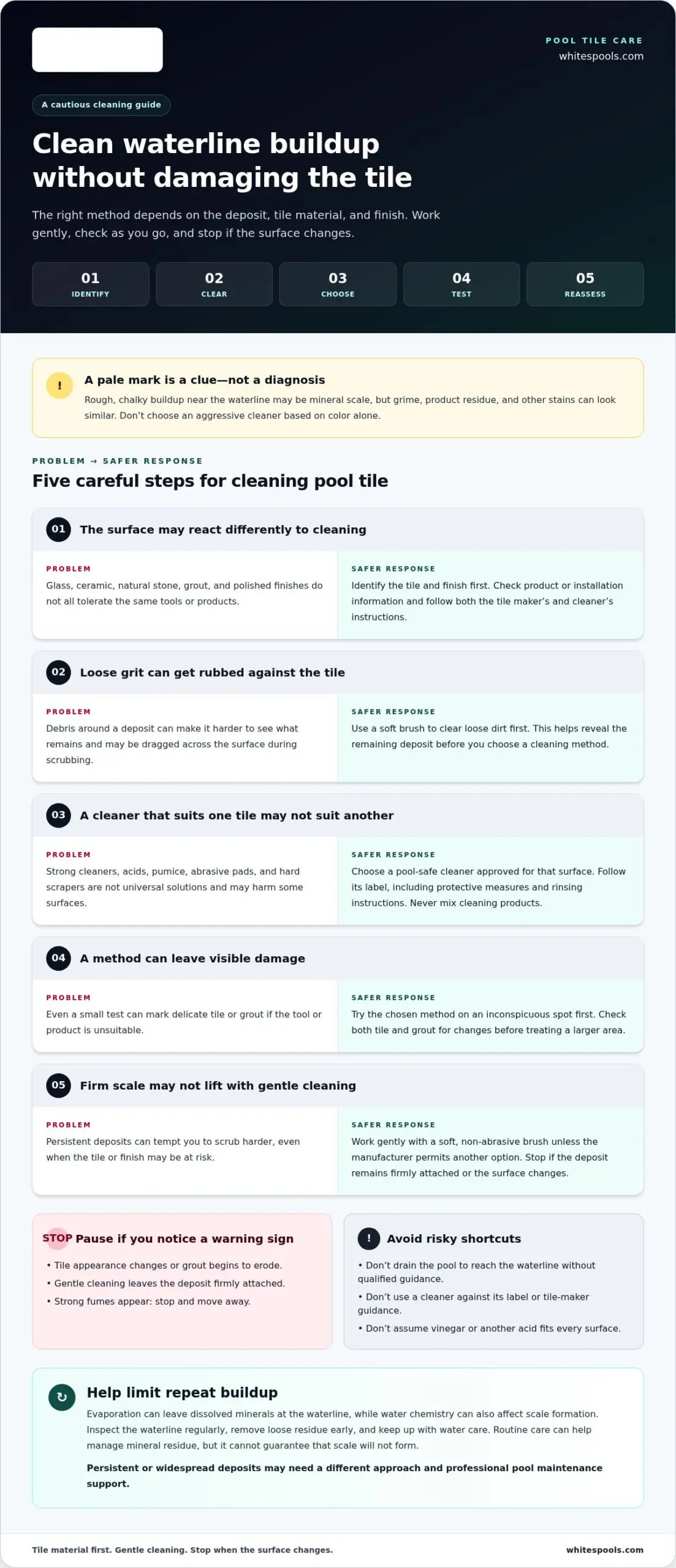
A cautious approach helps protect the tile, grout, and pool finish. Before deciding how to clean calcium buildup on pool tile, identify the surface and choose tools and products intended for it. Don’t assume every tile can tolerate the same cleaning method.
- Identify the tile and finish. Check product or installation information if available. Glass, ceramic, natural stone, grout, and polished finishes can respond differently to cleaners and abrasion.
- Remove loose debris. Use a soft brush to clear dirt around the deposit. This makes it easier to see what remains and helps prevent loose grit from being rubbed against the surface.
- Choose a suitable cleaner. Start with a pool-safe cleaner approved for that surface. Follow its label directions, including any protective measures and rinsing instructions.
- Test a small area. Try the method on an inconspicuous spot first. Check the tile and grout for changes before treating a larger section.
- Work gently and reassess. Use a soft, non-abrasive brush unless the tile manufacturer permits another option. Stop if the deposit stays firmly attached or the surface shows signs of damage.
Choose tools and cleaners with the tile surface in mind
Abrasive pads and hard scrapers may mark delicate or polished finishes. Pumice and acidic cleaners aren’t universal solutions; whether they’re suitable depends on the tile and deposit. Never mix cleaning products, and don’t use a cleaner contrary to its label or the tile manufacturer’s guidance. If you notice strong fumes, stop and move away from the area.
Know when to stop
Stop if the tile’s appearance changes, grout begins to erode, or gentle cleaning leaves the deposit firmly attached. Don’t drain the pool just to reach the waterline without qualified guidance. For persistent scale, White’s Pools provides pool maintenance support to help you determine a careful next step.
Prevent Calcium Buildup and Know When to Get Pool Maintenance Help
Regular care makes it easier to spot waterline changes before deposits become difficult to remove. It can’t guarantee that scale won’t form, but inspecting the tile and keeping up with water care can help manage mineral residue and protect the pool’s appearance.
Build a simple pool-tile care routine
Include the waterline in your regular pool-cleaning routine. Look for new chalky patches, changes in texture, or deposits spreading beyond their usual area. Gently remove loose residue with a tool suited to the tile instead of letting it accumulate and harden. Make a note of recurring spots so you can track whether the buildup is changing over time.
Consistent water care matters, too. Follow the instructions for your pool and water-treatment products, and keep up with recommended checks and adjustments. Well-managed water can help limit conditions that encourage mineral deposits, though results depend on the pool and its water. For owners exploring modern sanitation approaches, systems like Bionizer showcase how automated freshwater technology can manage pool water quality while reducing reliance on traditional chemical additives. If scale returns soon after cleaning, review ongoing care rather than simply scrubbing harder.
When professional pool maintenance makes sense
Consider professional pool maintenance if scale keeps returning, spreads across a large section of tile, or remains firmly attached after careful cleaning. Repeatedly applying stronger cleaners or more abrasive tools can damage tile and grout without addressing why deposits recur. White’s Pools provides pool cleaning and maintenance for ongoing pool care.
If persistent buildup is making your tile difficult to maintain, explore White’s Pools for pool maintenance support. Knowing how to clean calcium buildup on pool tile includes recognizing when routine care isn’t enough and a more considered next step is needed.
Make Ongoing Tile Care Part of Your Pool Routine
Set a regular time to inspect your pool’s waterline and include what you notice in your broader care routine. Regular checks help you make measured decisions about the tile instead of reaching for harsher tools or cleaners when a deposit becomes difficult to manage. The goal isn’t to prevent every mark; it’s to care for the surface thoughtfully over time.
If you’re unsure how to clean calcium buildup on pool tile safely, or deposits keep returning despite careful upkeep, pool maintenance can offer a considered next step. White’s Pools provides pool cleaning and maintenance, with a personal approach as a family-owned and operated, third-generation business.
Explore White’s Pools to get started with pool cleaning and maintenance for your tiled pool. With consistent attention and the right support, you can care for your pool tile with greater confidence.
Frequently Asked Questions
Can I use vinegar to remove calcium buildup on pool tile?
Vinegar may help with some mineral deposits, but it isn’t a universal pool-tile cleaner. Knowing how to clean calcium buildup on pool tile safely starts with checking whether the tile, grout, and finish can tolerate an acidic product. Read the tile and cleaner manufacturers’ guidance, then test a compatible method in an inconspicuous spot. Stop if the surface changes or the deposit remains.
Can calcium buildup be removed without draining the pool?
Many waterline deposits can be approached from the pool edge without draining, but the right option depends on the surface, deposit, and product directions. Don’t lower the water just to make cleaning easier. Changing the water level can create risks for some pool structures, so seek qualified guidance before making that decision.
Does calcium buildup damage pool tile?
Calcium scale can make tile feel rough or look less bright, but its presence alone doesn’t prove the tile has been harmed. A raised deposit may sit on the surface while the tile beneath remains intact. Avoid forceful scraping or harsh chemicals, which can damage tile, grout, or nearby finishes. If you see chips, etching, or a lasting change, stop and seek experienced pool-maintenance guidance.
How often should I clean calcium deposits from pool tile?
There isn’t one cleaning interval that suits every pool. During routine cleaning, check whether residue is loose, firmly attached, or returning in the same places. Remove fresh residue with a method approved for the surface, and follow care directions for pool and water-treatment products. If deposits keep reappearing, note where and how quickly they return. That pattern can help guide a review of water-care practices.
What if the white buildup does not come off with gentle cleaning?
If gentle cleaning leaves the deposit in place, stop rather than moving to a stronger chemical or rougher tool. The buildup may need a different treatment, and choosing one safely depends on the deposit and the surface beneath it. White’s Pools provides pool cleaning and maintenance for ongoing care when buildup persists or spreads. A careful next step is preferable to risking damage through repeated DIY attempts.

