
A custom swimming pool is either a property’s most compelling equity driver or its steepest resale hurdle, and the difference almost always comes down to craftsmanship and permanence. If you’re planning an investment of this scale, you’ve likely encountered conflicting advice from real estate brokers and pool contractors, leaving you to ask the essential question: do pools add value to a house, or do they simply introduce appraisal anxiety? It’s completely natural to fear pouring resources into an upgrade without knowing whether you’ll recover that capital when it’s time to sell.
The good news is that resale value doesn’t have to be a guessing game. In this guide, you’ll discover the real financial and lifestyle return on investment an inground pool brings to your home equity, cutting through outdated assumptions with verified 2026 data. We’ll explore how concrete appraisal standards measure high-spec builds, which integrated outdoor living features protect your long-term equity, and how to balance solid market returns with your family’s personal enjoyment.
Key Takeaways
- Understand how certified appraisers evaluate structural permanence on comparative market analyses to see exactly how do pools add value to a house.
- Debunk the persistent myth that swimming pools deter prospective buyers, revealing why cohesive, custom designs expand market appeal.
- Weigh pure capital recovery against the lifestyle equity dividend, balancing tangible property value with daily personal wellness and recreation.
- Identify the architectural design choices, timeless pool tile selections, and complete outdoor living integrations that safeguard future resale potential.
- Discover how routine equipment care and verifiable maintenance records protect structural longevity and reassure property inspectors during negotiations.
The Real Estate Reality: Do Pools Add Value to a House?
Evaluating how a swimming pool impacts your bottom line requires looking past standard real estate soundbites. Many homeowners ask, do pools add value to a house, expecting a simple yes or no. In reality, the return on investment hinges on structural build quality, property tier, and neighborhood parity. A pool creates measurable equity when built as a permanent architectural extension of the residence, rather than an afterthought.
Professional valuation separates emotional desirability from balance-sheet equity. An inground pool might draw dozens of eager buyers to an open house, accelerating sale velocity, but its recognized financial return is calculated strictly through comparative adjustments against recently sold properties.
How Real Estate Appraisers Value an Inground Pool
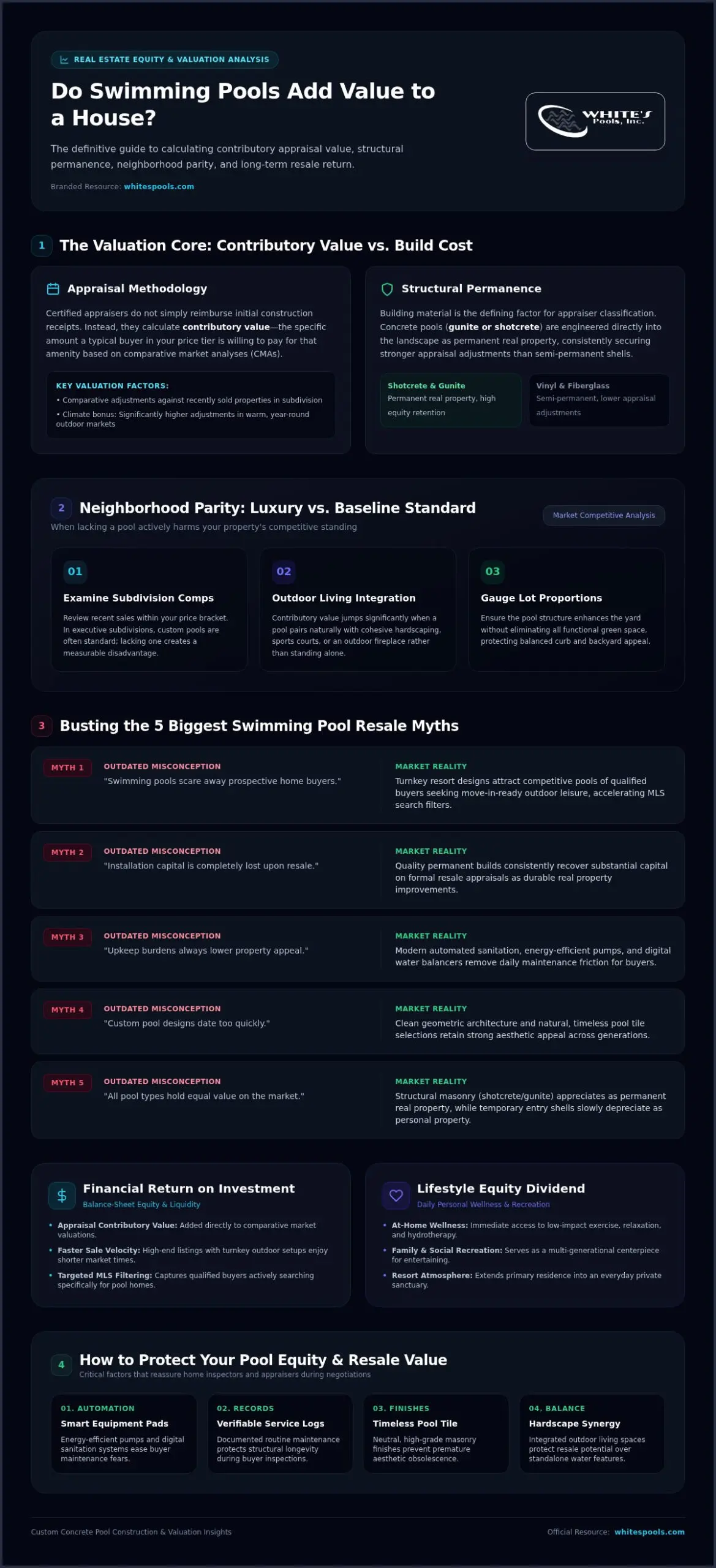
During a formal real estate appraisal, an appraiser calculates contributory value rather than reimbursing initial construction receipts. Contributory value reflects what a typical buyer in your specific market tier is willing to pay for that amenity. Permanent concrete structures built from shotcrete or gunite consistently secure stronger appraiser adjustments than semi-permanent vinyl or fiberglass shells. Because concrete pools are engineered directly into the landscape as permanent real property, appraisers view them as durable, long-term capital improvements. In warmer climates where yards serve as year-round living spaces, this positive adjustment climbs significantly higher.
Neighborhood Parity: When a Pool Becomes Essential
Neighborhood parity heavily dictates whether a pool functions as a luxury upgrade or a baseline requirement. In upscale and executive neighborhoods, swimming pools and integrated outdoor living spaces are often standard features. In these settings, lacking a pool can actively hinder your resale potential, placing your property at a distinct competitive disadvantage against nearby comparable homes. If you’re exploring high-demand markets or planning a move, discover NC High Country Real Estate to see how turnkey outdoor living spaces elevate property appeal in premier mountain communities.
To protect your capital before building, consider these evaluation guidelines:
- Examine neighborhood comps: Review recent home sales within your subdivision to see if inground pools are customary for your price bracket.
- Assess outdoor living integration: Value jumps when a custom pool pairs naturally with hardscaping, sports courts, or an outdoor fireplace rather than standing alone.
- Gauge lot proportions: Ensure the pool enhances the yard without eliminating all functional green space, maintaining balanced curb and yard appeal.
Busting the 5 Biggest Myths About Swimming Pool Resale Value
Outdated real estate tropes often paint backyard swimming pools with a broad, inaccurate brush. Many generalist home guides claim that private pools inevitably scare off future buyers or drain equity. When investigating whether do pools add value to a house, separating blanket generalizations from modern construction reality is essential. These misconceptions typically arise when analysts mistakenly group temporary, entry-level structures with enduring architectural masonry.
Here are the facts behind the five most common resale myths:
- Myth 1: Pools scare away every potential buyer. Turnkey outdoor living designs attract competitive pools of qualified buyers seeking move-in-ready leisure.
- Myth 2: Installation capital is completely lost. Quality permanent builds consistently recover substantial value on resale assessments.
- Myth 3: Upkeep burdens always lower property appeal. Modern automated sanitation, energy-efficient pumps, and professional cleaning services reduce daily maintenance concerns for new owners.
- Myth 4: Custom styles date too quickly. Clean geometric lines and natural tile finishes retain appeal across generations.
- Myth 5: All pool types hold equal value. Structural material choices directly determine whether a water feature appreciates as real property or slowly depreciates as disposable personal property.
Myth vs. Reality: Buyer Demand and Market Liquidity
High-end listings featuring cohesive, resort-style environments often experience shorter marketing times. Today’s prospective homeowners frequently apply direct MLS search filters to find residences with existing inground pools. Rather than worrying about upkeep, contemporary buyers appreciate automated equipment pads, digital water balancers, and weekly maintenance programs that keep ownership straightforward and relaxing.
Material Matters: Why Concrete Outperforms Vinyl and Fiberglass
Building material is the defining factor separating enduring equity from rapid depreciation. Real estate appraisers recognize shotcrete and gunite installations as permanent real property improvements. In contrast, vinyl liners require recurring replacements, and manufactured fiberglass shells face transport-related size limits and finite lifespans. Exploring the ultimate guide to custom concrete pools shows how reinforced masonry foundations prevent shifting and preserve structural integrity across decades.
When you focus on permanent masonry builds, you establish lasting equity that enhances your home’s appraisal profile. If you want to elevate your property with timeless craftsmanship, partnering with an experienced builder like White’s Pools ensures every detail aligns with long-term real estate value.
The Dual Value Equation: Financial ROI vs. Lifestyle Equity
Viewing major residential upgrades strictly through an appraisal lens tells only half the story. When evaluating how do pools add value to a house, experienced homeowners calculate both balance-sheet equity and daily lifestyle dividends. While closing documents eventually record capital recovery upon resale, the years spent enjoying the water generate continuous personal value. Approaching your backyard as a private sanctuary reframes the discussion from short-term speculation to purposeful living.
This dual value equation balances future liquidity against present enjoyment. A home isn’t merely a financial instrument; it is the physical foundation for family memories, personal health, and everyday rest.
Calculating the ‘Staycation’ and Entertainment Dividend
Private resort amenities fundamentally alter household spending by reducing the urge to travel for routine leisure. Hosting summer gatherings, birthday celebrations, and quiet weekend evenings around the water replaces costly resort trips and private club dues. The home becomes the preferred destination for recreation and relaxation.
Beyond discretionary financial savings, custom aquatic environments deliver distinct wellness advantages:
- Physical wellness: Daily access to low-impact cardiovascular exercise, whether swimming laps or unwinding in modern plunge pools.
- Mental rejuvenation: The natural acoustic and visual tranquility of water creates an immediate decompression zone after demanding workdays.
- Connection: A focal point that encourages children, teenagers, and friends to gather naturally without screens.
Aligning Investment Horizons with Homeownership Goals
Your timeline as a homeowner dictates how effectively this dual value equation functions. If you intend to relocate within twelve to twenty-four months, building a custom pool purely for rapid capital flipping creates unnecessary risk. In contrast, families who plan to remain in their home for five years or longer achieve the optimal balance. Over half a decade, the accumulated lifestyle dividends heavily cushion any unrecovered construction costs at eventual resale.
Before breaking ground, consult how to plan a custom pool budget to ensure your design ambitions harmonize with your broader fiscal goals. When you invest for durability and daily fulfillment, property value and quality of life grow hand in hand.
Features That Maximize Value: Designing for Future Resale
Strategic design separates an ordinary backyard pool from an enduring equity asset. If you find yourself asking do pools add value to a house in a lasting way, the answer rests squarely in architectural harmony. A standalone basin plopped onto an open lawn often feels detached, limiting buyer appeal. When water features integrate into a thoughtfully composed exterior living environment, appraisers and prospective purchasers view the property as a complete residential retreat.
Maximizing long-term resale potential means designing beyond transient decorative fads. Clean geometric contours, balanced patio proportions, and energy-efficient automation ensure your outdoor living space stays relevant and functional for decades.
Architectural Cohesion and Timeless Aesthetics
High-return outdoor spaces treat the swimming pool as a direct extension of the main residence’s architectural footprint. Aligning the pool’s orientation with sightlines from key interior rooms creates a unified indoor-outdoor transition that immediately impresses buyers. Selecting neutral pool tiles, natural stone coping, and understated aggregate finishes prevents premature dating. Hyper-stylized themes or garish mosaic patterns might satisfy personal quirks, but classic palettes of slate, cobalt, and earthen stone consistently command broader market interest.
The Power of Integrated Outdoor Living Environments
True luxury valuation occurs when aquatic elements connect with functional entertaining zones. Complete backyard master plans combine swimming areas with dedicated outdoor cooking spaces, shaded lounging verandas, and sports facilities like pickleball or tennis courts. These multi-dimensional spaces elevate an address into a private compound.
Pairing water with fire creates an especially strong visual impact across all seasons. Exploring poolside fireplace ideas demonstrates how masonry hearths extend your backyard’s usability well into cooler evenings, reinforcing property value even when swimming season winds down.
Consider these core features to protect future market equity:
- Intelligent hydraulic systems: Modern variable-speed pumps cut power demand, reassuring efficiency-minded buyers.
- Automated water sanitation: Smart app-controlled monitoring simplifies chemistry management and keeps filtration effortless.
- Preserved functional lawn: Thoughtful site plans leave ample green turf alongside hardscaping for pets, play, and landscaping balance.
Ready to design an enduring backyard retreat that elevates your estate’s long-term market standing? Connect with White’s Pools to collaborate with master builders who specialize in permanent concrete construction and complete outdoor living environments.
Protecting Your Investment: Maintenance and Long-Term Value
A swimming pool’s financial trajectory depends entirely on how well it is cared for after the concrete cures. When asking whether do pools add value to a house over a ten or fifteen-year horizon, the answer relies heavily on ongoing maintenance discipline. A pristine body of water signals meticulous property stewardship to appraisers and mortgage underwriters. Conversely, neglected plaster, chalky coping, or failing mechanical systems turn a prized asset into a contentious negotiation credit at the closing table.
Preventative care protects structural durability. Keeping water chemistry balanced prevents mineral etching on custom aggregate finishes, extends the service life of internal plumbing, and safeguards high-efficiency heating systems from corrosive wear. Understanding the causes behind issues like pool color green discoloration — whether from algae, metal contamination, or filtration failure — helps owners address problems at the source rather than masking symptoms with a quick chemical fix.
The Appraiser Inspection: Proof of Meticulous Care
During resale walk-throughs, home inspectors and appraisers scrutinize the mechanical pad just as closely as the pool’s cosmetic finish. They examine pump seals for weeping, inspect automated filter manifolds, and evaluate the clarity of the water. Presenting organized logs of scheduled chemical checks, seasonal winterization records, and comprehensive property care from specialists like Squirtz Property Detailing immediately eliminates buyer hesitation.
These maintenance protocols protect your equity profile:
- Systematic water balancing: Routine testing stabilizes pH and calcium hardness, stopping plaster degradation before it starts.
- Mechanical filter cycles: Regular media cleaning prevents backpressure strain on variable-speed pumps.
- Tile line maintenance: Addressing calcium scaling early preserves the lustrous appearance of waterline masonry.
Partnering with Seasoned Construction Craftsmen
True equity resilience begins beneath the surface with foundational engineering standards. Gunite and shotcrete structures installed by experienced, family-owned builders are engineered to withstand soil movement and seasonal freeze-thaw cycles without settling or cracking. Multi-generational construction heritage brings deep technical understanding to every phase, from reinforced steel placement to pneumatic concrete density.
Securing lasting value requires building on proven expertise. Partner with White’s Pools to build your luxury custom outdoor oasis, drawing on more than 75 years and three generations of dedicated craftsmanship to anchor your home’s equity.
Building Lasting Value for Your Family and Future Resale
Deciding to elevate your property comes down to recognizing how architectural permanence, thoughtful maintenance, and daily joy intersect. So, do pools add value to a house? When engineered with solid shotcrete foundations and integrated into a unified outdoor living space, the answer is a definitive yes. You capture measurable appraisal equity while giving your family years of private wellness, effortless entertaining, and restorative leisure.
Safeguarding that long-term equity requires partnering with builders who treat your backyard as an enduring legacy. Backed by over 75 years of multi-generational craftsmanship, our family-owned team brings dedicated expertise across custom concrete pools, outdoor fireplaces, and championship courts. Ready to transform your grounds into a timeless personal resort? Explore custom concrete pool designs with White’s Pools and create an outdoor environment that enriches your daily life today while protecting your residential equity tomorrow.
Frequently Asked Questions
How much percentage value does a pool typically add to a house?
On a national average, an inground swimming pool typically adds between 5% and 8% to a property’s total market value. In warmer climates where year-round outdoor living is standard, that equity lift frequently rises between 7% and 15%. The exact boost depends on neighborhood comps, lot layout, and structural build quality. Concrete construction paired with functional yard space secures the higher end of these appraisal ranges.
Does a concrete pool add more resale value than a vinyl liner pool?
Yes, custom concrete pools consistently add more resale value than vinyl liner pools. Appraisers categorize gunite and shotcrete pools as permanent real property improvements with multi-decade lifespans. Vinyl structures carry replaceable liners with finite durability, leading appraisers to assign lower contributory adjustments. For buyers wondering how do pools add value to a house over the long haul, permanent masonry construction preserves structural integrity and commands stronger appraisal figures.
Can adding a pool ever decrease a home’s property value?
A pool rarely decreases absolute appraised value, but deferred maintenance or poor design can hurt overall marketability. If a pool consumes the entire yard, leaving no functional green space, family buyers may look elsewhere. Similarly, visibly cracked plaster, outdated equipment, or green water signal deferred maintenance to inspectors. That often triggers repair credits or reduced purchase offers during contract negotiations, eroding your expected net equity.
What pool features offer the highest return on investment at resale?
Integrated outdoor living amenities and timeless masonry deliver the highest return on investment. Pairing an inground pool with an outdoor fireplace, integrated spa, or dedicated sports court elevates a property from a standard home into a cohesive residential compound. Energy-efficient variable-speed pumps, automated water management, neutral stone coping, and classic waterline tiles also appeal strongly to modern buyers looking for beauty and low utility overhead.
How do home appraisers determine the contributory value of an existing pool?
Appraisers determine contributory value through a comparative market analysis rather than tallying construction invoices. They evaluate recent home sales within your immediate neighborhood, comparing properties with pools against similar homes without them. Adjustments reflect local climate, lot proportions, construction permanence, and visible maintenance. When answering whether do pools add value to a house, appraisers measure what buyers in that specific price bracket consistently pay for the feature.
Do luxury home buyers expect an inground pool as a standard amenity?
In premier residential subdivisions and high-end executive neighborhoods, luxury buyers view an inground pool as an expected baseline. Homes lacking private aquatic amenities in these tiers face extended days on market and reduced buyer inquiry. When surrounding comparable properties feature custom resort spaces, building a concrete pool maintains neighborhood parity and protects your listing against below-market offers from buyers demanding a complete turnkey estate.
How does professional pool maintenance protect a home’s resale appraisal?
Professional pool maintenance preserves pristine surface finishes and optimal mechanical function, ensuring a flawless buyer inspection. Routine water balancing prevents mineral scale and etching on custom pool tiles and aggregate plaster. Clean filter manifolds, leak-free plumbing, and updated automation demonstrate disciplined home care. When you provide organized service records during resale, mortgage appraisers and prospective purchasers gain confidence in the system’s long-term mechanical reliability.

