
Relying on a generic square-foot estimate is the single fastest way to derail a custom pool budget before the first shovel hits the dirt. Real construction investments aren’t dictated by flat surface measurements; they’re shaped by your property’s unique topography, soil conditions, and comprehensive hydraulic engineering. It’s completely natural to worry about unexpected site excavation charges or feel unsure about how premium finishes and luxury features impact total project scope. Investing in a private backyard retreat should feel inspiring and clear, not like walking into a maze of hidden fees and vague contractor promises.
You can master every phase of this process without second-guessing your decisions. In this comprehensive guide, you’ll discover how to build an accurate budget framework that accounts for structural concrete craftsmanship, site preparation, and elevated outdoor living elements like infinity edges and masonry fireplaces. We will walk you through the essential planning roadmap you need to protect your investment and build with absolute confidence.
Key Takeaways
- Build an accurate custom pool budget by separating essential engineering and hydraulic requirements from elective aesthetic upgrades early in the design phase.
- Evaluate property topography and soil conditions early, as site grading and structural elevation dictate foundational requirements before excavation starts.
- Invest in structural concrete craftsmanship to secure multi-decade durability, avoiding the recurring structural replacement cycles common with alternative pool materials.
- Approach the backyard through unified master planning that balances the pool basin with surrounding elements like outdoor fireplaces and active court zones.
- Choose a builder whose detailed proposal accounts for comprehensive site preparation, utility integration, and equipment startup rather than masking omitted work behind an artificially low initial quote.
Core Components of a Realistic Custom Pool Budget
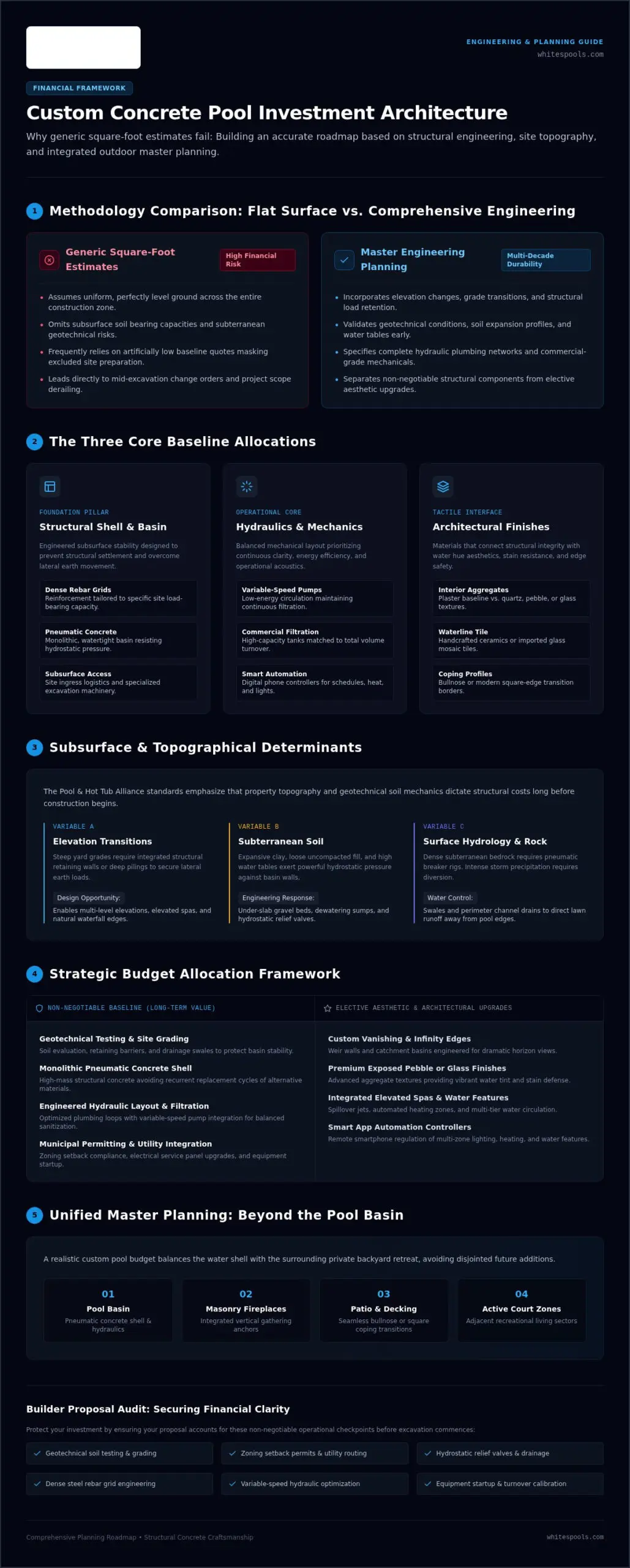
A realistic custom pool budget is a comprehensive master plan that accounts for structural engineering, hydraulic efficiency, and long-term site integration. While standard buyer guides often focus on basic surface dimensions, establishing an accurate financial roadmap requires distinguishing non-negotiable structural foundations from elective aesthetic enhancements right from the start. Among the standard types of swimming pools available today, custom concrete construction provides complete architectural freedom, adapting effortlessly to complex yard grades where factory shells cannot fit. For an in-depth breakdown of these engineering methodologies, explore the ultimate guide to custom concrete pools.
The Structural Shell and Subsurface Foundation
Long-term structural stability begins beneath the surface. Your budget allocation must account for soil composition testing, site access logistics, and dense rebar steel reinforcement grids tailored to your lot’s load-bearing capacity. Pneumatic concrete application forms a monolithic, watertight basin engineered to resist ground shifting and hydrostatic pressure. Investing in meticulous site preparation at this initial stage prevents structural settlement and protects your investment for decades.
Circulation, Filtration, and Mechanical Infrastructure
Mechanical infrastructure keeps your water crystal clear while actively managing energy consumption. Modern planning prioritizes commercial-grade filtration tanks, energy-efficient variable-speed circulation pumps, and advanced sanitization systems. Thoughtfully engineered hydraulic plumbing layouts maximize turnover rates, support whisper-quiet operation, and maintain balanced heating performance across every zone. Integrating smart automation controllers lets you adjust lighting, heating schedules, and water features directly from your phone.
Interior Finishes and Architectural Surfacing
Surfacing materials bridge structural endurance with everyday tactile comfort. Standard plaster provides a clean baseline, but quartz blends, exposed aggregate, and smooth glass pebble textures deliver vastly superior stain resistance and vibrant water coloration. Your custom pool budget should also balance waterline tile selections, such as handcrafted ceramics or imported glass mosaics, alongside bullnose or square-edge coping profiles that unite the pool basin with the surrounding patio deck.
Critical Site and Engineering Variables That Impact Your Investment
Many initial contractor estimates fail because they treat backyard ground as a uniform, flat surface. In reality, subsurface conditions and lot topography represent the most significant variables in an accurate custom pool budget. Addressing site mechanics prior to excavation prevents unexpected mid-project change orders and ensures your pool meets structural criteria supported by leading trade organizations like the Pool & Hot Tub Alliance.
Evaluating Yard Topography and Elevation Changes
Backyard slopes directly dictate your engineering requirements. Significant grade transitions often require integrated structural retaining walls or deep pilings to secure the surrounding earth against lateral loads. Rather than viewing slope as a hindrance, experienced builders turn elevation shifts into dramatic design opportunities, utilizing multi-level layouts for elevated spas or natural waterfall pools. Crucially, proper grading includes swales and channel drains that divert lawn runoff away from the pool edge during intense rainfall.
Subsurface Geotechnical Conditions and Soil Quality
What lies beneath the grass can quickly alter your foundational requirements. Geotechnical soil evaluations reveal expansive clay, loose fill, or high groundwater tables that exert tremendous hydrostatic pressure against pool walls. If excavation crews encounter subterranean bedrock, pneumatic breaking equipment becomes mandatory. Adapting the structural design with under-slab gravel envelopes, dewatering sumps, and hydrostatic relief valves ensures the concrete basin remains stable, eliminating the risk of shifting or cracking over time.
Permitting, Property Access, and Utility Infrastructure
Logistics above ground demand equal diligence during the initial planning phase. Every custom build requires local municipal building permits, zoning setback compliance, and stamped engineering drawings before construction starts. Builders must also plan equipment pathways from the street to the basin, protecting existing driveways and landscape features from heavy machinery. Coordinating utility locates for buried electrical, gas, and plumbing lines prevents expensive interruptions. To evaluate your site’s physical dynamics accurately, consult with White’s Pools for a thorough upfront property assessment.
Strategic Budget Allocation: Prioritizing Features vs. Long-Term Value
Smart allocation divides project capital into three distinct tiers: structural engineering, operational infrastructure, and bespoke lifestyle amenities. Structuring your investments this way ensures that money flows to permanent subterranean assets first, where retrofitting is impossible once shotcrete cures. Property dimensions also play a defining role in how you allocate funds. While expansive estates allow for sprawling multi-zone concepts, compact urban lots benefit immensely from targeted spatial design. Homeowners working within tighter footprints can turn to this ultimate plunge pool guide to discover how hydrotherapy jets and deep soaking profiles deliver five-star luxury on a smaller footprint. Regardless of your yard’s footprint, setting aside a dedicated contingency reserve within your custom pool budget provides total peace of mind against unanticipated excavation conditions.
The Structural Core vs. Aesthetic Upgrades
Foundational elements must always take precedence over decorative trims. Allocating capital to thicker shell walls, heavier rebar schedules, and high-volume plumbing lines creates a multi-generational structure that holds its integrity for half a century. Cosmetic enhancements like perimeter landscape planters can easily be added in future phases. Selecting high-durability pebble aggregate or glass bead interiors during initial construction dramatically reduces resurfacing frequency compared to standard plaster, saving substantial ownership effort over the life of your pool. Before finalizing your feature priorities, it’s worth understanding whether pools add value to a house in your specific market, so your investment decisions align with long-term equity goals.
High-Value Water Features and Architectural Focal Points
Elevated architectural features deliver immense sensory value, blending visual drama with calming acoustic movement. Vanishing edges merge the water line seamlessly into open horizons, making them prime investments for sloping lots. Custom masonry grottos, natural stone waterfalls, and integrated laminar deck jets create sculptural focal points, but they require dedicated plumbing lines engineered directly into the primary hydraulic manifold. Raised spas spilling smoothly into the main basin offer dual functionality, serving as relaxing therapeutic retreats while producing a continuous waterfall soundscape.
Energy Efficiency and Equipment Longevity
Operational efficiency pays quiet dividends every single month. Sizing up filtration media reduces pump head pressure, allowing variable-speed circulation pumps to run at ultra-low wattages while moving crystal-clear water. Combining high-efficiency heat pumps with automated pool covers significantly cuts thermal loss on cool evenings. Completing the mechanical package with low-voltage, multi-zone LED lighting systems gives you full control over evening ambiance without driving up energy consumption.
Expanding Beyond the Basin: Budgeting the Entire Outdoor Living Environment
Treating a swimming pool as an isolated concrete vessel is a costly planning mistake. Surrounding hardscape, shade structures, and recreation zones routinely match or exceed the pool’s surface footprint. A comprehensive custom pool budget unites these surrounding elements into a single cohesive master plan, eliminating disconnected contractors and redundant construction phases.
Pool Decking, Patios, and Flatwork Materials
Hardscape surfaces bridge the gap between your interior living quarters and exterior leisure zones. Selecting high-density natural travertine, architectural porcelain pavers, or textured non-slip natural flagstone ensures cool walking comfort and long-term freeze-thaw endurance. The true longevity of these surfaces depends entirely on subsurface preparation. Pouring engineered concrete sub-slabs over compacted aggregate beds and integrating expansion joints prevents lateral movement from cracking expensive exterior stone.
Outdoor Fireplaces, Kitchens, and Entertaining Structures
Outdoor entertainment amenities transform a daytime swim area into a multi-season venue. Integrating dedicated utility trenches for natural gas, dedicated 20-amp electrical lines, and water connections during excavation avoids tearing up completed decking later. Installing custom masonry outdoor fireplaces anchors nighttime gatherings, providing ambient warmth that extends outdoor use across cooler months. Discover timeless masonry inspiration by exploring our curated poolside fireplace ideas.
Recreational Amenities and Athletic Courts
Active sports spaces elevate a residential yard into a private resort compound. Integrating full-sized tennis courts or dedicated pickleball courts alongside the pool basin requires careful grade coordination and shared drainage management. Pouring post-tensioned concrete slabs alongside the pool’s earthmoving phase minimizes equipment mobilization costs. Complementing the athletic surfaces with acoustic landscape plantings and custom fencing ensures active recreation harmonizes with relaxing lounge areas.
Planning these exterior zones concurrently produces significant efficiency during excavation and permitting. If you want a seamlessly executed private compound, contact White’s Pools to design your master outdoor living plan today.
Selecting a Master Pool Builder and Securing Financial Clarity
The lowest initial bid is often the most expensive bid in disguise. Incomplete contractor estimates routinely omit essential work like certified engineering reviews, extensive site preparation, and proper utility tie-ins, triggering aggressive change orders once construction is underway. Maintaining financial control across your custom pool budget requires partnering with an established builder who provides comprehensive, all-inclusive contracts. Multi-generational craftsmen bring decades of proven subcontractor relationships, stable balance sheets, and deep construction wisdom that prevent costly field delays.
Evaluating Builder Proposals and Identifying Hidden Exclusions
Thorough proposals leave no room for guesswork. Review contracts carefully to verify explicit excavation limits, soil removal terms, and electrical bonding requirements. Equipment specifications must reflect commercial-grade circulation and filtration units rather than undersized residential packages that strain under heavy loads. Professional builders back their work with active general liability policies, verified workers’ compensation coverage, and solid structural shell warranties that safeguard your property over the long haul.
Financing Vehicles and Milestone Payment Architecture
Financing a bespoke outdoor living project through dedicated pool loans or home equity lines requires clear draw governance. Never agree to payment terms tied to arbitrary calendar dates. Disbursements should follow verified structural milestones verified by municipal inspectors or engineering leads:
- Completion of layout excavation and rough grading
- Tied steel rebar cage inspection and plumbing rough-ins
- Pneumatic concrete application and shell curing
- Waterline tile, coping, and hardscape integration
- Interior surfacing application, water fill, and mechanical startup
Every modification to materials or dimensions should require an approved, written change order before workers perform any field adjustments.
Planning for Post-Construction Ownership and Water Care
Long-term clarity extends beyond project completion into daily care. The initial twenty-eight days of water balancing, brushing, and chemical management dictate the lifespan of your interior finish. For actionable techniques on maintaining pristine water conditions, review our pool flocculant guide for clear cloudy water. Sustainable water quality protects equipment efficiency and preserves aggregate surfaces for decades to come. Understanding how issues like pool color turning green from algae, metals, or filtration problems develop helps you respond quickly and protect your premium concrete finish. Contact White’s Pools to plan your custom retreat with trusted engineering guidance and multi-generational craftsmanship.
Build Your Bespoke Outdoor Sanctuary With Confidence
Designing a remarkable outdoor space begins with absolute clarity. A well-constructed custom pool budget protects your investment by prioritizing geotechnical engineering, high-performance hydraulics, and unified outdoor living spaces long before breaking ground. When you focus on permanent structural integrity over temporary cosmetic shortcuts, you secure an architectural asset that enriches your daily lifestyle for decades. To fully understand the long-term financial return on that commitment, explore the verified 2026 data on how pools add value to a house before finalizing your project scope.
Bringing that dream to reality requires a dedicated partner who understands the fine balance of engineering and artistry. Backed by over 75 years of multi-generational craftsmanship, White’s Pools pairs lifetime structural engineering standards with turnkey outdoor living expertise, delivering bespoke concrete pools, artisan masonry fireplaces, and regulation pickleball courts. When you’re ready to invest in enduring backyard luxury, Schedule a Design Consultation with White’s Pools and take the first step toward a timeless family retreat.
Frequently Asked Questions
How much contingency buffer should I include in my custom pool budget?
Allocate a ten to fifteen percent contingency reserve above your core construction agreement. This buffer protects your custom pool budget against subsurface surprises discovered during initial excavation, such as dense rock formations, unstable backfill, or high water tables requiring gravel stabilization. Having dedicated reserves ensures unexpected ground mechanics never stall your project or compromise structural engineering standards.
Why do custom concrete pools require a higher initial investment than fiberglass shells?
Custom concrete construction demands intensive on-site craftsmanship, including hand-tied steel rebar cages, custom plumbing networks, and pneumatic concrete application. Unlike factory-molded shells restricted by highway shipping widths, concrete allows infinite shape customizations, variable depths, and integrated architectural benches. It also provides multi-generational durability, lasting over fifty years without the shell replacements common with alternative materials.
How does backyard slope or uneven terrain affect total custom pool construction costs?
Steep yard grades require specialized structural engineering to support both the pool vessel and surrounding soil. Builders must integrate shotcrete retaining walls, engineered pilings, or multi-tiered terracing to distribute lateral earth pressure safely. Slopes also require comprehensive drainage systems, including deep gravity channels and subsurface sumps, to divert natural stormwater away from pool decks.
Can I phase my outdoor living project to spread out the overall investment over time?
Phasing works exceptionally well when subterranean infrastructure is completed during the initial pool dig. Have your builder run stub-outs, electrical conduits, and gas lines for future amenities like outdoor fireplaces, pool houses, or pickleball courts before pouring hardscape decks. This allows you to install perimeter living amenities in later years without trenching through finished masonry.
What ongoing maintenance and utility costs should I prepare for after pool construction?
Post-construction expenses center on electrical draw, heating energy, sanitation sanitizers, and routine mechanical care. Utilizing variable-speed circulation pumps significantly curtails monthly electrical draw compared to older single-speed models. Concrete pools also benefit from professional periodic water balancing and scheduled equipment servicing to protect aggregate finishes and extend pump operating lifespans.
How do luxury additions like infinity edges and rock waterfalls influence the overall budget?
Elevated architectural features require dedicated mechanical loops, secondary catch basins, and reinforced engineering. An infinity edge demands a lower collection trough, secondary surge tanks, and precision weir leveling. Similarly, natural waterfall pools require high-flow plumbing manifolds and variable booster pumps. Planning these hydraulic systems early ensures efficient water circulation without straining primary filtration equipment.
What questions should I ask a custom pool builder to avoid surprise change orders?
Ask prospective builders to confirm what site conditions trigger additional excavation fees, such as hitting subsurface rock or groundwater. Clarify whether dirt haul-off, utility line rerouting, and local municipal permit processing are fully included in the base proposal. Finally, request written confirmation of structural shell warranties and ensure all draw schedules align with verified municipal inspection sign-offs.

