
A quick chlorine shock isn’t always the right first move. If you’re searching for “pool color green,” you’re likely looking at an unwelcome change in a pool you take pride in and wondering whether a chemical fix could harm its concrete or tile. Algae is the most common cause, but metals, unbalanced water, or a filtration problem may also be involved. Treating the color without finding its source can leave the underlying issue unresolved.
Clear water starts with a careful diagnosis, not guesswork. This guide explains how to distinguish algae from metal discoloration, why chlorine can lose effectiveness, and how to restore clarity while taking your pool’s finish and equipment into account. You’ll also find practical steps to help prevent another green-water episode. White’s Pools designs and builds custom concrete pools and provides pool cleaning and maintenance, making a whole-system approach central to caring for a high-end pool.
Key Takeaways
- Use the water’s appearance and the feel of pool walls to help distinguish algae from metal-related discoloration when you see a pool color green.
- Before adding more chlorine, check whether high cyanuric acid or pH is reducing its effectiveness.
- Review circulation and filter condition alongside water chemistry. A chemical-only approach may miss a system issue.
- Restore clarity methodically by removing debris, brushing concrete surfaces, and checking key water balance levels.
- A consistent maintenance routine can help protect water quality, pool finishes, and filtration equipment from recurring problems.
Pool Color Green: Identifying Algae vs. Metallic Oxidation
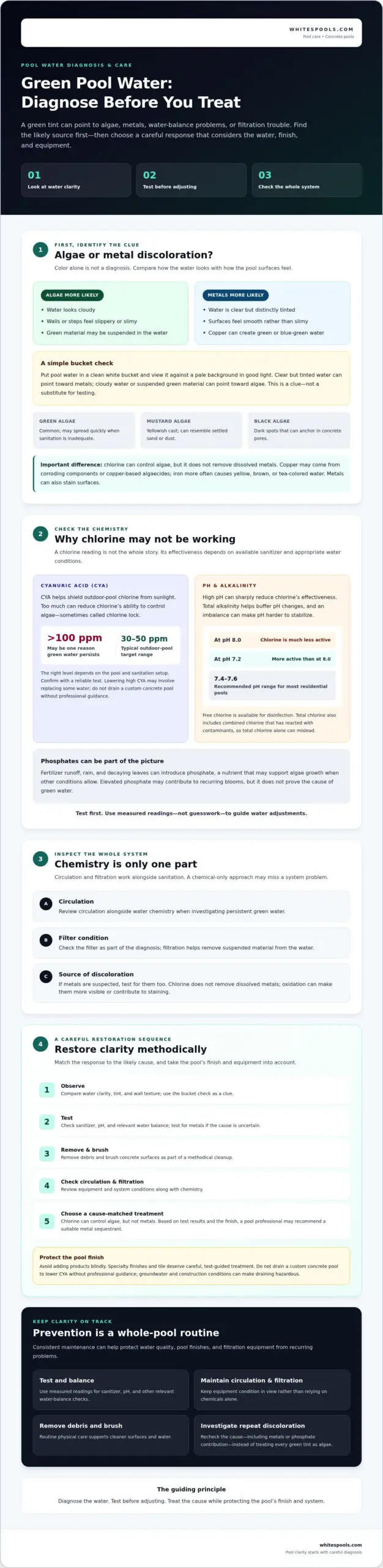
A green tint doesn’t always mean algae. Look closely before choosing a treatment. Algae typically makes water cloudy and pool walls feel slippery, while dissolved metals can tint otherwise clear water. The difference matters because chlorine can control algae, but it won’t remove metals. Treating the water aggressively before identifying the cause may create more problems for a carefully finished concrete pool.
As this overview of swimming pool sanitation methods explains, chlorine and filtration work together in pool care. Neither is a universal answer to every green tint.
Common Types of Pool Algae
Green algae is the most common type. It can spread quickly when sanitation is inadequate, cloud the water, and leave a slippery film on walls or steps. Mustard algae has a yellowish cast and may look like sand or dust settled on a surface. Black algae appears as dark spots and can anchor into the pores of concrete, making it particularly difficult to remove. Color and texture offer useful clues, but water testing helps confirm the cause.
Mineral Discoloration in Concrete Pools
Copper is a common cause of clear green or blue-green water. It may enter the water through corrosion of copper components, including older heater parts, or from copper-based algaecides. Iron more often creates yellow, brown, or tea-colored discoloration, especially when it enters with source water. Both metals can stain surfaces, so don’t treat a suspected metal tint as an algae bloom.
Chlorine doesn’t remove dissolved metals. In some circumstances, oxidation can make metals more visible or contribute to staining. Based on test results and the pool’s finish, a pool professional may recommend a suitable metal sequestrant to help keep metals dispersed in the water. Don’t add products blindly, especially around specialty finishes or tile.
A Simple Bucket Check
Fill a clean, white bucket with pool water and examine it against a pale background in good light. If the sample looks clear but distinctly tinted, metals may be involved. If it’s cloudy or contains suspended green material, algae is more likely. Check the walls, too. Slime supports an algae diagnosis, while a smooth surface with clear tinted water points more toward metals. This visual check is only a clue, not a substitute for testing.
If the cause remains uncertain, test for metals as well as sanitizer and pH before treatment. Identifying the source first helps protect your pool’s finish and guides a more appropriate restoration plan.
The Chemistry of a Green Pool: Why Chlorine Isn’t Working
If chlorine seems present but algae keeps growing, ask whether enough is available to sanitize the water. Free chlorine is the portion currently available for disinfection. Total chlorine also includes combined chlorine that has already reacted with contaminants, so a total-chlorine reading alone can give a misleading picture. Government pool-water guidance describes how chlorine eliminates bacteria and algae, but effective treatment depends on appropriate water conditions.
The Role of Cyanuric Acid (CYA)
Cyanuric acid acts like sunscreen for chlorine in an outdoor pool, helping shield it from sunlight. Too much can reduce chlorine’s ability to control algae, a condition often called chlorine lock. A CYA reading above 100 ppm can be one reason green water persists despite repeated shocking. A typical target range for outdoor pools is 30–50 ppm, though the right level depends on the pool and sanitation setup.
Lowering high CYA often involves replacing some water, but don’t drain a custom concrete pool without professional guidance. Groundwater conditions and pool construction can make draining hazardous. Confirm the reading with a reliable test, then determine a safe correction based on the pool’s structure and circumstances.
PH, Alkalinity, and Chlorine Performance
High pH can sharply reduce chlorine’s effectiveness. Chlorine is much less active at pH 8.0 than at 7.2. For most residential pools, 7.4–7.6 is a recommended pH range. Total alkalinity helps buffer pH changes, so an imbalance can make pH difficult to stabilize. Acidic water isn’t the same as high pH, and neither pH nor alkalinity should be adjusted without testing first.
Use measured readings to guide corrections rather than adding chemicals by guesswork. This is especially prudent for pools with specialty finishes, where maintaining water balance is part of careful long-term care.
Phosphates and Recurring Algae
Fertilizer runoff, rain, and decaying leaves can introduce phosphates into pool water. Phosphate is a nutrient that can support algae growth when other conditions allow algae to thrive. Elevated phosphate may contribute to recurring blooms, but it doesn’t prove that phosphate is the sole cause of green water or replace the need for effective free chlorine.
If algae returns, test relevant water levels and investigate possible sources of phosphate rather than relying on a single chemical fix. A clear diagnosis helps you choose a measured response and avoid unnecessary treatment.
System Check: Is Your Filtration the Real Culprit?
Clear water depends on more than chemical treatment. If circulation is weak or a filter is clogged, suspended debris can remain in the pool and slow recovery. During an algae bloom, continuous pump operation may be appropriate if the equipment is designed for it. Follow the pump manufacturer’s instructions and monitor pressure and flow rather than assuming one schedule suits every system.
A turnover rate estimates how long the system takes to circulate a volume of water equal to the pool’s capacity. It doesn’t guarantee that every corner receives equal flow, especially in a pool with a custom shape. Persistent pool color green can be a reason to check circulation patterns and equipment performance, not just water treatment.
Optimizing Water Circulation
Steps, benches, coves, and recessed areas can interrupt water movement, allowing debris to settle in low-flow areas. Check that return jets are open and direct water to encourage movement across the surface and through the pool. Skimmers draw in floating debris, while the main drain pulls water from lower areas. Both support circulation, but a blockage or poorly functioning pump can limit their effectiveness.
Clean the Filter Before Replacing It
Sand, diatomaceous earth (DE), and cartridge filters capture particles in different ways. DE media can trap very fine particles, including small algae debris, but it must be cleaned and recharged according to the manufacturer’s instructions. Backwash a sand filter when its pressure indicates it’s needed, and remove and clean cartridges as directed. A severe bloom doesn’t automatically mean the filter media must be replaced. Look for wear or damage, or signs that cleaning no longer restores performance.
Flocculant may help suspended particles clump and settle, but it isn’t suitable for every pool or filter configuration. Check product directions and system requirements before using it. White’s Pools’ pool flocculant guide explains when this option may fit a water-clarity plan. Consistent filter care and circulation checks support restoration and ongoing pool maintenance.
How to Fix Green Pool Water: A Step-by-Step Restoration Guide
Restoring green water takes more than a single dose of shock. First identify the likely cause, then work through cleaning, water balance, sanitation, and filtration in order. Avoid draining a concrete pool as a quick fix. Draining can create structural risks, so consult a pool professional before considering it.
- Remove debris and brush thoroughly. Skim leaves and other debris, empty the skimmer and pump baskets, then brush the walls, floor, steps, and corners. Brushing loosens algae from concrete so treatment can reach it. Use equipment suitable for your pool’s surface.
- Test and balance the water. Measure pH, total alkalinity, calcium hardness, free chlorine, and CYA. Correct pH before raising chlorine, following test results and chemical labels. Alkalinity helps stabilize pH, while appropriate calcium hardness supports the care of concrete finishes. Don’t add chemicals based on guesswork.
- Raise chlorine appropriately. The SLAM approach means Shock, Level, and Maintain: raise free chlorine to a target based on measured CYA, then maintain that level while treatment works. The required amount depends on pool volume, current readings, and product strength, so use a reliable pool calculator or get professional guidance. Never mix chemicals, and follow the product label, especially around plaster, pebble, and tile finishes.
- Keep water circulating and filter debris. Run the pump according to equipment guidance, check flow and filter pressure, and clean or backwash the filter as its manufacturer directs. Flocculant isn’t right for every filtration setup. Confirm that the product is compatible and follow its directions before use.
- Retest and rebalance. Clear or blue-looking water doesn’t prove the cleanup is complete. Verify that free chlorine and other readings have returned to appropriate operating ranges before swimming, following chemical-label guidance.
Maintain Treatment and Protect the Finish
During a SLAM-style treatment, test and replenish chlorine as needed to maintain the selected target. An Overnight Chlorine Loss Test compares free chlorine after sunset with a reading before sunlight reaches the water. A substantial overnight drop can indicate ongoing chlorine demand. Use reliable testing and interpret results alongside water clarity and combined chlorine, rather than treating one reading as the only endpoint.
Never leave chlorine tablets sitting directly on a concrete pool floor. Concentrated chemicals can damage or discolor surfaces. Add products only as their labels direct, and brush after treatment when appropriate for your finish. If the pool color green persists, or you’re uncertain how high chlorine levels may affect a specialty finish, have a pool professional assess the water and equipment.
For help restoring water quality while caring for a custom concrete pool, explore White’s Pools cleaning and maintenance services.
Long-Term Prevention: Maintaining the Pristine Clarity of Custom Pools
Clear water is easier to preserve with a consistent routine than to restore after an algae bloom. A weekly routine for custom concrete pools can include testing sanitizer and pH, skimming debris, brushing surfaces, emptying baskets, and checking that circulation and filtration are working as expected. Adjust the routine for weather, pool use, and your equipment rather than adding chemicals automatically.
Use algaecides or phosphate removers only when testing and pool conditions indicate they’re appropriate. These products don’t replace effective sanitation, circulation, or debris removal. Ask about metal content before using an algaecide in a pool where copper-related discoloration is a concern.
The Value of Professional Pool Maintenance
Routine professional care can help identify water-balance changes, restricted flow, or filter concerns before they develop into larger problems. Dedicated servicing teams like Pool Blitz provide expert water balancing and routine checkups that help protect equipment and finishes, though no maintenance plan can guarantee against repairs or resurfacing. Regular checks also make it easier to spot a developing issue before a green tint surprises you.
High-end pools can include custom shapes, specialized finishes, and complex filtration systems that call for attentive care. White’s Pools designs and builds custom concrete pools and provides recurring maintenance. Explore ideas for a luxury pool design while considering how ongoing care fits the full outdoor environment.
Smart Tools and Off-Season Care
Automation can support a maintenance routine, but it doesn’t remove the need to test and inspect. Depending on the system, automated chemical dosing, salt-water chlorine generation, and remote monitoring may help manage sanitation or flag readings that need attention. Keep sensors calibrated, verify readings with appropriate water tests, and respond to alerts rather than assuming the system has corrected an imbalance.
Pool care continues through colder months, though the right approach depends on whether the pool remains operational or is prepared for seasonal closure. For an operating pool, continue monitoring water balance, circulation, and debris. If it’s winterized, follow equipment and pool-specific guidance for protecting the water and system. Plan care for the off-season rather than waiting until reopening.
Steady maintenance helps you notice changes early, care for valuable equipment, and keep the pool ready to enjoy.
Bring Your Pool Back to Its Best
A green tint is a clue, not a diagnosis. Start by distinguishing algae from metal discoloration, then check water balance and filtration before choosing a treatment. This measured approach can help restore clarity while protecting the finish and equipment of your custom concrete pool.
Once the water is clear, consistent care can help keep pool color green from becoming a recurring concern. Testing, circulation, and routine cleaning work together to catch developing issues early. Pools with distinctive finishes or complex systems may also benefit from professional attention.
White’s Pools designs and builds custom concrete pools and offers pool cleaning and maintenance. Contact White’s Pools to discuss pool maintenance.
With a clear understanding of the cause and a steady prevention plan, you can look forward to enjoying your pool with confidence.
Frequently Asked Questions
Can I swim in a pool that has a green tint?
Don’t swim until you know why the water is green and have confirmed it’s safe. Algae can cloud the water and make surfaces slippery, while poor water balance may mean sanitizer isn’t working effectively. A green tint can also come from metals, which need a different response. Test the water, check that you can clearly see the pool bottom, and keep swimmers out until water quality and visibility are restored.
How long does it take to turn a green pool clear?
There’s no reliable fixed timeline. It depends on the cause, severity, water balance, circulation, and filter condition. A mild algae bloom may clear sooner than a dense bloom or a pool with restricted flow or high stabilizer levels. Test the water, remove debris, brush surfaces, and keep filtration operating as directed. If the tint comes from metals rather than algae, chlorine treatment alone may not clear it.
Will shocking my pool damage the concrete or tiles?
Pool shock can harm or discolor finishes if used incorrectly, so follow the product label and account for your pool’s surface. Don’t exceed directions, mix chemicals, or place chlorine tablets directly on concrete or tile. Brush only with tools suitable for the finish. If you have specialty plaster, pebble, or tile and aren’t sure which treatment is appropriate, consult a pool professional before adding a high dose of chemicals.
Why does my pool turn green every time it rains?
Rain can dilute pool water and disrupt its balance, while wind-driven debris and fertilizer runoff may introduce nutrients that support algae. Rain itself doesn’t prove that algae is the cause. After a storm, clear leaves from the water and baskets, check circulation, and test free chlorine, pH, and stabilizer. If the pattern continues, assess runoff and drainage around the pool and consider testing for metals or phosphates.
Do I need to drain my pool if it’s dark green or black?
No. Don’t assume draining is necessary, even if the water looks dark green or nearly black. Dark water may indicate a severe algae bloom, but appearance alone can’t confirm the cause. Draining a concrete pool without expert guidance can create structural risks. First test the water and inspect circulation and filtration. If the cause is unclear or the pool is heavily discolored, have a pool professional assess it before taking drastic action.
What is the fastest way to get rid of green algae?
The quickest sound approach is to remove debris, brush pool surfaces, test and correct water balance, then treat algae according to measured chlorine and stabilizer levels. Keep the pump and filter operating as directed, and clean the filter when its pressure or manufacturer guidance indicates it’s needed. Avoid adding repeated shock doses without retesting. A treatment plan based on actual readings is more reliable than guessing at chemical amounts.
Can high phosphate levels cause green water even if chlorine is high?
High phosphates can provide nutrients that support algae, but they don’t automatically turn water green if sanitation is effective. A high chlorine reading may also be misleading if it reflects total chlorine rather than free chlorine available to sanitize. Check free chlorine, pH, and stabilizer, and confirm the test is reliable. If algae keeps returning, test phosphate levels and address the source as well as the water’s sanitation and circulation.
Why is my pool green but the chemicals are ‘balanced’?
“Balanced” may not mean every relevant measurement is correct. A basic test may miss high cyanuric acid, distinguish poorly between free and total chlorine, or fail to detect dissolved metals such as copper. Algae can also persist if circulation is weak or the filter is dirty. Retest with a reliable method, inspect the water and surfaces, and check equipment flow. The phrase pool color green describes a symptom, not a diagnosis.

