
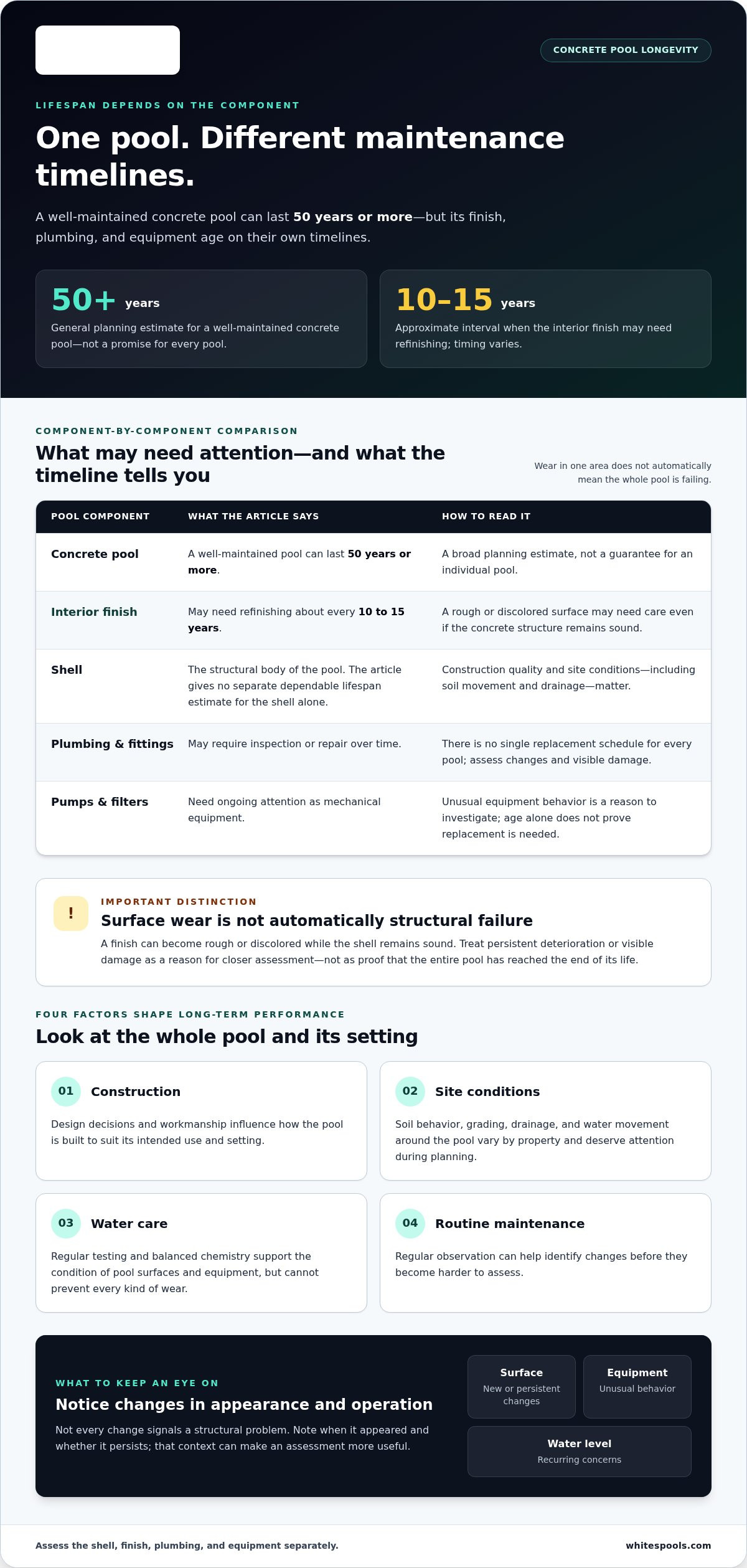
What if the part of your concrete pool that looks worn isn’t the part nearing the end of its life? If you’re asking how long does a concrete pool last, the answer depends on which component you mean. A well-maintained concrete pool can last 50 years or more, while its interior finish may need refinishing roughly every 10 to 15 years.
It’s understandable to worry when you spot a crack or surface wear. But these signs don’t automatically mean the pool’s structure is failing. A concrete pool has components that age at different rates, and paying attention to changes can help you understand what needs care and what may remain sound.
This guide explains what influences a concrete pool’s lifespan, which parts may need attention first, and how construction quality, water chemistry, and consistent maintenance affect long-term performance. You’ll also learn what changes to watch for and when an inspection can help clarify next steps. White’s Pools designs and builds custom concrete pools and provides ongoing pool maintenance to support long-term care.
Key Takeaways
- When asking how long does a concrete pool last, consider the shell, finish, plumbing, and equipment separately. Each can need attention on its own timeline.
- Look beyond the pool surface: construction quality, site conditions, water care, and routine maintenance all play a role in long-term performance.
- Compare concrete, fiberglass, and vinyl pools by their upkeep needs and design flexibility, not by lifespan alone.
- Build a simple care routine around water testing, equipment observations, and periodic surface checks so you can notice changes early.
- Thoughtful custom design and construction planning can help align a pool with your property and long-term goals.
How Long Does a Concrete Pool Last? Understand the Lifespan
A well-maintained concrete pool can last 50 years or more. Treat this as a general planning estimate, not a promise for any individual pool. The actual answer to “how long does a concrete pool last” depends on the condition of its shell, finish, plumbing, and equipment, which can all age differently.
A pool doesn’t have one expiration date; its components wear on separate timelines. A rough or discolored interior finish may need attention even when the concrete structure remains sound. Pumps, filters, plumbing, and fittings have their own maintenance needs, so wear in one area doesn’t automatically mean the whole pool is failing.
Does the concrete shell last as long as the pool?
Not necessarily. The shell is the pool’s structural body, while the finish is the exposed interior surface. Plumbing carries water through the system, and mechanical equipment circulates and filters it. Each component serves a different purpose and may need care or repair independently. For a general overview of pool types and construction methods, see Swimming pool types and construction. It provides context, not a lifespan guarantee.
The estimate of 50 years or more applies broadly to a well-maintained concrete pool, but it doesn’t establish a separate, dependable lifespan for the shell alone. Construction quality and site conditions matter: soil movement, drainage, and how water is managed around the pool can affect structural performance. No single estimate can account for every site or build.
Which pool components may need attention sooner?
The interior finish is exposed to water, chemicals, and regular use. A concrete pool’s surface may need refinishing about every 10 to 15 years, though timing varies with the finish and pool conditions. Surface wear can be a maintenance issue rather than evidence that the underlying shell has reached the end of its useful life.
Equipment follows a different pattern. Pumps and filters need ongoing attention, and plumbing and fittings may also require inspection or repair over time. There’s no single replacement schedule for every pool, so don’t treat a component’s age alone as proof that it must be replaced. Changes in performance, visible damage, or persistent surface deterioration deserve a closer assessment. Keeping the shell, finish, and operating systems distinct makes it easier to identify what needs attention and plan care without assuming the entire pool is failing.
What Determines How Long a Concrete Pool Lasts?
Construction, site conditions, water care, and routine maintenance all shape a concrete pool’s long-term performance. None works in isolation. A well-planned pool still needs attentive care, while maintenance can’t correct every issue caused by site conditions or construction. If you’re considering how long does a concrete pool last, look at these factors together rather than relying on one lifespan estimate.
Concrete-pool longevity depends on sound planning, suitable site conditions, balanced water, and consistent attention over time.
- Construction: Design decisions and workmanship influence how the pool is built to suit its intended use and setting.
- Site conditions: Ground behavior, drainage, and the movement of water around the pool vary from property to property.
- Water care: Testing and maintaining balanced chemistry supports the care of pool surfaces and equipment.
- Routine maintenance: Regular observation can help identify changes before they become harder to assess.
How construction and site conditions affect durability
Good planning starts with the specific property, not a one-size-fits-all assumption. Soil composition and movement, grading, and drainage can differ across a site. If the ground shifts or water isn’t managed well around the pool, those conditions may contribute to stress or affect nearby structures. That doesn’t mean damage is inevitable; it means site conditions deserve attention during planning. Careful design and workmanship help account for project needs, but they can’t remove every environmental variable.
Concrete pool construction also involves choices suited to the design and site. The approach should be considered as part of the complete project, alongside the pool’s layout and surroundings. Since a pool is affected by its setting, thoughtful planning helps align the design with the conditions it will face.
How water care and routine upkeep protect the pool
Water chemistry is another part of long-term care. Regular testing and balanced water help support the condition of the interior surface and pool equipment. Chemistry alone, however, can’t prevent every kind of wear or address ground movement, plumbing problems, or mechanical issues. It’s one useful part of a broader care routine, not a guarantee against damage.
Pay attention to changes in how the pool looks and operates. A new surface change, unusual equipment behavior, or recurring water-level concern may be a reason to investigate rather than wait for the next routine visit. Not every change signals a structural problem, but noting when it appeared and whether it persists can make an assessment more useful. Consistent professional pool cleaning and maintenance can also be part of responsible ongoing care.
For homeowners planning a new pool, these factors belong in the conversation from the start. White’s Pools designs and builds custom concrete pools and provides ongoing maintenance. A design suited to the property and attentive care over time both contribute to responsible ownership.
Concrete vs. Fiberglass and Vinyl Pools: Compare Longevity Fairly
A fair comparison starts by asking what “lifespan” describes. It might mean the structure, the interior surface, or a replaceable component. A concrete finish that needs renewal and a vinyl liner that needs replacement are not the same as a pool structure reaching the end of its useful life. Without comparable, reliable evidence for each component, it’s more useful to compare how the pool types are built and maintained than to name one universal winner.
What does a lifespan comparison actually measure?
Separate the pool’s supporting structure from the surface you see and use. Concrete pools have a structural shell and a distinct interior finish. Fiberglass pools have a molded shell with an integrated surface. Vinyl pools have a supporting structure covered by a replaceable liner. Each component can wear or need attention independently, so renewing a surface or replacing a liner doesn’t automatically mean the entire pool must be rebuilt.
| Pool type | Structure | Surface or liner upkeep | Customization |
|---|---|---|---|
| Concrete | Concrete shell | Separate interior finish; its condition and care should be considered apart from the shell. | Offers substantial flexibility in shape, size, and features. |
| Fiberglass | Factory-formed fiberglass shell | The surface is part of the shell, so upkeep differs from renewing a separate concrete finish or vinyl liner. | Shape and dimensions are based on available shell designs. |
| Vinyl | Supporting pool structure | A separate liner covers the structure and may need replacement during the pool’s life. | Design depends on the liner pool’s structural system and available configurations. |
This comparison describes component differences, not a guaranteed lifespan ranking. For a general overview of pool types and construction, see Swimming pool types and construction. It’s useful background, but it doesn’t establish how long a particular pool or component will last.
How should homeowners weigh durability against upkeep?
Consider the care involved as well as the structure. Concrete pools have a separate finish to monitor and maintain; fiberglass and vinyl pools have different surface or liner needs. All pool types also rely on equipment, plumbing, water care, and attention to site conditions. Maintenance can support good performance, but it can’t guarantee a particular lifespan or prevent every problem.
Customization matters, too. Concrete construction allows broad design flexibility, while fiberglass shapes are tied to available shell designs and vinyl configurations to their structural systems. Think about the pool you want and the care you’re prepared to provide, then compare like with like: structure against structure, finish against surface, and liner against liner. That makes “how long does a concrete pool last” a more useful question because it considers the component rather than treating the whole pool as one wear item.
How to Protect a Concrete Pool and Spot Wear Early
Consistent care helps you notice changes and respond thoughtfully, without assuming every mark means the pool is failing. A practical routine can stay simple: focus on water condition, equipment performance, and the pool surface. Keep a record of anything that changes over time.
- Test the water consistently. Use a reliable testing method and follow its instructions. Adjust water chemistry according to product directions or guidance suited to your pool and finish. Balanced water supports the care of the surface and equipment, though it can’t prevent every type of wear.
- Observe how equipment operates. Pay attention to changes in circulation, unusual sounds, visible leaks, or equipment that seems to run differently than usual. Follow the manufacturer’s operating and care guidance, and note recurring issues rather than assuming they’ll resolve on their own.
- Check the surface periodically. Look for changes in color or texture, and areas that appear rough, worn, or damaged. Compare what you see with earlier observations, since a gradual change can be easier to assess when you know when it began.
- Record concerns and follow up. Note the location and appearance of a change, when you first noticed it, and whether it has spread or returned. If a concern persists or worsens, arrange a qualified professional assessment.
What concrete-pool wear should homeowners watch for?
Finish changes may show up as fading, roughness, discoloration, or small areas that look different from the surrounding surface. These observations are clues, not a diagnosis. A single mark can’t establish structural failure or determine what repair is needed. Changes that grow, recur, or appear alongside other concerns deserve timely attention. Photos taken from a consistent angle can help track whether the appearance is changing.
There’s no universal resurfacing date that applies to every concrete pool. The finish type, how the pool is used, and its current condition all matter. Surface wear may call for attention to the finish, while a concern affecting the shell or another component requires a different assessment. Avoid deciding that the pool needs resurfacing, or that it’s structurally failing, based on appearance alone.
Which habits support long-term pool performance?
Consistency is more useful than guesswork. Follow equipment instructions, maintain a regular water-testing routine, and act on persistent changes instead of letting small concerns linger. Early attention won’t prevent every repair, but it can help identify maintenance needs before they contribute to avoidable deterioration. If you’re still wondering how long does a concrete pool last, remember that steady care supports performance but can’t guarantee a specific lifespan.
White’s Pools provides pool cleaning and maintenance to help homeowners care for their pools over time. Schedule pool cleaning and maintenance as part of a considered care routine.
Plan for a Concrete Pool That Performs for Years
A concrete pool’s lifespan isn’t defined by the shell alone. Its finish, plumbing, equipment, site conditions, and ongoing care each contribute to how it performs over time. A lifespan estimate can help with planning, but it can’t promise how a particular pool will age. The practical goal is to make informed choices at the start and build a care routine that suits the pool you own.
What should homeowners consider before building?
Start with the property and how you plan to use the pool. Available space, site conditions, preferred shape and features, and intended use all help guide design decisions. Think about future care, too, including how the finish and equipment will be maintained. Considering these needs together helps shape a pool around your goals, rather than treating construction and upkeep as separate concerns.
Lifespan figures are broad planning guides, not guarantees for an individual pool. Two pools made from the same material can experience different conditions and care. A thoughtful design considers the setting as well as your vision, and leaves room to plan for components that may need attention at different times.
How can experienced construction and care support longevity?
White’s Pools designs and builds custom concrete pools, tailoring each project to the homeowner’s plans. The company is family-owned and operated, now in its third generation, with more than 75 years in business. That experience informs its pool construction work, but it isn’t a promise of a specific lifespan for any pool.
Once the pool is in use, ongoing attention matters. White’s Pools also provides pool cleaning and maintenance to support the care side of pool ownership. Regular maintenance works alongside sound planning; it doesn’t guarantee that every component will last or prevent every repair.
As you consider your project, think through these decisions as one connected plan:
- Site: Account for the property and its conditions during design planning.
- Use: Identify how the pool should serve your household and which features matter most.
- Design: Choose a shape, finish, and layout that reflect your preferences and project goals.
- Care: Consider how you’ll maintain the pool and monitor its separate components over time.
The answer to how long does a concrete pool last is best understood as a long-term picture, not a countdown to one replacement date. The shell, finish, plumbing, and equipment have distinct needs, while thoughtful design and consistent care help you plan for the pool as a whole.
If you’re imagining a custom concrete pool, consider how its design can fit your property and plans. If you already own a pool, make ongoing care part of your long-term ownership plan.
Shape a Pool Plan Around Your Future
The question “how long does a concrete pool last” can start a more useful conversation: what do you want your pool to make possible over the years, and how should its design support that vision? Thinking beyond an estimated lifespan helps turn a major investment into a considered plan, from how the pool fits your outdoor space to how you’ll care for it as your needs change.
Bring your priorities together before choosing a design. Consider how you’ll use the pool, which features matter most, and what ongoing care will look like. With those decisions in view, you can explore a custom concrete pool designed around your home and long-term plans.
White’s Pools is a family-owned, third-generation business with more than 75 years of experience in custom concrete pool construction and pool maintenance. Explore a custom concrete pool with White’s Pools and take a first step toward a pool designed around the way you want to live.
Frequently Asked Questions
Can a concrete pool be left empty?
Sometimes, but draining a concrete pool can create risks that depend on the pool and surrounding groundwater conditions. Groundwater pressure may affect an empty shell, so don’t assume it’s safe to drain the pool for cleaning, repairs, or seasonal reasons. Before lowering the water, get qualified guidance specific to the pool and site. If it’s already empty, avoid refilling it or taking other steps based on guesswork; have its condition assessed first.
What happens if a concrete pool develops a crack?
A crack may be limited to the finish, or it may involve the underlying structure; appearance alone can’t tell you which. Note its location and length, take a dated photo, and watch for changes or signs such as recurring dampness nearby or unexplained water loss. Don’t assume every crack needs the same repair. If it widens, returns after attention, or appears alongside other changes, arrange a professional assessment to identify its cause and an appropriate response.
Can a concrete pool be renovated instead of rebuilt?
Renovation may be an option, but whether it’s suitable depends on the pool’s condition and the scope of work. A project might focus on the interior finish, tiles, coping, or equipment rather than replacing the entire pool. If the shell or other underlying components have serious problems, the plan may be more extensive. An assessment of the existing pool helps distinguish a refresh from work that needs to address structural concerns.
Does a concrete pool need to be resurfaced?
A concrete pool may need resurfacing if its interior finish has deteriorated, but it isn’t an automatic requirement on a fixed schedule. The finish material, pool use, water care, and visible condition all affect whether resurfacing is appropriate. Fading or roughness alone doesn’t confirm that the shell needs work. A professional assessment can help determine whether the finish needs renewal, a smaller repair, or continued monitoring.
Can weather affect how long a concrete pool lasts?
Yes. Weather can affect pool conditions, particularly where repeated freezing and thawing occurs, because temperature changes may contribute to stress in materials. Heavy rain can also alter drainage and groundwater conditions around a pool. These effects vary by property and aren’t proof that damage will occur. If you notice a new crack, shifting nearby surfaces, or a change after severe weather, document it and have persistent concerns assessed.
Is a concrete pool a good choice for a custom design?
Concrete is well suited to homeowners who want substantial flexibility in a pool’s shape, size, or integrated features. That flexibility can help a design respond to a particular property or personal vision. The right choice still depends on the site, desired look, and willingness to plan for the pool’s care. Thinking through how you’ll use the space and which features matter most helps turn a custom concept into a practical project brief.
What is the difference between pool resurfacing and structural repair?
Resurfacing renews or replaces the pool’s interior finish, the layer swimmers see and touch. Structural repair addresses a problem with the pool shell or its underlying integrity. The two can involve different scopes of work, and resurfacing alone may not resolve a structural issue. If a crack or other defect is present, an assessment should establish what’s affected before deciding on a repair approach. A worn finish doesn’t automatically mean the shell has failed.

