
A pool alone doesn’t make a backyard feel like a resort. To understand how to make your backyard feel like a resort, bring together comfortable poolside furnishings, shade, layered lighting, and thoughtful details that make it easy to relax. Outdoor cushions, a welcoming place to lounge, and a water feature or fireplace can create an inviting setting beyond the water.
Small choices around the pool shape the experience: where you sit, how you find shade, and whether the space feels connected and comfortable. This guide covers practical ideas for furnishings, lighting, water features, and layout. You’ll also learn how to coordinate materials and create distinct places to swim, dine, and unwind, so the backyard feels cohesive rather than crowded.
Key Takeaways
- Plan comfortable lounge seating, practical shade, and layered lighting to make the backyard inviting after sunset as well as during the day.
- Choose outdoor cushions for moisture and fade resistance, then use rugs, lanterns, and pots to give seating and dining areas a finished feel.
- Consider an infinity edge, a sun shelf, or a water feature to shape the poolside experience around how you want to relax.
- Arrange dining, cooking, and lounging zones for easy movement between the house and patio, with landscaping or walls to create privacy.
- Finish the plan with furnishings that suit the space, such as daybeds or a hammock, and keep pathways clear around the pool.
1. What are the Essential Elements of a Resort-Style Backyard?
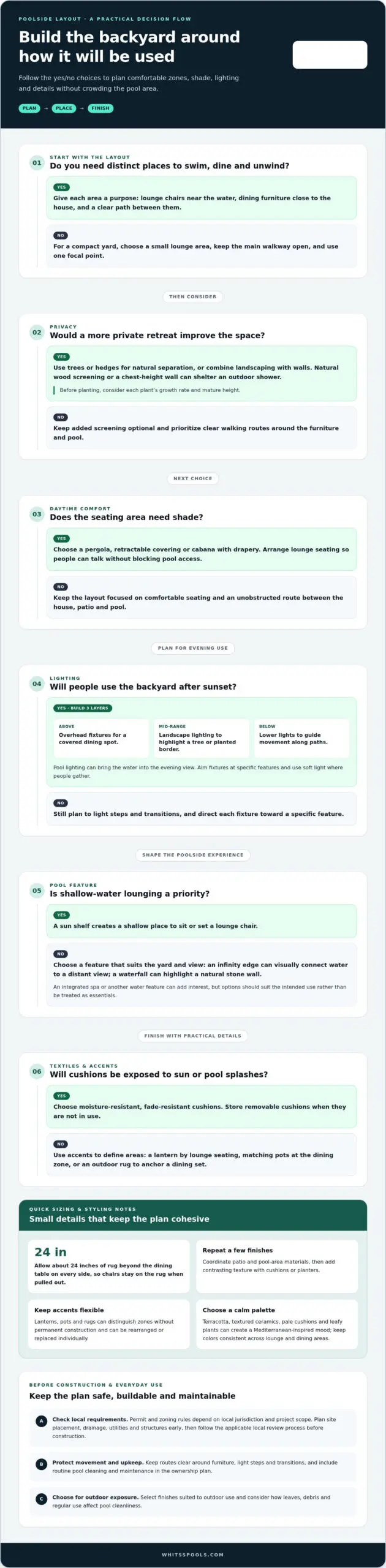
To make your backyard feel like a resort, start with comfortable seating, reliable shade, and thoughtful lighting. These essentials shape how you use the space, from a quiet morning beside the pool to an evening with guests. Give each area a purpose: place lounge chairs near the water, position dining furniture close to the house, and keep a clear path between them. Make finishes, materials, lighting, and layout work together rather than compete for attention.
Permit and zoning requirements for backyard pools, decks, and outdoor kitchens depend on local jurisdiction and project scope. Plan for site placement, drainage, utilities, and structures early, then follow the applicable local review process before construction begins.
Privacy doesn’t require a fence. Use trees and hedges to create natural separation, or combine landscaping with walls for a more intimate retreat. Before planting, consider each plant’s growth rate and mature height. Natural wood screening or a chest-height wall can also shelter an outdoor shower without closing off the whole yard.
A small backyard can feel luxurious when each feature earns its place. Choose a compact lounge area, keep the main walkway open, and use one focal point, such as a waterfall or sculptural planter. Layers, levels, and dimension add visual interest without requiring a large footprint. Repeating a few finishes across the patio and pool area helps the space feel intentional.
Build outdoor lighting in three layers: above, at mid-range, and below. Overhead fixtures can illuminate a covered dining spot, while lower lights guide movement along paths. Landscape lighting can draw attention to a tree or planted border, and pool lighting can bring the water into the evening view. Aim each fixture at a specific feature, and use soft light where people gather. This creates atmosphere without making every corner equally bright.
Choose materials that support both the look and daily use of the space. Repeat a patio finish in a nearby seating area, for example, then add contrasting texture through cushions or planters. Shade can come from a pergola, retractable covering, or cabana with drapery. Arrange lounge seating so people can talk without blocking pool access. Add fans or heaters where they suit the setting and help extend outdoor use.
Keep safety and maintenance in the plan from the start. Clear walking routes around furniture, light steps and transitions, and choose finishes suited to outdoor exposure. Leaves, debris, and regular use can affect pool cleanliness, so include routine cleaning and maintenance in the ownership plan. A well-planned layout makes upkeep easier while keeping seating, shade, and lighting comfortable for everyday use.
2. Outdoor cushions, throws, lanterns, pots and rugs
Textiles and small accents can transform a plain patio into a comfortable outdoor retreat. Start with moisture-resistant, fade-resistant cushions, especially on seating exposed to direct sun or pool splashes. Add a throw for cooler evenings, then repeat an accent color in cushions, lanterns, or planters. Terracotta pots beside neutral cushions, for example, create warmth without making the seating area feel visually busy.
Choose furniture for the way you use each zone. A pair of lounge chairs encourages poolside reading, while a cushioned bench can make a narrow patio useful without crowding the walkway. For dining, leave enough room to pull chairs back and move around the table. An outdoor rug can anchor the dining set on a porch, patio, deck, or balcony. Allow about 24 inches of rug beyond the table on every side, so chairs remain on the rug when pulled out.
Lanterns and planters help distinguish spaces without permanent construction. Place a lantern on a side table near lounge seating, then use matching pots to mark the edge of a dining area. A low outdoor rug can visually separate that dining zone from the kitchen entrance. These choices are also budget-friendly because you can rearrange or replace individual accents as your needs change, rather than rebuilding a patio.
For a Mediterranean-inspired mood, combine earthy terracotta, textured ceramics, pale cushions, and leafy plants such as an olive tree in a pot. Keep the palette consistent across the dining area and lounge furniture. A woven throw or patterned cushion adds contrast, while lanterns create a softer evening setting. Choose outdoor textiles for moisture and fade resistance, and store removable cushions when they aren’t in use.
Think through the furniture plan before buying accessories. An outdoor design team can help coordinate finishes, fabrics, and walking routes with the home’s architecture. Consider how you use the space: hosting meals, reading beside the pool, or finding a quiet place to unwind. That helps guide practical choices, including durable cushion covers, movable planters, and rug placement that keeps doors and paths clear.
If you’re planning furnishings around a new pool, explore custom concrete pool design as part of the overall outdoor layout. Coordinating the pool’s shape and surrounding seating can make the finished space feel considered, rather than like separate features added over time.
3. Infinity pools, tanning ledges, and water features
A standout pool feature gives the eye a destination and adds dimension to outdoor spaces. An infinity edge can visually connect the water with a distant view, while a sun shelf creates a shallow place to sit or set a lounge chair. Integrated spas and water features can add another point of interest. Choose features according to the yard’s shape, views, and intended use, rather than treating every option as essential.
Consider how the pool looks from the house, patio, and main seating area. A vanishing edge may draw attention toward a hillside or open landscape, while a waterfall can highlight a natural stone wall. In a compact yard, a plunge pool with a simple water feature can create a focal point without filling every available space. Align the feature with the approach to the pool so it feels intentional from the first view.
A tanning ledge can serve several purposes. Place it where swimmers can move easily between shallow lounging and deeper water. Pair the ledge with in-water seating or a nearby umbrella for a comfortable pause from swimming. Keep the surrounding deck clear enough for people to pass, and consider how the ledge looks from the dining area. These practical choices help the feature work as part of the whole backyard.
Water movement also changes the sound of a yard. For noise masking, a fountain with a noticeable fall or splash is recommended over a quieter pour-over style. Position the sound feature between the seating area and the noise source, such as a nearby road. A small, contained cascade can make the pool edge a natural focal point, while a broad waterfall can suit a larger landscape with stone planting beds.
Many water features use a recirculating pump to move water from a basin through the feature and back again. Keep the intake accessible, remove leaves and debris, and watch for changes in flow that can signal a blockage. Match the feature’s scale to the pool and patio. A narrow rill beside a walkway creates a different effect from a waterfall spilling into the pool.
Coordinate finishes around the water. Stone, tile, and concrete can create contrast, but repeating one surface near the pool and patio helps connect separate areas. At night, use pool or landscape lighting to highlight the moving water without overwhelming nearby seating. An outdoor fireplace or fire pit can provide a contrasting gathering point, balancing the cool visual character of water with a place for evening conversation.
4. Backyard design and layout planning
Begin with a simple plan showing the house, pool, patio, and main walking routes. Mark where people enter the yard, gather, dine, and relax before choosing finishes. Sliding or folding glass walls can connect indoor and outdoor areas, while aligned kitchen and patio access makes carrying food easier. Matching indoor and outdoor flooring can strengthen that visual connection. Leave clear routes between activity zones so furniture doesn’t interrupt everyday movement.
A Santorini-inspired design can use white surfaces, blue accents, and restrained planting for a crisp coastal mood. Repeat those colors in pool tile, cushions, and planters rather than introducing a new palette in every zone. Pale paving can contrast with blue water, while natural wood adds warmth. Use a few strong details, such as a tiled bench or simple pergola, to suggest the style without making the backyard feel themed or crowded.
A Bali-inspired backyard can lean on tropical foliage, natural textures, and flowing water. Plant choices should suit the local climate and the amount of care you can provide. Tropical options include Tasmanian tree fern (Dicksonia antarctica) for USDA zones 9 to 10, shell ginger (Alpinia zerumbet) for zones 9 to 11, and Kahila garland-lily (Hedychium gardnerianum) for zones 8 to 10. Soil, sunlight, and watering needs also affect how well plants thrive.
Plan pool and spa features around how you want to use the yard. An infinity edge can emphasize an open view, while a sun shelf offers a shallow place to lounge. An integrated spa or waterfall can add another focal point. In a smaller space, a plunge pool may fit the design better than a large pool. Connect the chosen feature to nearby seating and pathways, so it feels integrated rather than isolated.
Choose one design theme, then let materials and landscaping carry it through. Layers, levels, and changes in texture add visual dimension; for example, a raised planter beside a lower patio creates separation without dividing the yard completely. Trees and hedges can form natural boundaries, but consider mature height and growth rate before planting. Walls and landscaping can create a more private retreat without making every area feel enclosed.
Custom design means resolving practical details before construction, including circulation, views, shade, and where water features will sit. Sketch the yard from the house and poolside, then note which views deserve attention and which need screening. A consistent palette helps different spaces feel connected. The result can draw inspiration from Santorini or Bali while reflecting the home’s architecture and how its residents use the backyard.
5. Resort-style poolside furnishings
Poolside furniture should make relaxing easy without turning the deck into an obstacle course. Start by identifying the activities each area should support: sunbathing, reading, conversation, or drying off after a swim. Place loungers where they catch the sun, then add a small side table for a book, towel, or drink. A conversation set works better near the patio than in a narrow path beside the pool.
Choose furniture by function before comparing finishes. Adjustable loungers suit people who like to change positions, while a low sofa creates a casual gathering spot. Pair each seat with somewhere to set personal items, such as a sturdy table or built-in ledge. Keep the route between the house, seating, and pool open so moving through the space feels natural, even when guests are gathered.
Make comfort practical. Look for outdoor cushions with moisture and fade resistance, and select removable covers that are easy to care for. A throw can add warmth during a cool evening, while a shade umbrella near a lounge chair offers respite from direct sun. Choose finishes that complement the patio and pool rather than introducing a different look with every furniture piece.
Include more than chairs. A daybed can create a restful focal point, and a hammock offers a lighter place to unwind. Hang a hammock between two sturdy trees or posts, and make sure its landing area is comfortable and unobstructed. Grass, bark mulch, walkable ground cover, or gravel can work beneath it. Keep nearby paths clear so the hammock doesn’t interrupt movement around the yard.
Small furniture choices can define separate outdoor spaces. A pair of chairs and a side table creates a reading nook; a dining set marks a place for meals. Use a bench along a wall when a full lounge set would crowd the patio. A movable ottoman can serve as a footrest or extra seat, making the arrangement adaptable for a quiet afternoon or a gathering.
Think of every piece as part of a coordinated set of elements. Repeat a material or finish, such as warm wood on a side table and nearby bench, then use cushions for a controlled accent. Arrange furnishings to frame a view of the pool or a waterfall, not block it. The strongest layout balances comfortable seating, clear circulation, and open sightlines.
Ready to shape a poolside setting around your home and the way you relax? Plan your poolside design with the pool, furniture, and surrounding spaces in mind.
White’s Pools: Custom Concrete Pools
White’s Pools can turn your backyard plan into a custom concrete pool designed around your home, preferred features, and poolside layout. The team also provides Pool Cleaning & Maintenance for routine upkeep and builds Outdoor Fireplaces that create a gathering place beside the water. For homeowners planning year-round swimming, White’s Pools builds Indoor Pools.
Bring your priorities into the planning conversation, such as an infinity edge, a natural waterfall, or a plunge pool. These choices influence how the pool connects with seating, paths, and the rest of the yard. To discuss your backyard plans, contact White’s Pools.
Make Your Backyard Plan Your Own
The most successful outdoor retreat starts with how you want to spend time at home. Before choosing another feature, picture an ordinary afternoon: where you’ll sit, how you’ll move between the house and pool, and what would make you want to stay outside longer. That personal vision guides decisions about how to make your backyard feel like a resort, without letting a trend dictate the entire design.
Turn that vision into a practical plan by noting your priorities, existing site conditions, and the features you want to build around. Thoughtful design can bring poolside comfort together with the character of your home. White’s Pools can help shape the next step, whether you’re planning a new backyard or considering how an outdoor project fits your home.
Contact White’s Pools to plan your backyard, and take the first step toward creating an outdoor setting that feels distinctly yours.
Frequently Asked Questions
What Outdoor Amenities are Essential for a Complete Oasis Feel?
Essential amenities support how you want to spend time outdoors, not just how the yard looks. Consider a comfortable place to sit, an area for meals, useful shade, and a focal feature such as moving water or a fireplace. A poolside rinse area or nearby towel storage can also make swimming more convenient. Prioritize features that fit your routine before adding extras designed mainly for occasional entertaining.
What are the Essential Elements of a Resort-Style Backyard?
A resort-style backyard needs a clear plan connecting the home, pool, and places to relax. Start by mapping the main route from the back door to the pool, then note where people might gather or pause. A dining area near the kitchen can simplify serving meals, while a separate quiet corner offers a change of pace. Repeat a few materials or colors across these areas to give the design a consistent character.
What features make a backyard feel like a resort?
Features with a clear purpose make a backyard feel considered and inviting. An infinity edge can draw attention toward a landscape view, while a shallow ledge offers a different way to enjoy the pool. A small plunge pool may suit a compact yard better than a larger design. To decide how to make your backyard feel like a resort, choose a focal feature that fits your space and how you’ll use it.
What are affordable resort-style backyard ideas on a budget?
Refresh the yard in stages, starting with movable details rather than major construction. Rearrange existing chairs to create a conversation area, repurpose containers as planters, or add coordinated outdoor cushions. A simple outdoor rug can define a dining spot, while a carefully placed lantern adds evening ambience. Improve one area first, then carry its colors or materials into other spaces over time.
How to design a backyard lounge area with comfortable seating and shade?
Place lounge seating where it supports conversation or quiet use, then position shade according to the sun’s path and the area’s function. A chair beside a reading table needs a different arrangement from a group of seats facing the pool. Leave a natural route between the lounge area and nearby doors. Select furniture that fits without making access feel cramped, and keep frequently used items close at hand.
What backyard lighting creates a relaxing resort atmosphere?
Relaxing backyard lighting combines gentle ambient light with focused illumination for practical tasks. Use a warm-toned fixture near dining or seating, then direct a separate light toward steps or a frequently used path. Shielded fixtures reduce glare into people’s eyes and nearby windows. A dimmer or separate switches let you shift from meal preparation to evening conversation without lighting the entire yard at full brightness.
How to add a pool, hot tub, or water feature to a backyard?
Decide how a new feature should connect to existing doors, patios, and outdoor gathering areas. A pool may become the yard’s central destination, while a hot tub can suit a more sheltered corner. A fountain or waterfall needs room for its basin, pump access, and surrounding circulation. Sketch the proposed location and nearby paths before selecting finishes, so the feature works with the yard’s layout.
What are the best outdoor materials and furniture for weather resistance?
Choose outdoor materials based on the conditions they’ll face, including direct sun, rain, humidity, and frequent use. Aluminum, teak, stone, and outdoor-rated fabrics are common choices, but their upkeep and appearance differ. Consider how each finish responds to moisture and how much cleaning it needs. For furniture, look for durable frames and removable cushion covers, then match the materials to the home’s exterior and poolside setting.

