
Privacy comes from layers, not one tall fence. Creating a private backyard oasis starts with combining greenery and planters with a water feature, comfortable shade, and personal details. Screens, trellises, or thoughtfully placed plants can soften sightlines, while separate areas for dining, lounging, or reading help the yard feel calm and intentional.
It’s natural to want both privacy and a welcoming place to spend time outdoors. A thoughtful mix of greenery, gentle water sounds, and shade can make a backyard feel more restful without relying on a single design element. Start with how you want to use the yard, then choose features that serve that purpose. The ideas below cover planters for privacy, water features, shade, and personal finishing touches.
Key Takeaways
- Choose fragrant plants for spots near outdoor seating to make time outside feel more inviting.
- A fountain, birdbath, or bubbling rock can add a soothing water element when a pool isn’t the right fit.
- Use a pergola or shade sail to make a sunny area more comfortable, then consider how lighting or climbing plants could finish the space.
- Bring in a few personal details, then spend time in the finished space and adjust anything that feels cluttered or missing.
1. Using planters for privacy and layered planting
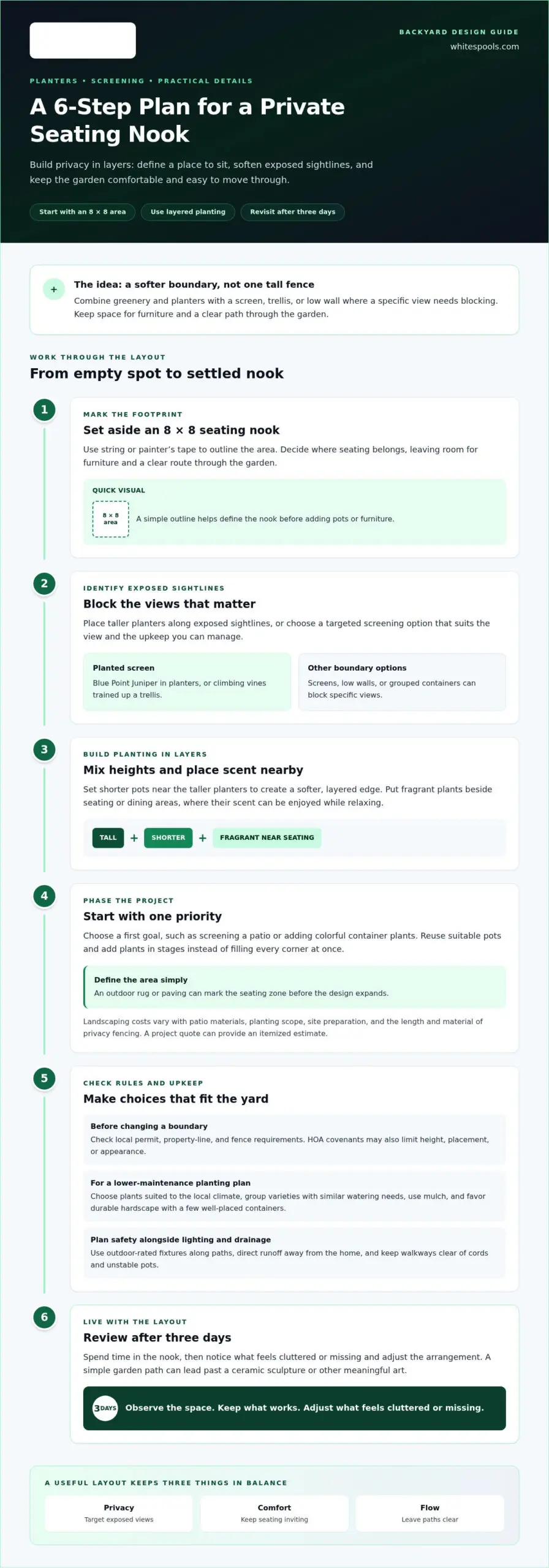
Start by marking an 8×8 area with string or painter’s tape to define a seating nook. Arrange tall planters along exposed sightlines, then place shorter pots nearby. This layered planting creates a softer boundary while leaving room for furniture and a clear path through the garden.
For privacy without a fence, use planters with Blue Point Juniper or train climbing vines up a trellis. Screens, low walls, and grouped containers can also block specific views. Place fragrant plants near seating or dining areas, where you can enjoy their scent as you relax.
To plan within a budget, start with one priority, such as screening a patio or adding colorful container plants. Reuse suitable pots, add plants in stages, and use an outdoor rug or paving to define the seating area before expanding the design.
Landscaping costs vary with patio materials, planting scope, site preparation, and the length and material of privacy fencing. A project quote can provide an itemized estimate. No single type of screening suits every yard. Choose a fence, trellis, or planted screen based on the views you want to block and the upkeep you can manage.
Permit, property-line, and fence rules depend on local requirements, and HOA covenants may add limits on height, placement, or appearance. Review applicable local rules and HOA documents before building or changing a boundary.
For a low-maintenance, drought-tolerant yard, select plants suited to your local climate and group varieties with similar watering needs. Use durable hardscape, mulch around plantings, and choose a few well-placed containers instead of filling every corner with pots.
Plan lighting, drainage, and safety together. Use outdoor-rated fixtures along paths, direct runoff away from the home, and keep walkways clear of cords and unstable pots. A simple garden path can lead past a ceramic sculpture or other meaningful art. After three days, notice what feels cluttered or missing, then adjust the layout.
2. Water features and masking neighborhood noise
A fountain, birdbath, or bubbling rock adds moving water without making a pool the centerpiece. Its gentle sound can soften nearby conversations or traffic, especially when the feature is near seating. Choose a sound and scale that suit the space, then arrange flowers or containers nearby to integrate it with the garden.
Which outdoor features best create a relaxing backyard oasis, such as a patio, fire pit, or water feature? Start with the activity you most want to enjoy. A patio supports dining and lounging, a water feature adds sound and movement, and a fire feature creates a gathering point on cooler evenings. Pair comfortable seating with one focal feature to give the layout a clear purpose.
In a small yard, a tabletop fountain or compact birdbath can add water without taking over the patio. A bubbling rock suits a naturalistic setting, while a simple basin works well with flowers and structured planting. Place the feature where you can see and hear it from a chair, rather than hiding it behind a boundary or in an unused corner.
Pair an outdoor fireplace with cozy seating to create a separate evening destination. Arrange chairs around the fire feature with enough room to move comfortably, and add cushions or throws for summer nights that turn cool. Orient the seating toward the fire and any water feature, rather than neighboring windows.
Before choosing, consider how the sound, footprint, and visual style fit your routine. A fountain may suit quiet reading, while a larger water-centered design can anchor a more expansive outdoor setting. For inspiration, explore a tranquil backyard focal point that brings water into the overall design.
When space or budget is limited, a fountain, birdbath, or bubbling rock can be an alternative to a private pool. Choose based on whether a pool is your priority or you want the sound and presence of water without making a pool the centerpiece.
3. Creating shade with a sail or pergola
Begin with the place you use most, such as a favorite reading chair or dining table. Observe how sunlight falls there, then position shade to cover the area during the hours you plan to spend outside. A shade sail can define a compact seating nook, while an umbrella offers flexible coverage beside movable furniture.
Choose a sail shape and placement to suit the yard’s layout, not just its appearance. A triangular sail can add a crisp visual line above a small patio, while a larger arrangement can cover a dining area. For bespoke sizing and configurations, specialists like Sail Shades Direct design custom solutions that work with unique footprints. Keep the edges clear of doorways and garden paths, and consider how the fabric color will complement paving, planters, and outdoor cushions.
A pergola gives a seating area an architectural frame and can add privacy and ambiance. Its open structure can support string lights for evening use or climbing vines for a greener canopy. To create a private backyard oasis, place a pergola beside a patio or lounge area, distinguishing it from the rest of the garden. For a softer look, train vines along one side rather than covering every surface.
Umbrellas and gazebos are other ways to add shade. An umbrella suits a table or group of chairs that may move, while a gazebo can create a defined retreat. Match the structure to how you spend time outdoors, whether dining, reading, or gathering with family. A clear purpose helps keep shade from interrupting the route between the house, seating, and planting.
Finish by arranging lighting and furniture beneath the chosen structure. Under a pergola, string lights can create a warm evening setting; beside a shade sail, a low table keeps the area useful without crowding it. Thoughtful placement helps a private backyard oasis feel connected to the home while offering a sheltered place to unwind. Many modern property developments, such as the executive courtyard layouts by Pimlico Homes, prioritize this kind of architectural flow so that outdoor relaxation areas feel naturally secluded and integral to the home.
4. Personalizing the space with meaningful touches
Give each outdoor space a purpose before choosing accessories. A reading corner might include a favorite chair and small side table, while a dining area could display a handmade serving bowl. These choices make separate spaces feel considered without filling every surface. Start with objects you already enjoy, then decide where each belongs.
For seating, choose cushions, pillows, and throws made for outdoor use. Durable outdoor-rated fabric and water-resistant polyfill inserts are better suited to patio conditions than indoor cushions. Coordinate one or two colors with nearby planters or paving, then vary textures to keep the arrangement welcoming. Store soft furnishings when they’re not in use to keep the seating area tidy.
Use one or two meaningful decorative pieces as focal points. Wind chimes can bring movement and sound to a quiet corner; a ceramic sculpture can add shape beside a path. A child’s rock art offers a personal touch near family seating. Place each item where it can be appreciated, rather than grouping several decorations together.
Personal details work best when they support how you use the yard. Set a small tray beside a lounge chair for a book or drink, or display a favorite ceramic pot near the garden entrance. Keep walking routes open and leave useful surfaces clear. A simple arrangement feels intentional when every object has a place and purpose.
After three days of using the space, take a fresh look. Notice whether a seating spot needs another pillow, whether a decorative piece feels misplaced, or whether an area feels cluttered. Adjust one detail at a time, then see how the outdoor space feels in daily use. To bring a larger focal point into your design, explore ideas for your outdoor retreat.
Keep decorative choices deliberate: use one or two meaningful pieces, such as wind chimes, a ceramic sculpture, or a child’s rock art. Let each selected object add a personal note instead of adding items just to fill a surface. A piece that connects with the space’s purpose can make the area feel individual while keeping attention on how the yard is used.
White’s Pools: Custom Concrete Pools
White’s Pools designs and builds custom concrete pools around your home and outdoor setting. Consider a pool when it is central to your plans, rather than relying on planters and smaller water features alone. A carefully planned pool can become a focal point and connect with the seating, planting, and shade areas you’ve arranged.
For a more natural look, White’s Pools also builds natural and waterfall pools. An outdoor fireplace can complement a backyard gathering area, while Pool Cleaning & Maintenance supports ongoing care after installation. The right combination depends on how you want to use your outdoor space and which features matter most to your household.
Contact White’s Pools to discuss a custom concrete pool for your backyard oasis.
Shape the Backyard Around the Life You Want
The most rewarding next step is to decide what you want your yard to make possible. Perhaps it’s an unhurried morning by the water, a comfortable place to host friends, or a quiet corner to enjoy at day’s end. Let that picture guide your choices so each feature supports how you’ll actually use the space.
Creating a private backyard oasis is an evolving process. Begin with one central feature and let the rest of the design take shape around it. If a pool is part of your vision, White’s Pools offers Custom Concrete Pools, Pool Cleaning & Maintenance, and Outdoor Fireplaces to support a considered backyard plan.
Contact White’s Pools to plan your oasis, and take the next step toward an outdoor space that feels distinctly yours.
Frequently Asked Questions
What are the best plants and trees for backyard privacy in the United States?
The best plant choices depend on your local climate, soil, and screening needs. Blue Point Juniper offers an evergreen option, while climbing vines can cover a trellis. In mountain climates, Austrian Pine and Prescott Blaze Maple are shade-tree options; Mountain Lilac and Penstemon suit mountain soil and temperature swings. Check each plant’s mature size and sunlight needs before placing it near a patio or property boundary.
How much does backyard landscaping cost, including patios, plants, and privacy fencing?
Landscaping costs vary with patio materials, planting scope, site preparation, and the length and material of privacy fencing. A project quote can provide an itemized estimate.

