
A pool’s value isn’t measured by resale alone. A custom inground pool may increase a home’s value by an estimated 5% to 8% on average, but whether a custom pool is a good investment depends on how well its design fits your property, your plans for the home, and the way your household will use it. A standard pool may suit simpler needs, while customization can make the space feel more connected to your home and outdoor living.
It’s sensible to weigh the financial return before committing to a major backyard project. Resale value is only one part of the decision. Family enjoyment, ongoing care, and how long you expect to stay in your home matter, too.
This article compares custom and standard pools, explains how pool ownership may affect home value and everyday family life, and explores the factors that shape the decision across the United States. You’ll come away with a clearer picture of which option may better fit your home and priorities.
Key Takeaways
- Judge a pool’s resale appeal by how well it fits the home and local market, not by construction type alone.
- Consider how often your household would use the pool and whether it would make family time and entertaining more enjoyable.
- Factor regular maintenance, seasonal care, and operating needs into the long-term ownership decision.
- Compare a standard design with a custom concrete pool by weighing practical needs against the value of a backyard tailored to your home by White’s Pools.
Is a Pool a Smart Investment for Your Home?
A pool’s financial value depends on buyer demand, the property, and how well the design suits its outdoor setting. Whether a custom pool is a good investment also depends on how you plan to use it.
Resale Appeal and Sale-Price Premiums
Resale appeal is the interest a pool may generate among buyers; a sale-price premium is the amount they pay above comparable homes. An appraisal estimates value based on property details and comparable sales, but it cannot guarantee that a buyer will pay more. A well-maintained pool that suits the home and yard may support buyer interest. Compare nearby properties with similar outdoor features to gauge how buyers may respond.
Pool Type and Property Value
Pool type affects how permanent and integrated the feature appears. An inground pool becomes part of the ground and landscape, while an above-ground pool is generally more removable. Buyers may consider how either option fits the yard, home, and surrounding properties. If you’re asking, “Is a custom pool a good investment?” consider whether its design complements the property and suits the buyers most likely to value it.
National Home-Value Effects
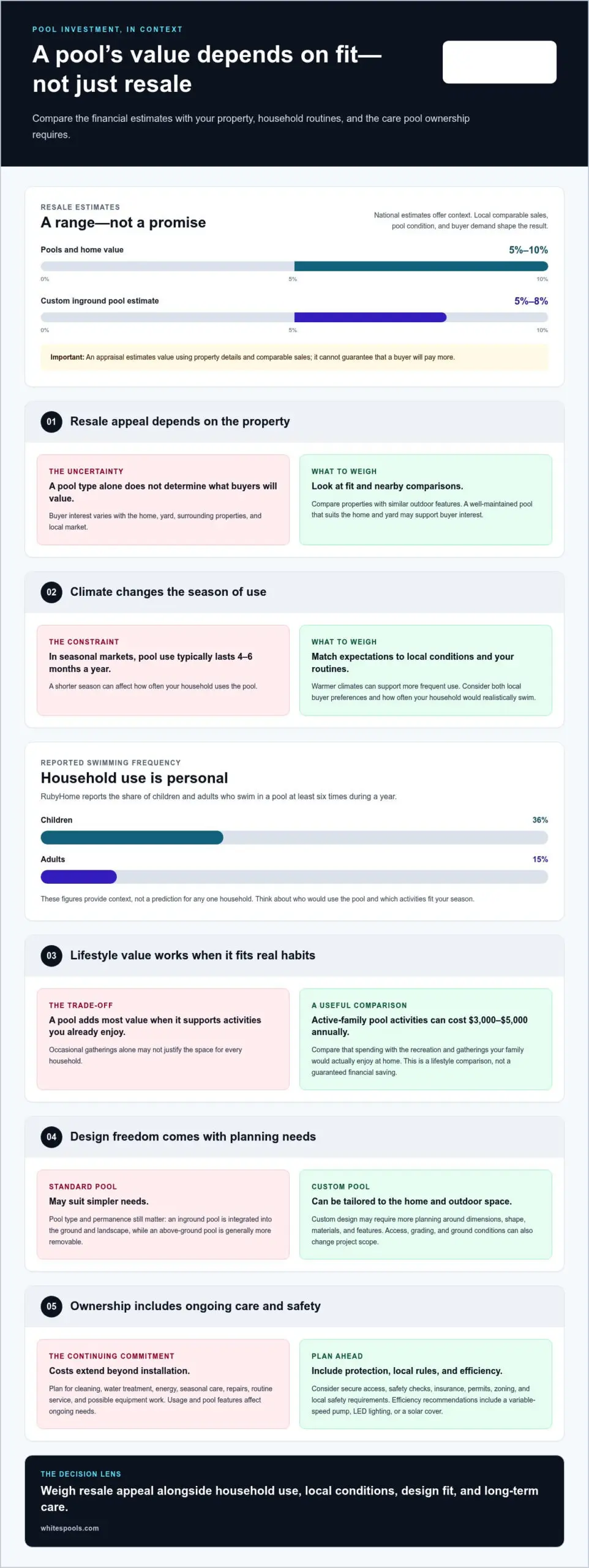
National estimates associate pools with a 5% to 10% increase in home value. A custom inground pool may increase a home’s value by an estimated 5% to 8% on average. These figures offer context, not a guaranteed result for a specific property. Local comparable sales, pool condition, and buyer demand affect how a pool contributes to value. So, is a custom pool a good investment? Its resale contribution depends on how well it fits the home and its market.
Climate and Location Effects
Climate and location affect pool value by shaping its season of use and appeal to local buyers. In seasonal markets, pool use typically lasts 4-6 months per year, while warmer climates can support more frequent use. Location also influences whether pools are common or unusual in nearby properties. Consider both your household’s likely use and local buyer preferences; each can shape the pool’s personal value and resale appeal.
Family activities and entertaining
A pool can turn ordinary afternoons into shared recreation, from swim practice to relaxed weekends with friends. How much you enjoy it depends on whether it fits your family’s routines, outdoor space, and vision for home life.
Family Recreation and Exercise
A pool provides a convenient setting for active play and water-based exercise at home. That matters when family members want recreation without planning a trip elsewhere. RubyHome reports that 36% of children swim in a pool at least six times during a year; the same report puts adults at 15%. Those figures offer context, not a promise about any one household. Think about who would use the pool, what activities they enjoy, and how often those routines realistically fit your season.
Social Connections and Entertaining
A pool can make the backyard a natural gathering place for relatives and friends. A casual afternoon might combine swimming, conversation, and a meal outdoors, while children play nearby. For an active family, spending on pool-related activities such as camps and water park visits can reach $3,000-$5,000 annually. Compare that spending with the gatherings and recreation you would actually enjoy at home. The pool adds the most lifestyle value when it supports existing social habits, rather than relying on occasional events to justify the space.
Lifestyle and Family Benefits
Pool ownership can shape how a family uses its home, from quiet morning exercise to lively summer entertainment. The broader benefit is a private setting that reflects your household’s vision, whether that means a simple place to cool off or a more expressive backyard centerpiece. Design choices can influence the experience: a plunge pool suits a compact retreat, while a natural or waterfall pool creates a different atmosphere. Consider available yard space, preferred activities, and who will maintain the pool. If you’re exploring a family-focused backyard, custom pool design options can help you picture how the space might serve your routines.
What’s the ROI of a Custom Pool?
A pool’s return depends on construction, upkeep, resale appeal, and how often your household uses it. Compare the financial costs with the everyday value before choosing a design.
Installation Costs by Pool Type
Installation costs vary by pool type, site conditions, and design complexity. A custom design may require more planning around dimensions, shape, materials, and features. The property matters, too: access, grading, and ground conditions can change the project scope. Financing may involve home-equity borrowing or personal loans; interest and total borrowing costs depend on loan terms and your finances. Compare the full project scope when weighing options.
Ongoing Ownership Costs
Ownership costs include cleaning, water treatment, energy, seasonal care, and repairs. Regular cleaning and balanced chemicals help maintain pool water. Budget separately for routine service and possible equipment work, since usage and pool features affect both. Efficiency recommendations may include a variable-speed pump, LED lighting, or a solar cover to reduce operating costs. Regular care also helps preserve the pool’s condition over time.
Insurance and Safety Expenses
Insurance and safety expenses reflect the risks and protections associated with pool ownership. Insurers may consider pool access, the surrounding property, and safety measures when assessing coverage. Include secure access and ongoing safety checks in your ownership plan. Permits, zoning rules, and safety requirements depend on local jurisdiction and property conditions, so account for them during project planning, before construction begins. Early planning helps align the design with applicable rules.
Returns Compared with Other Home Improvements
Return on investment compares a project’s resale contribution with its installation cost. The typical return for an inground pool is 40-60% of its installation cost. That figure cannot establish whether a pool outperforms another improvement, because local sales, project scope, and buyer demand differ. A pool can also provide personal enjoyment that resale calculations don’t capture. Weigh financial return alongside the use and lifestyle value you expect from the backyard.
Custom pools compared with standard pools
A custom pool is designed around a specific property and homeowner’s priorities, while a standard pool follows a more defined design. The better fit depends on how closely the layout, appearance, and use should respond to your backyard.
Customization can matter when the available space has an unusual shape or outdoor living needs to connect with existing landscaping. For example, a homeowner might prioritize a shallow play area, a distinct swimming zone, or a pool that follows the yard’s contours. A standard design may suit a straightforward backyard where familiar dimensions and features meet the household’s needs. Greater design flexibility can enhance the setting, but it also means making more decisions about the pool’s form and surrounding space.
- Choose custom design when a specific layout or visual vision matters.
- Choose a standard design when a simpler, more established configuration fits the yard.
- Compare both against how your household expects to use the pool during summer.
Consider the whole outdoor environment, not just the water. A custom pool can coordinate with landscaping, pathways, and a patio to create a unified outdoor living area. A standard pool may leave more of those choices to separate design decisions. Either way, assess where people will enter, gather, and move around the pool. These practical details influence daily enjoyment as much as appearance.
The investment decision comes down to fit, use, and priorities. A standard pool may be sensible if its layout already supports swimming and family recreation. Customization may be worthwhile when adapting the design to your property is central to your plans. Before deciding, distinguish features you truly want from those you’d use only occasionally. The key takeaway: choose custom for meaningful personalization, not simply because it sounds more luxurious.
White’s Pools: Custom Concrete Pools
White’s Pools designs and builds Custom Concrete Pools for homeowners who want a pool tailored to their property and outdoor plans. If you’re weighing a custom design against a standard layout, consider how the pool’s shape, setting, and intended use fit your home.
After construction, Pool Cleaning & Maintenance supports ongoing care, including water quality and equipment performance. White’s Pools also builds Indoor Pools for homeowners who want swimming space inside the home. Start by clarifying your goals, whether family recreation, entertaining, or a particular design vision, then discuss how a custom concrete pool can meet them.
For a conversation about your pool plans, contact White’s Pools.
Turn Your Pool Vision Into a Clear Plan
Before committing to a backyard design, decide what you want the space to make possible. Perhaps you picture family swimming, a quieter outdoor retreat, or an entertainment area that brings people together. Those priorities can guide choices about the pool and its surroundings, keeping the project connected to how you want to live at home.
Whether a custom pool is a good investment depends on the balance between personal value and financial commitment. White’s Pools offers Custom Concrete Pools, Pool Cleaning & Maintenance, and Outdoor Fireplaces, helping homeowners plan for the pool, its care, and the wider setting. A thoughtful conversation can help turn your vision into a practical plan for your property.
Contact White’s Pools to discuss your pool and explore a design that feels right for your home.
Frequently Asked Questions
Is It Harder to Sell a Home With a Pool?
Not automatically, but a pool may appeal more to some buyers than others. A well-kept pool and tidy yard help buyers picture how they could use the outdoor space. A neglected pool, crowded patio, or maintenance concerns may reduce interest. Before listing, present the pool’s condition clearly and make sure the surrounding space looks usable, cared for, and consistent with the home.
How much does it cost to build a custom pool in the United States?
The price depends on the project and is provided after a quote request. Cost factors include the pool’s dimensions, shape, materials, site access, ground conditions, and selected features. A level, open backyard can require different work from a sloped or difficult-to-access site. The project scope matters, too: landscaping and related outdoor construction can affect the overall plan. Compare proposals by the work included, not just the headline amount.
How much does an inground pool add to home resale value?
There is no single resale-value figure that applies to every inground pool. Its contribution depends on comparable homes, buyer demand, pool condition, and how well the design fits the property. A well-maintained pool that complements the yard may strengthen a home’s appeal, while deferred upkeep can weaken it. Appraisals and actual sale prices can differ, so consider the pool as one feature among the home’s overall qualities.
Do custom pools increase home value enough to recover their cost?
Usually, resale value alone shouldn’t be the only measure of whether the project pays off. Recovery depends on the original project scope, ongoing care, and what buyers in the area value. A household that uses the pool regularly may also gain personal value that a resale calculation doesn’t capture. To assess the trade-off, compare the project’s full ownership costs with both likely resale appeal and the use you expect from it.
What are the annual maintenance and utility costs of a custom pool?
Annual expenses depend on pool size, equipment, usage, season, and how much care you handle yourself. Common budget categories include cleaning, water treatment, equipment upkeep, electricity, and seasonal opening or closing. A pool used often, for example, may need more frequent cleaning and pump operation than one used occasionally. Keep maintenance and utilities as separate budget lines, then revisit them as usage patterns and equipment needs change.
Do buyers in my local real estate market value homes with pools?
Local buyer preferences can be reflected in comparable listings, recent sales, and the features highlighted in property descriptions. Look at homes near yours with similar lot sizes and outdoor spaces, then compare how pools relate to asking prices and buyer interest. Neighborhood expectations matter: a pool that complements nearby homes may feel like an asset, while one that dominates a smaller yard may appeal to fewer prospective buyers.

