
Slip resistance depends on more than coping material alone. Textured travertine, bluestone, and matte-finish porcelain are among the types of non-slip pool coping to consider. Surface texture, drainage, and how the material performs in your climate all affect the choice. A finish that feels comfortable underfoot and suits the pool edge matters as much as appearance.
Choosing coping means balancing safety, durability, maintenance, and style, so look beyond a sample’s color or texture. This guide explains what pool coping does and compares materials by climate suitability, drainage, long-term wear, upkeep, and pool type. Use these details to identify what matters most as you plan a comfortable, cohesive pool design.
Key Takeaways
- Compare textured stone and matte porcelain by wet traction, surface feel, and upkeep, not appearance alone.
- Match coping to local climate and drainage needs, since water management affects both comfort and long-term performance.
- Understand how coping finishes the pool edge and contributes to a comfortable transition between the water and deck.
- Choose an edge profile and material that suit your pool’s design, construction, and intended use.
What Are the Best Non-Slip Surfacing Materials for Pool Areas?
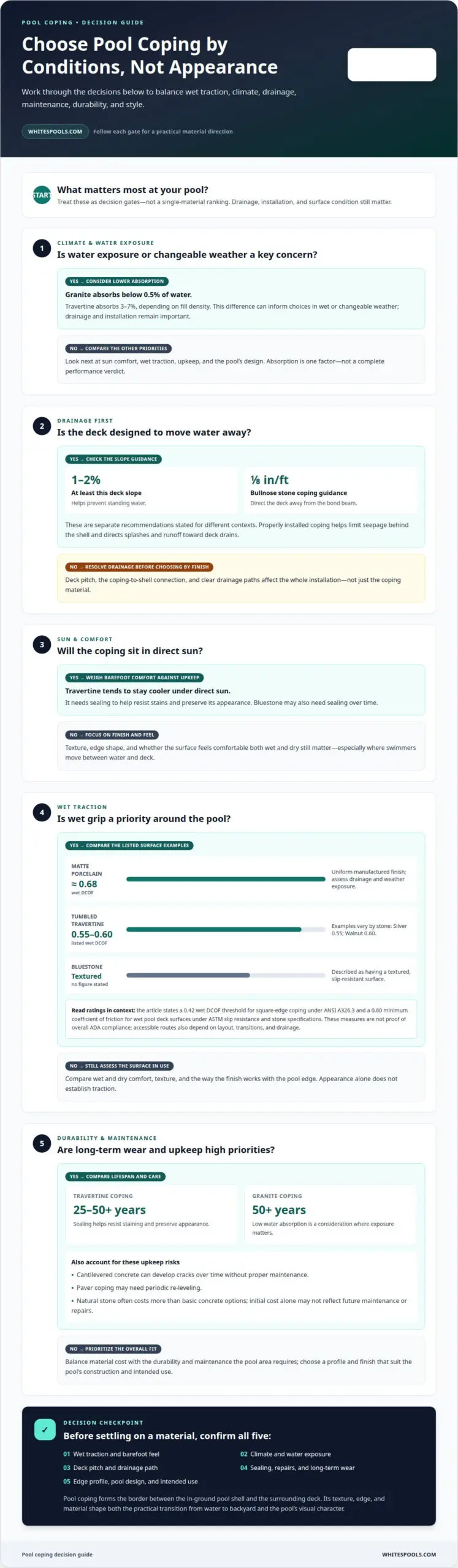
Texture can improve grip, but a poolside finish also needs suitable drainage, manageable upkeep, and a comfortable feel. Compare wet-traction information and performance in your climate instead of choosing by appearance alone.
Textured Finishes
A textured finish adds surface variation that can help provide grip when pool water splashes onto the deck. Bluestone has a textured, slip-resistant surface, while matte porcelain offers a more uniform manufactured finish; matte porcelain pavers have an approximate wet DCOF rating of 0.68. Texture alone doesn’t establish accessibility: an accessible route also depends on layout, transitions, and drainage, so a traction figure isn’t proof of overall ADA compliance. For square-edge coping, the stated wet DCOF threshold is 0.42 under ANSI A326.3; wet pool deck surfaces are also described with a minimum coefficient of friction of 0.60 under ASTM slip resistance and stone specifications. These measures should be considered in their stated context.
Tumbled Finishes
Tumbling softens a stone’s edges and creates a less uniform surface than a consistent brushed or matte finish. That variation can support wet traction, but results differ by stone: Silver Travertine with a Premium Tumbled finish has a wet DCOF of 0.55, while Walnut Travertine with the same finish is 0.60. Travertine also tends to stay cooler under direct sun, though it needs sealing to help resist stains. Bluestone may also need sealing over time to maintain its appearance.
| Material and finish | Wet traction example | Poolside consideration |
|---|---|---|
| Matte porcelain | Approx. 0.68 wet DCOF | Consistent finish; assess drainage and weather exposure. |
| Tumbled travertine | 0.55-0.60 wet DCOF in listed examples | Comfortable in sun; periodic sealing helps limit staining. |
| Textured bluestone | Textured, slip-resistant surface | May need sealing to help maintain its appearance. |
Compare wet traction, barefoot comfort, drainage, and maintenance needs to choose the right material.
Choosing coping based on climate, drainage, durability, and budget
Start with the conditions around the pool, then weigh upkeep and material cost. Travertine absorbs 3-7% of water, depending on fill density, while granite absorbs below 0.5%. That difference can inform choices in wet or changeable weather, but drainage and installation still matter. Natural stone often costs more than basic concrete options, so a practical selection balances appearance with the maintenance and durability the pool area requires.
Drainage begins with the deck’s pitch and the way coping meets the pool shell. A pool-deck drainage slope should be at least 1-2% to help prevent standing water. Properly installed coping helps limit water seepage behind the shell and directs splashes and runoff toward deck drains. For bullnose stone coping, the stated recommendation is a deck slope of 1/8 inch per foot, directing water away from the bond beam. Clear drainage paths support the whole installation, not just the coping material.
Climate affects how much care a material needs. Travertine can remain cooler in direct sunlight, but sealing helps prevent staining and preserve its appearance. Bluestone may also need sealing over time. In areas exposed to severe weather, thin porcelain coping measuring 10-12mm can be vulnerable to hail impact. Granite’s low absorption may suit a pool area where water exposure is a key consideration, while surface condition and drainage remain important to long-term function.
Durability and budget work together: a lower initial material cost may not reflect future maintenance or repairs. Travertine coping has a typical lifespan of 25-50+ years; granite coping is listed at 50+ years. Cantilevered concrete can develop cracks over time without proper maintenance, while paver coping may need periodic re-leveling. For a pool design that integrates these decisions from the start, explore custom concrete pool design as a way to coordinate the pool edge, deck, and drainage plan.
What Is Pool Coping?
Pool coping forms the border where an in-ground pool shell meets the surrounding deck. Its profile and finish shape the transition from water to backyard, affecting both barefoot comfort and the pool’s visual character.
Barefoot Comfort and Texture
Barefoot comfort depends on more than whether a coping surface feels smooth. Texture, edge shape, and the pool area’s climate all influence how the material feels underfoot. A deeply textured surface may offer more grip, while a smoother finish can feel gentler but needs careful consideration around splashed water. Natural stone bullnose coping is suited to thicknesses of 1.25 to 2 inches, giving designers room to shape a rounded edge. That profile differs from a crisp square edge, which creates a sharper visual line.
If children or swimmers regularly move between the water and deck, consider how the finish feels both wet and dry. Choose a surface suited to how the pool is used, not just how it looks.
Porcelain Coping Texture
Porcelain coping offers a manufactured surface with a consistent finish across individual pieces. That uniformity differs from natural stone, where color and texture can vary from piece to piece. Outdoor porcelain pavers are available in formats such as 24 by 24 inches and 16 by 48 inches, creating different visual rhythms around the pool. Large-format porcelain is a notable pool-coping design trend in 2026.
Finish matters too: matte porcelain has a subdued appearance, while surface texture affects grip and how light reflects across the deck. Choose a paver format that works with the pool’s outline and surrounding paving.
Surface Texture and Finish
Texture describes a surface’s feel and relief; finish describes its final appearance and treatment. Brushed, sandblasted, and tumbled stone finishes each feel different, while porcelain offers a more consistent manufactured look. These distinctions can help you coordinate coping with deck pavers, waterline tile, and the wider backyard design—an approach frequently utilized by hardscaping professionals like Landscape By Design Of Palmetto when blending pool edges with custom patios and retaining walls.
Edge profiles shape the visual effect, too. Cantilevered decking extends the deck material slightly over the pool edge, while drop-face coping emphasizes a vertical front. Drop-face depth typically ranges from 1.5 to 4 inches. Pairing the profile, finish, and climate-conscious material creates a unified poolside design.
Coping recommendations for different pool types
A rectangular swimming pool can suit a clean, contemporary edge: a 24×24 outdoor porcelain mitered-edge coping product is shown for this shape. Match the profile to the pool outline and adjoining deck, so the transition looks intentional and feels consistent underfoot. For a seamless appearance, coordinate coping color and finish with nearby pavers rather than treating the edge as a separate detail.
Standard vinyl pools commonly use top-mount coping, a slender strip fitted above the bond beam. This edge differs from cantilevered decking, where the deck extends slightly over the pool edge. Each creates a distinct boundary, so the pool structure and edge detail need to work together. There is no single profile that suits every pool.
Natural and waterfall pools often pair well with edge designs that complement irregular contours and the surrounding landscape. Natural stone can echo an organic setting, while concrete coping can create a unified, practical deck. For infinity-edge pools, plan the coping and visible water edge as parts of the same composition. A restrained profile can help keep a plunge pool’s compact outline clear.
Each material has trade-offs: natural stone may need periodic care, pavers can require re-leveling, and cantilevered concrete can crack without proper maintenance. Cracks, shifting, and loose pieces can create uneven walking surfaces, so inspect coping and address underlying structural issues. Interlocking concrete pavers have a repair advantage: individual pieces can be replaced without disturbing an entire section. Match the edge to the pool’s construction, shape, and maintenance needs.
Planning a custom concrete pool? Explore pool design options with the coping profile and surrounding deck in mind.
White’s Pools
White’s Pools helps homeowners consider pool-edge details as part of a custom pool design. Because coping shapes the transition between water and deck, material, finish, drainage, and pool shape are best considered together during planning. This is especially relevant when designing a concrete pool or integrating a feature such as an infinity edge or natural waterfall.
For an existing pool, White’s Pools provides Pool Maintenance to support ongoing care. The pool’s overall condition and use can also inform coping decisions. White’s Pools designs indoor pools, where the surrounding space shapes material and finish choices. The next step depends on whether you’re planning a new pool or maintaining one already in use.
Contact White’s Pools to discuss your pool plans and coping considerations.
Turn Your Coping Choice Into a Poolside Plan
Use your shortlist of types of non-slip pool coping as a starting point, then consider how the edge should look and feel within the finished outdoor space. A sample is only one part of the decision. The coping profile, surrounding deck, and routes between the water and seating areas all contribute to a cohesive design.
Before settling on a material, decide which priorities matter most for your household: barefoot comfort, a particular visual style, or a maintenance routine that suits your plans. Bringing these preferences together early helps create a considered design rather than one assembled feature by feature.
If you’re ready to discuss how coping fits your pool plans, contact White’s Pools about pool coping. A thoughtful conversation can help you shape a clear direction for your next design decisions. Your poolside space can reflect the way you want to enjoy it.
Frequently Asked Questions
Are these surfaces ADA compliant?
Not automatically. A slip-resistant finish alone does not establish ADA compliance. Accessibility depends on the complete route and its design, including connections to adjoining areas. A coping material’s wet-traction measurement can inform selection, but it does not certify the pool area as accessible. Consider the full layout, transitions, and intended use when planning an accessible pool environment.
How long do these surfaces last?
Typical lifespans vary by material: travertine coping is listed at 25-50+ years, marble and porcelain at 30-50+ years, and granite at 50+ years. Limestone is listed at 30-50+ years. These are typical material lifespans, not a guarantee for a particular installation. Exposure, installation quality, maintenance, and damage can affect how long coping remains serviceable.
What Is Bluestone Coping?
Bluestone coping is natural stone edging installed around a pool. Its textured surface is described as slip-resistant, making it an option for edges exposed to splashes. Unlike manufactured coping, natural stone can vary in appearance. Bluestone may need sealing over time to help prevent discoloration and maintain its appearance, so factor that care into your long-term plans.
What are the main types of non-slip pool coping materials?
Common options include natural stone, porcelain, precast concrete, and interlocking concrete pavers. Stone choices include travertine, bluestone, marble, granite, and limestone, each available in different finishes. Precast concrete is molded off-site in standardized shapes, sizes, textures, and colors. Compare the specific finish and wet-traction information, then consider how installation, drainage, climate, and maintenance fit your pool design.
Which pool coping materials offer the best slip resistance when wet?
Among the examples with wet DCOF figures, porcelain pavers often measure around 0.65-0.70, and matte-finish porcelain is approximately 0.68. Specific stone finishes vary: Walnut Travertine with a Premium Tumbled finish is 0.60, while Silver Travertine with that finish is 0.55. Compare the exact material and finish, since a material name alone doesn’t establish its wet traction.
How do textured concrete, natural stone, brick, and porcelain pool coping compare?
Textured concrete offers a molded option, while natural stone provides distinct stone choices and finishes. Porcelain pavers offer manufactured formats and finishes, with matte porcelain around 0.68 wet DCOF. Brick is another material category, but its wet traction depends on the specific surface and finish. For a useful comparison, consider measured wet traction, poolside exposure, drainage, upkeep, and how each option suits the pool edge.

