
What if the most important pool-building decisions happen before construction begins? The right questions to ask a custom pool builder can help turn your ideas into a design that suits your property, lifestyle, and practical needs. It’s natural to wonder what a project includes, how site conditions may shape the plan, and what to expect as the work moves forward.
A focused consultation should help you understand the design process, project scope, schedule, and communication plan. With clear answers, you can compare options and make decisions based on what matters most to you, rather than guesswork.
This guide covers practical questions to prepare for that conversation, from defining your vision to understanding construction and planning for pool care. White’s Pools designs and builds custom pools, including concrete, indoor, infinity edge, natural waterfall, and plunge pools. Use the questions below to organize your priorities, understand the steps ahead, and identify a useful next step for your home.
Key Takeaways
- Start with how you want to use the pool and outdoor space to give the design conversation a clear direction.
- Use questions to ask a custom pool builder to understand how design preferences, materials, and construction choices fit together.
- Compare written project scopes, allowances, and exclusions to understand what each proposed plan covers.
- Clarify who handles decisions, how updates are shared, and how property-specific permit requirements are addressed.
- Include handover, equipment orientation, and routine pool care in your planning, not just the construction phase.
Questions to Ask a Custom Pool Builder Before You Begin Planning
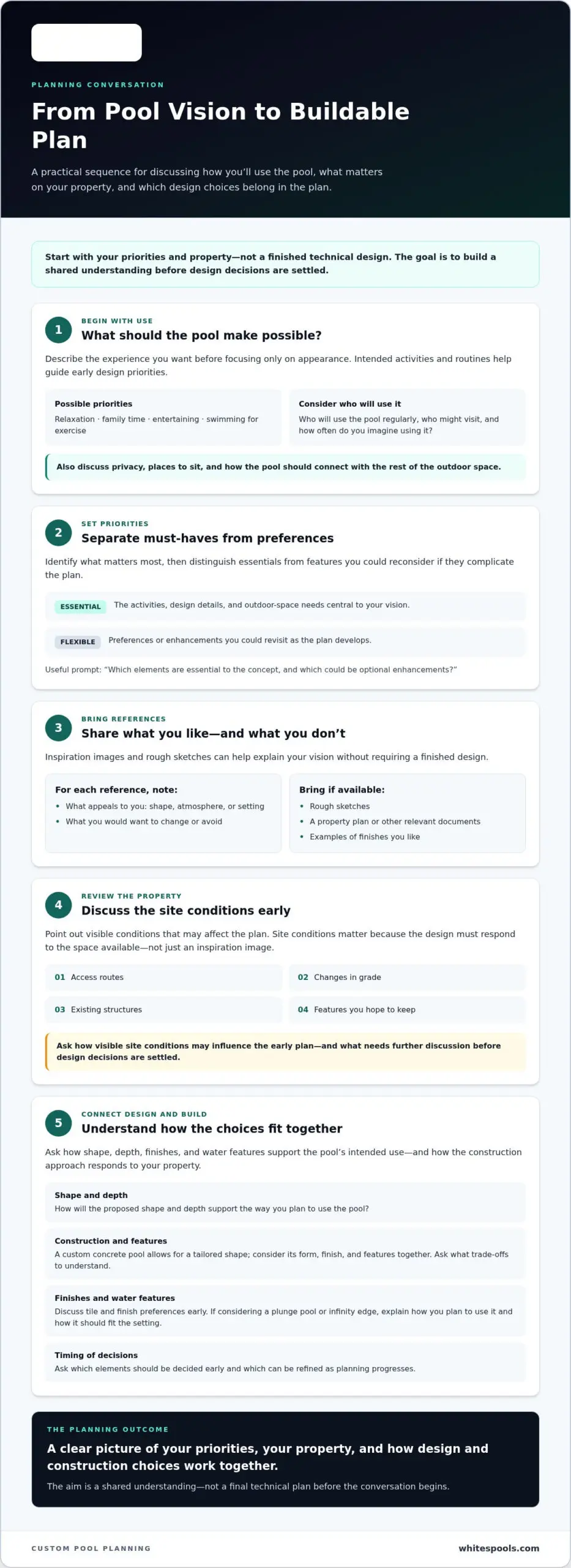
A focused first conversation can make a complex pool project easier to plan. You don’t need every detail decided in advance. Explain what you want your pool and outdoor space to make possible, then use these questions to ask a custom pool builder to turn broad ideas into clear priorities.
Begin with how you expect to use the pool, not just how you want it to look. Intended activities, household needs, and design preferences can guide early decisions and keep the discussion centered on what matters most.
How will the pool fit your lifestyle and outdoor space?
Describe the experience you want to create. Is the pool mainly for relaxing, family time, entertaining, or swimming for exercise? Consider who will use it, how often, and what routines you imagine around it. A pool designed for lively gatherings may have different priorities from one intended as a quiet retreat.
Think about how the pool should relate to the rest of the yard. Privacy, places to sit, and room for outdoor entertaining can all affect how the overall space works. Identify what matters most, then distinguish your must-haves from the features you could reconsider if they complicate the plan.
These starter questions can help focus the discussion:
- What activities should the pool support?
- Who will use the pool regularly, and who might visit?
- Do you picture a space for quiet relaxation, family time, or entertaining?
- How important are privacy and the connection between the pool and the rest of the outdoor space?
- Which priorities are essential, and which are preferences?
What should you share about the site and your vision?
Bring inspiration images, rough sketches, and any property information you already have. For each image, note what appeals to you, such as the shape, overall atmosphere, or relationship between the pool and its surroundings. It’s just as useful to describe what you don’t want. These examples make your vision easier to discuss without requiring you to arrive with a finished design.
Point out visible site conditions, including access routes, changes in grade, existing structures, and features you hope to keep. Bring a property plan or other relevant documents if you have them. Site conditions shape custom pool planning because the design must respond to the space available, not just an inspiration image.
Ask how the visible conditions may influence the early plan and what needs further discussion before design decisions are settled. For background on types of swimming pools and construction, a general overview can help you find language for ideas you’d like to explore. The goal at this stage is to establish a shared understanding of your priorities and property, not to arrive with a final technical plan.
Questions About Custom Pool Design, Materials, and Construction
Once your priorities are clear, explore how design choices translate into a buildable plan. Shape, depth, finishes, and water features affect the pool’s appearance and how it supports your intended use. Ask the builder to explain the options in everyday language and distinguish design preferences from construction decisions.
Which design details and features matter most?
Start with the choices that will have the greatest effect on how you use and enjoy the pool. Ask how the proposed shape and depth relate to your goals, and how finishes or water features would contribute to the experience. A useful question is, “Which elements should we decide early, and which can we consider as the design develops?”
Separate essentials from enhancements. You might prioritize a particular pool shape and finish before exploring additional features. If you’re considering a plunge pool, discuss how you plan to use it and how that should guide the design. An infinity edge also brings specific design considerations, including how its visual effect fits the setting. The aim is to understand how each feature supports the overall plan, rather than add options simply because they’re available.
How do material and construction choices affect the plan?
Ask how the proposed construction approach supports your design and responds to your property. A custom concrete pool allows for a tailored shape, but the form, finish, and features still need to be considered together. Ask the builder to explain how those choices work as a whole and what trade-offs you should understand before settling on a plan.
Custom design choices become practical plans when construction decisions are considered alongside the look and use you want.
Discuss pool tile and other finish preferences early, since they help define the finished appearance. Bring examples or describe the qualities you like, then ask how those preferences fit the proposed design. For a broader look at material and design considerations, explore this custom concrete pool guide.
Keep the conversation specific with questions such as:
- How will the proposed shape, depth, and features support the pool’s intended use?
- Which design elements are essential to the concept, and which could be treated as optional enhancements?
- How do the construction approach and property conditions influence the design?
- How will tile and finish choices affect the look of the completed pool?
- What decisions should be made now, and what can be refined as planning progresses?
Clear answers help you understand not just what the pool may look like, but how its design and construction fit together. White’s Pools designs and builds custom concrete pools, with features such as natural waterfalls, infinity edges, plunge pools, and high-quality tiling. Explore custom pool design and construction as you consider the possibilities for your project.
Questions About Pool Project Scope, Estimates, and Schedule
A proposal is easier to understand when it describes the work behind the estimate. Scope, site conditions, selected features, and project assumptions all affect what’s being planned. Ask for a written outline, then compare its details to see what each proposal includes and what still needs clarification.
What should a pool project estimate explain?
Ask how the proposed work is divided and what each part covers. Does the outline describe design, construction, equipment, finishes, and site work? If it includes allowances, ask what they apply to and how selections will be handled if your preferences differ from the amount or option described. The goal is to understand the plan, not assume every proposal uses the same format.
Clarify exclusions and responsibilities, too. Ask what falls outside the proposed scope, what information or decisions you’ll need to provide, and what assumptions have been made about the property. Site conditions can affect the work required, so ask how the estimate reflects the information available during planning.
Use a simple comparison record as you review written proposals. Fill in one column for each proposal, or use the same headings in your notes:
Scope item: Design, construction, equipment, finishes, site work
Included or allowed for: What the written proposal says about each item
Excluded or homeowner responsibility: Work or decisions identified as outside the scope
Open questions: Assumptions, selections, or details that need clarification
This makes it easier to compare like with like, rather than relying on a headline figure to explain an entire project.
How should you discuss schedule and project changes?
Ask which phases shape the project schedule, what needs to happen before each phase can move forward, and how you’ll receive progress updates. The schedule depends on the project scope and conditions, so focus on the sequence and decision points rather than expecting a standard duration. Find out how timing is discussed when a selection or decision is outstanding.
It’s also useful to understand how requested changes are handled. Ask who reviews a change, how its effect on scope or schedule is explained, and how the decision is documented before work proceeds. A written record gives everyone a shared reference if the plan evolves.
A written scope helps align expectations by recording what’s planned, what’s excluded, and which assumptions still need attention. These are among the most practical questions to ask a custom pool builder because clear answers help you assess the project as a whole. Explore White’s Pools’ custom pool services as you consider your next steps.
Questions About Communication, Permits, and Project Decisions
A clear communication plan keeps decisions, responsibilities, and project information from getting scattered. Before work begins, agree on how updates will be shared, who will answer project questions, and how important choices will be recorded. These practical questions to ask a custom pool builder can help establish a steady process from planning through construction.
Who coordinates decisions and project updates?
Ask who your main point of contact will be and how updates will be shared. Clarify which decisions need your approval, when they’re needed, and what information you’ll receive to make them. A shared written record, such as a decision log or organized project correspondence, makes it easier to revisit what was agreed and what remains open.
It also helps to understand how approvals are captured. If you select a finish or agree to a design revision, ask how that decision will be documented and shared with the people involved in the work. Consider asking:
- Who should I contact with questions about different parts of the project?
- How are routine updates shared, and how are time-sensitive decisions brought forward?
- Where are approvals, selections, and changes recorded?
- How will I know which decisions are still outstanding?
These details make communication more predictable while allowing for different project processes. Keep your own notes, too. After a discussion, summarize important decisions in writing so everyone can refer to the same understanding.
How are permits and unexpected conditions handled?
Permit and regulatory requirements depend on the project’s jurisdiction and property. Ask how permitting responsibilities fit into the project plan, which steps require your input, and how related decisions are communicated. This helps you understand the process in relation to your property instead of relying on rules that may apply elsewhere.
Discuss how unexpected site conditions will be handled as well. Ask how an issue will be explained, what information you’ll receive before a decision is needed, and how any effect on the agreed scope will be documented. If a newly identified condition calls for a plan change, ask for an explanation of the proposed adjustment and its implications before approving it.
Useful follow-up questions include:
- How are permitting responsibilities and related steps reflected in the project plan?
- How will an unforeseen site condition be described and recorded?
- What details will I receive if a proposed response affects the project scope?
- How are decisions and approvals documented before the plan changes?
Bring your priorities and questions to a conversation about planning your custom pool with White’s Pools. A clear discussion of responsibilities and a written record of decisions can help keep the project organized.
Questions About Pool Handover, Maintenance, and Your Next Step
A custom pool project doesn’t end when construction is complete. Before handover, make time to understand how to operate the pool, care for its equipment, and keep important project information organized. These questions to ask a custom pool builder help you prepare for ownership and plan for the routine care that follows construction.
What should you understand before taking ownership?
Ask what operating guidance you’ll receive for the pool and its equipment. Make sure you understand the basic steps for everyday operation, what routine water-quality care involves, and how to recognize when equipment needs attention. If an explanation feels too technical, ask for it in practical terms. You should leave with a clear picture of regular tasks, not just instructions you’re unsure how to use.
Clarify which project and operating information you should keep. Depending on what’s provided for your pool, this may include equipment information, care instructions, and records of agreed selections or decisions. Ask where to find guidance later and which documents are useful to keep together. Organizing these details in one place makes them easier to refer to as you become familiar with your pool.
- What operating instructions will I receive for the pool and its equipment?
- What routine water-quality checks and care should I understand?
- Which project documents and equipment information should I retain?
- What should I do if I have questions about routine operation or equipment care?
How can ongoing pool care fit into the plan?
Regular cleaning helps maintain water clarity and hygiene, while equipment care supports the pool’s ongoing operation. Ask what routine tasks you’ll need to plan for, how cleaning and equipment maintenance fit into an ownership routine, and what signs may indicate that something needs attention. Understanding these responsibilities early helps you plan beyond the construction phase.
White’s Pools provides professional pool cleaning and maintenance, including cleaning to maintain water clarity and hygiene and routine equipment maintenance. The pool cleaning and maintenance guide offers further context for thinking about care after handover. As you discuss the finished project, consider what support and information will help you feel prepared to look after it.
White’s Pools designs and builds custom pools and provides ongoing pool care. Keep your final questions focused on what you’ll need to know as an owner, from operating guidance to routine maintenance. Then consider how pool construction and care can fit into your plans for the outdoor space.
Take Your Pool Vision Into the Next Conversation
You don’t need to arrive with every choice made. Turn your ideas into a short list of priorities: what you most want the pool to make possible, what you’re still weighing, and which decisions you’d like help understanding. That gives the conversation a clear starting point while leaving room for thoughtful design.
Keep your questions to ask a custom pool builder close at hand, but let the discussion develop naturally. The answers can help you see which possibilities fit your vision and what information will make the next decisions easier. A clear understanding of the path ahead can help you approach each choice with confidence.
Ready to discuss your ideas? Explore custom pool design and construction with White’s Pools and start shaping a plan for your home.
Frequently Asked Questions
What should I bring to my first custom pool consultation?
Bring inspiration images, a rough sketch of your preferred layout, and notes about how you hope to use the pool. Share property information you already know, such as existing outdoor features or areas you’d like to preserve. You don’t need a finished plan. A few examples of what appeals to you, paired with what doesn’t, can help focus the discussion and turn early ideas into a clearer direction.
Can a custom pool builder design an indoor pool?
Yes. White’s Pools designs and builds indoor pools as well as outdoor pools. In your consultation, describe how you’d like the indoor pool to function, what space is available, and what kind of experience you hope to create. For example, consider whether the pool is primarily for exercise, relaxation, or family use. Those priorities give the design conversation a useful starting point instead of a one-size-fits-all plan.
Can a custom pool include a natural waterfall?
Yes, a natural waterfall can be part of a custom pool design. Its placement and appearance should complement the pool’s layout and the surrounding setting. Bring reference images that show the atmosphere or visual character you like, and explain what draws you to them. Is it the sound of falling water, a natural-looking feature, or the way the pool blends with its surroundings? Those details help shape the design discussion.
Can a pool project include a pickleball or tennis court?
Yes. White’s Pools installs pickleball and tennis courts, so you can discuss a pool and court as parts of a larger outdoor recreation plan. Think about how household members and guests might move between the areas and which activities should take priority. For instance, consider whether you picture separate zones for swimming and play or a layout that connects them. Sharing these preferences early helps organize the overall vision.
Is a plunge pool a good option for a smaller outdoor space?
A plunge pool may suit a smaller outdoor space, depending on the room available and how you plan to use it. Think beyond dimensions: consider whether your priority is a place to cool off, relax, or enjoy the look of water in the yard. Note any features you hope to include and which parts of the outdoor area need to remain usable. White’s Pools designs plunge pools tailored to the project and homeowner’s goals.
How much detail should I expect in a pool project estimate?
A useful estimate should explain the proposed work, identify exclusions, and make clear the assumptions behind the plan. Ask for unfamiliar terms or allowances to be clarified in writing, then note unanswered questions alongside the relevant line item. For example, if a proposal mentions equipment or site work without describing it, ask for a clearer explanation. Comparing written details helps you understand the scope more accurately than looking at a headline figure alone.

