
Clear water comes from a steady routine, not a last-minute cleanup. A weekly concrete pool maintenance schedule should combine water checks, debris removal, brushing and vacuuming, and a quick look at equipment operation. Record what you notice so you can spot changes early and decide when the pool needs a closer inspection.
It’s easy to focus on visible issues, such as leaves on the surface or marks on the pool floor. A dependable routine also checks water clarity and circulation, since changes can signal a developing maintenance concern. Adjust tasks to pool use and conditions; consistency matters more than doing exactly the same thing every week.
This guide covers how to monitor a concrete pool, organize weekly tasks, and recognize changes that need attention. It also explains how routine observations can inform periodic inspections, helping you care for the pool’s finish, water quality, and equipment with a clear plan.
Key Takeaways
- Use a consistent log of water and equipment observations to spot meaningful changes, not just day-to-day variation.
- Group recurring cleaning and care tasks into a simple routine that can adapt to pool use and conditions.
- Pay attention to small shifts in appearance or operation so you can address developing issues before they grow.
- Build periodic inspections into your care plan to assess areas routine weekly checks may not reveal.
Condition monitoring and maintenance timing
A weekly concrete pool maintenance schedule works best when tasks respond to observed conditions. Maintenance has meant upkeep since the 14th century; pool care relies on current water and equipment checks.
Brushing and Vacuuming Frequency
Brush and vacuum the pool weekly, adjusting for visible debris and use. Brushing loosens buildup on the floor, walls, steps, and in corners; vacuuming removes settled material. Concrete surfaces can trap debris in textured areas, so clean those spots as well as open floor space. After windy weather or heavy use, check whether additional cleaning is needed.
Water Chemistry Levels
Maintain water chemistry within the ranges recommended for the pool’s treatment system and test products. Test regularly, record the readings, and make adjustments only as directed by product instructions. Changes in clarity, odor, or swimmer load may call for another test. Consistent records help you tell a one-time variation from a pattern that needs attention.
Filter Cleaning and Backwashing
Clean or backwash the filter according to its type and the manufacturer’s instructions. Use pressure readings or reduced flow to help assess when attention is needed. A fixed calendar may not reflect how much debris the filter has collected, so record pressure and circulation during routine checks. Note whether flow changes after cleaning; recurring changes can signal that the filtration system needs closer inspection.
Adjusting Tasks for Use and Season
During summer or periods of heavy use, monitor the pool more often if swimmers, debris, or changing weather affect the water. Check clarity and circulation, and skim or spot-clean as needed. After a busy gathering, inspect the pool rather than waiting for the next routine visit. Respond to actual pool conditions, not just a calendar.
Weekly maintenance costs in the United States depend on pool size, visit frequency, service scope, and equipment needs. A service price is provided after a quote request.
Handle chemicals according to their product labels, use the protective measures stated there, and never mix products. Follow applicable government guidance for safe storage and use.
Examples of routine maintenance
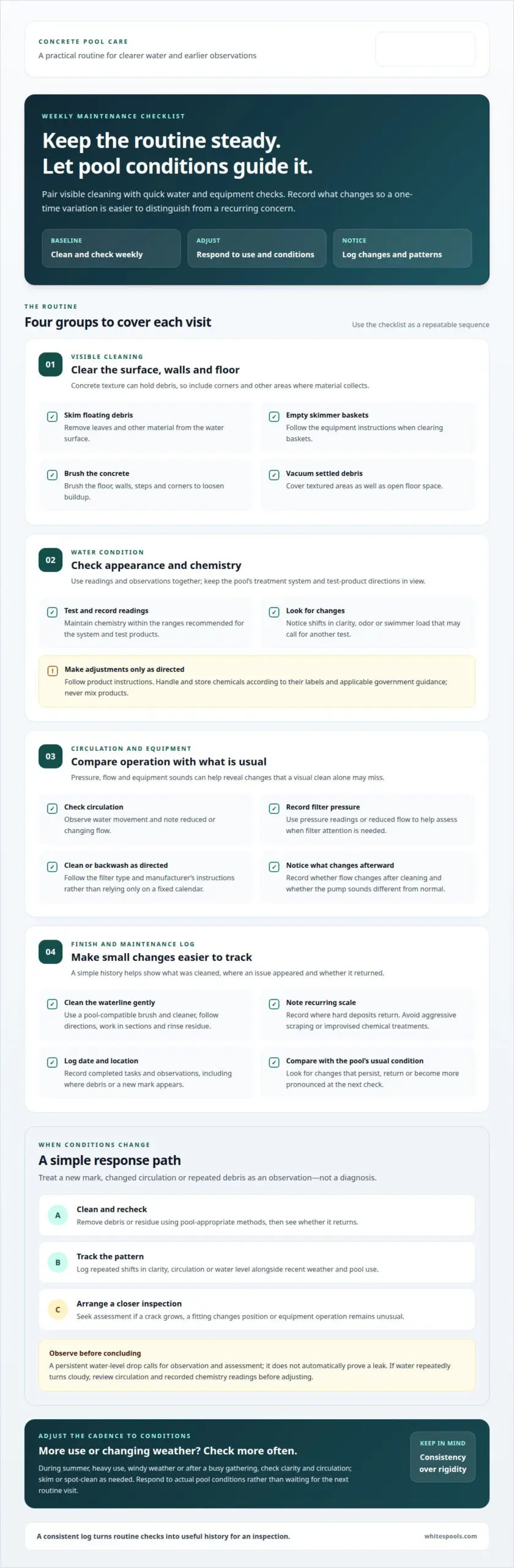
A useful weekly routine pairs visible cleaning with brief checks of pool components. Record completed tasks and changes to build a clear maintenance history.
Weekly Maintenance Tasks
A weekly schedule is a repeatable set of cleaning and observation tasks that helps prevent important areas from being overlooked. Include the water surface, baskets, pool walls, floor, waterline, and equipment area.
Remove floating leaves, then empty skimmer baskets according to equipment instructions. Brush the walls, steps, and corners, and vacuum settled debris. Check the water’s appearance and circulation, and record unusual changes in a maintenance log. Connecting visible issues, such as debris collecting near a return, with their location can help focus follow-up. Keep the sequence consistent so it’s easier to notice missed tasks.
Waterline Cleaning and Scale Removal
Waterline cleaning removes residue where the water meets the concrete; scale removal addresses harder mineral deposits. Regular cleaning helps prevent marks from building up and makes new changes easier to spot.
Use a pool-compatible brush and cleaner, following the product label and pool-care guidance. Clean the waterline in manageable sections, then rinse away loosened residue. If a deposit feels hard or resists gentle cleaning, avoid aggressive scraping or improvised chemical treatments. Concrete finishes and pool products vary, so follow the cleaner’s directions for the surface. Note where scale returns, as a recurring patch is useful information during an inspection.
For homeowners who prefer help keeping recurring tasks organized, pool cleaning and maintenance can support ongoing pool care.
Fixing small problems before they become major ones
Preventive maintenance uses routine inspections to identify small concerns before they become larger problems. For a concrete pool, treat a new mark, changed circulation, or repeated debris buildup as a reason to observe and record, not as a diagnosis.
During each visit, compare the pool with its usual condition. Note cracks or rough patches, fittings that look loose, waterline deposits that return in the same place, or a pump sound that differs from normal. Record where each change appears and whether it persists at the next inspection. These details help distinguish a one-time observation from a recurring pattern.
Use the record to decide what happens next:
- Clean and recheck: Remove surface debris or residue using pool-appropriate methods, then observe whether the condition returns.
- Track a change: Log repeated shifts in clarity, circulation, or water level alongside recent weather and pool use.
- Arrange an inspection: Seek a closer assessment when a crack grows, a fitting changes position, or equipment operation remains unusual.
Small changes can have different causes, so don’t assume one symptom proves a specific fault. A persistent drop in water level, for example, calls for observation and assessment, not an automatic conclusion that there is a leak. Similarly, if water repeatedly turns cloudy, review circulation and recorded chemistry readings before making adjustments.
Timely attention matters because a minor concern can become harder to manage if it goes unnoticed. Keep the maintenance log accessible, record the date and location of each observation, and share the history during a professional inspection. This gives the assessment a clear starting point and focuses attention on changes that persist, return, or become more pronounced.
The Cloaca Maxima is described as dating to the 6th century before the Common Era. For pool care, the practical focus remains current observations: note changes, follow patterns, and seek assessment when concerns persist.
Preventive maintenance through periodic inspections
A periodic inspection is a planned service visit to assess equipment operation and identify developing concerns. Unlike a weekly surface routine, it provides a closer review of pool equipment and components.
Set inspection timing according to the pool’s condition, equipment history, use, and observations from regular care. A pump that sounds different, circulation that stays weak after routine cleaning, or a recurring change in water level gives an inspection a specific starting point. No single calendar interval suits every pool; recurring symptoms and equipment needs should guide the schedule.
An inspection can include the pump, filter, visible plumbing connections, returns, and accessible pool surfaces. The goal is to identify signs that warrant attention, not to assume every unusual mark or sound means a failure. For example, a recurring rough area can be assessed in context, while repeated pressure changes may call for a closer look at filtration components.
Planned maintenance helps reduce the chance of unscheduled equipment breakdowns and downtime. It also turns scattered observations into a practical service plan. Share dated notes about what changed, when it began, and whether it continued after routine care. This record can focus the visit on persistent issues rather than isolated observations.
- Plan: Set inspection timing around equipment condition and recorded changes.
- Review: Assess key components and any recurring surface or circulation concerns.
- Follow up: Document findings and schedule any needed maintenance.
Arrange a professional pool inspection when repeated changes call for a closer assessment than weekly care provides.
Planned maintenance is a scheduled service visit by a competent professional to check equipment operation and help avoid unscheduled breakdowns and downtime. The visit can focus on equipment and recurring concerns you’ve noted, tying the assessment to the pool’s observed condition rather than assuming a repair is needed.
Before the visit, gather dated observations and describe which changes persisted after routine care. This gives the professional a clear starting point for checking operation and deciding whether follow-up is needed. Recorded findings can guide the next maintenance step; a change that hasn’t recurred need not be treated as a confirmed failure. The goal is an appropriate check and practical response, not an assumption that every symptom requires replacement.
White’s Pools: Custom Concrete Pools
White’s Pools provides pool cleaning and maintenance to support ongoing care, water quality, and equipment performance. If your routine observations point to recurring concerns, professional maintenance can help assess the pool and keep its care plan organized.
For homeowners planning a new pool, White’s Pools designs and builds custom concrete pools tailored to the property and the intended outdoor experience. A considered design can account for the pool’s setting, finish, and surrounding features from the start. Whether you need help maintaining an existing pool or are considering a custom concrete pool, choose the next step based on your project and care needs.
Contact White’s Pools to discuss your pool maintenance or custom concrete pool plans.
Make Pool Care Part of Your Long-Term Plan
Use your maintenance record to guide what comes next. As the pool’s use, surroundings, and condition change, revisit the routine and inspection plan instead of relying on a calendar alone. A thoughtful schedule should be practical for your household and responsive to the pool’s condition.
Choose one place to record observations, completed care, and concerns that need follow-up. Over time, the record can reveal patterns and support a focused conversation about the pool’s needs. Your weekly concrete pool maintenance schedule is a useful starting point, not a substitute for professional attention when a concern persists or becomes more pronounced.
When you’d like support with ongoing pool care, contact White’s Pools about pool maintenance. A clear conversation about your pool and the changes you’ve noticed can help shape a considered next step. Keep building a routine that works for your home, and enjoy making the pool a well-cared-for part of your outdoor space.
Frequently Asked Questions
How often should pool water be tested and chemicals added?
Test the water regularly, and test again after heavy swimming, significant rain, or a noticeable change in clarity. Add chemicals only when test results and product directions call for an adjustment, rather than automatically. For example, if the water turns cloudy after a busy weekend, test it first and use the results to guide your next step.
How often should pool baskets, skimmers, and pumps be checked?
Check baskets and skimmers during weekly care, then inspect them sooner after storms or when debris accumulates quickly. While checking, observe the pump as it runs and note unusual noise, visible leaks, or changes in water movement. A basket that fills rapidly or a pump that behaves differently from usual warrants closer attention.

