
What if the word “gunite” tells you more about how a pool shell is built than how good the finished pool will be? If you’re asking what is gunite, the terminology can make it hard to compare construction methods and know what to ask a builder. Gunite is a dry-mix method of pneumatically applying concrete, but the application method is only one part of a custom concrete pool project.
It’s reasonable to want clarity before making decisions that shape your finished pool. This article explains gunite in plain language, outlines how it’s applied to form a pool shell, and clarifies how the term differs from shotcrete. You’ll also find practical questions to ask about the design, materials, workmanship, and ongoing care, so you can evaluate the complete project rather than rely on a construction term alone. White’s Pools designs and builds custom concrete pools, and a thoughtful conversation can help connect your ideas with the details of the proposed project.
Key Takeaways
- Understand what is gunite and why it describes a concrete application method, not a pool style or surface finish.
- Review the broad steps that turn a prepared pool site into a concrete shell, keeping in mind that plans and site conditions affect the sequence.
- Compare gunite and shotcrete by asking builders to explain their application methods, rather than treating either name as a guarantee of quality.
- Assess a pool proposal by separating the construction method from the design, finishes, equipment, and maintenance plan.
- Use your preferred layout, features, finishes, and long-term care needs to guide a conversation about the full custom concrete pool project.
What Is Gunite in Pool Construction?
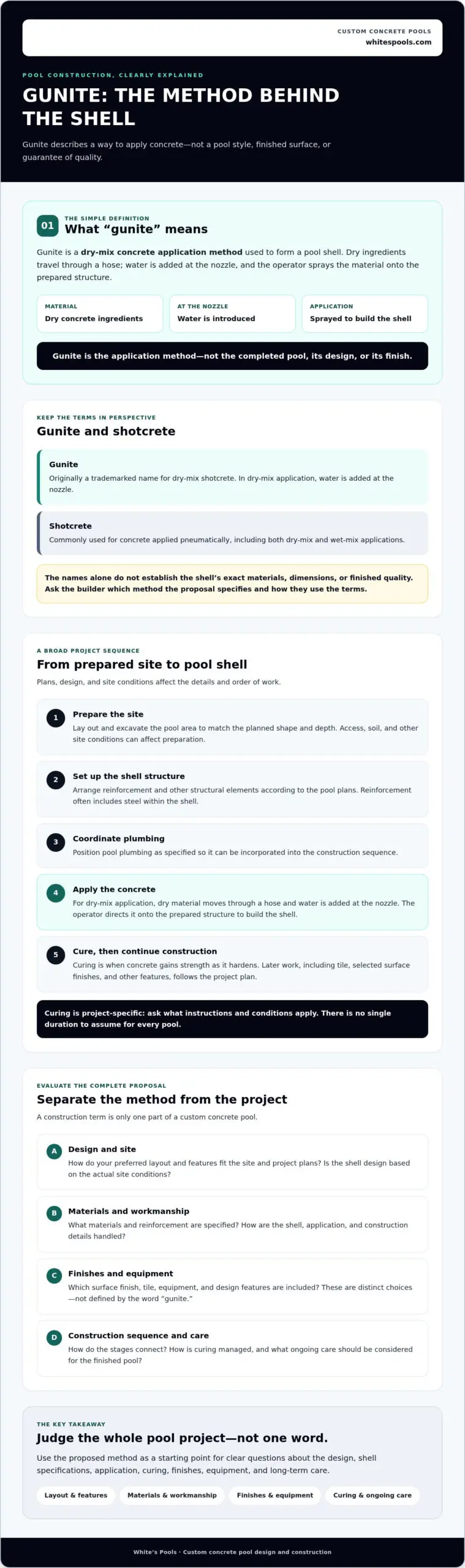
If you’re asking what is gunite, the simplest answer is that it’s a dry-mix concrete application method used to form pool shells. Dry ingredients travel through a hose, and water is introduced at the nozzle as the material is sprayed onto the prepared structure. The operator directs the application to build up the concrete layer according to the project plans.
Gunite is a method of applying concrete to form a pool shell. It isn’t the completed pool, a particular pool style, or its finished surface.
What does gunite mean when planning a swimming pool?
Homeowners often encounter the term while comparing custom concrete pool options. It describes how concrete is placed, but it doesn’t tell you whether the pool will have an infinity edge, a plunge-pool layout, a tile finish, or other features. Those are separate design choices based on your goals, site, and project specifications. The term alone also doesn’t establish the shell’s exact materials or dimensions.
Terminology can vary across the industry. Gunite was originally a trademarked name for dry-mix shotcrete, while “shotcrete” is also commonly used for concrete applied pneumatically, including wet-mix applications. Ask your pool professional how they’re using these terms and which method the proposal specifies.
How does gunite become a pool shell?
The broad sequence is straightforward: the pool area is prepared, the shell’s supporting structure is set up, concrete is applied, and the material is allowed to cure. Curing is the process through which concrete gains strength as it hardens. Work then continues according to the project plan, including later steps for the chosen finish.
Reinforcement, often steel placed within the shell, works with the concrete as part of the structure. Its configuration and the shell’s design should follow the project specifications, which may vary with the pool design and site conditions. There isn’t one specification that fits every pool.
For a clear proposal, ask the builder to explain what “gunite” means in the scope, how the shell is prepared and reinforced, and how application and curing are handled. A qualified pool professional should confirm the material details and construction terminology for your project. That helps you understand the method without mistaking its name for a complete measure of the finished pool’s quality.
How Is Gunite Applied to Build a Concrete Pool?
Gunite construction follows a coordinated sequence, from preparing the pool area to applying concrete and completing the selected finishes. The exact order and details depend on the design, project plans, and site conditions. Ask the builder to explain how the stages connect, rather than relying on a one-size-fits-all timeline.
- Prepare the site. The pool area is laid out and excavated to match the planned shape and depth. Access, soil, and other site conditions can affect preparation.
- Set up the shell structure. Reinforcement and other structural elements are arranged according to the pool plans.
- Coordinate plumbing. Pool plumbing is positioned as specified in the plans so it can be incorporated into the construction sequence.
- Apply the concrete. In dry-mix application, dry concrete material moves through a hose, and water is added at the nozzle. The operator directs the material onto the prepared structure to build the shell.
- Cure and complete the pool. The concrete is given time to cure before later construction stages proceed. Finishes, tile, and other features are separate parts of the overall project.
What happens before gunite is applied?
Before application, the builder coordinates the excavation and pool layout with the planned shell, reinforcement, and plumbing. These details should follow the project specifications, not a generic template. Ask how site conditions may affect preparation and what needs to be in place before the application crew begins. For technical context on shotcrete practices, see the American Concrete Institute (ACI) Guide to Shotcrete.
What happens after the gunite application?
Curing is a planned part of concrete construction, not idle time to skip or guess at. The shell must be allowed to cure according to the project-specific instructions before subsequent work proceeds. There’s no single duration to assume for every pool, so ask the builder what conditions and guidance apply to your project. Tile, the selected surface finish, and design features are later components, each coordinated with the completed shell.
Before work begins, ask the builder to walk you through the sequence, explain how site conditions affect it, and clarify how curing is managed. If you’re exploring a custom concrete pool, discussing your design goals and the construction approach can put each step in context. White’s Pools designs and builds custom concrete pools, including pools with features such as waterfalls, infinity edges, and custom tile. Explore custom concrete pool planning to consider how those choices fit into a project.
Gunite and Shotcrete: What Should Homeowners Compare?
The words “gunite” and “shotcrete” can be used differently across the construction industry, so ask a builder what method they mean instead of relying on the label. The commonly described distinction is dry mix versus wet mix. In dry-mix application, water is added at the nozzle; in wet-mix application, water is blended with the concrete before it travels through the hose. Both methods apply concrete pneumatically, meaning it’s projected under pressure. For technical background on shotcrete selection and application, consult the U.S. Army Corps of Engineers’ Standard Practice for Shotcrete.
Is gunite the same as shotcrete?
Not always in everyday usage. “Gunite” commonly refers to dry-mix application, while “shotcrete” may refer broadly to pneumatically applied concrete or specifically to a wet-mix process. Definitions can depend on the speaker and technical context. Ask the builder to describe how water and concrete are delivered, then confirm that the terminology and specifications in the proposal suit the project requirements and applicable technical guidance.
| Comparison point | Gunite, commonly described | Shotcrete, commonly described | Ask your builder |
|---|---|---|---|
| Material delivery | Dry ingredients move through the hose. | Wet concrete mix moves through the hose. | Which method does the proposal specify? |
| Water addition | Water is added at the nozzle. | Water is incorporated before delivery. | How is the application process described in the project specifications? |
| Project details | The method name alone doesn’t describe the full shell design or construction plan. | Likewise, the label doesn’t define the complete project. | What materials, preparation, and workmanship details are included? |
Does one method automatically make a better pool?
No method name, by itself, establishes finished-pool quality. Consider the design, specified materials, site preparation, application, and workmanship together. Rather than relying on broad claims about durability, speed, or performance, ask how the proposed process fits your pool plans and site. A useful comparison focuses on the details each builder commits to, not just whether a proposal says “gunite” or “shotcrete.”
Terminology is only a starting point. Ask the builder to explain the method in plain language and show where it appears in the written scope. Use the comparison questions above to make proposals easier to understand and assess.
How Can You Evaluate a Gunite Pool Proposal?
A proposal should explain more than the word “gunite.” When comparing estimates, review each scope against your project and look for clear descriptions of the construction approach, the pool design, and what is included after the shell is formed. Ask for unfamiliar terms to be explained in plain language, and request written clarification when a detail is unclear.
What should you ask a pool builder about gunite?
Start with the method. Ask how the builder defines gunite and how the planned application process will work. Then review the scope for the supporting work and responsibilities around it:
- Construction method: What application method is specified, and how are preparation, reinforcement, curing, and any inspections addressed?
- Pool design: Do the plans clearly show the pool’s shape, dimensions, depth, and intended features?
- Finishes: Which surface finish and tile selections are included, and what is treated as a separate choice?
- Equipment and coordination: What pool equipment is specified, and who coordinates plumbing with the shell, finishes, and other features?
- Maintenance: What ongoing care will the selected pool finish and equipment require, and what guidance is provided?
These categories help you distinguish shell construction from the design and completed pool. They also make it easier to compare proposals without assuming that the same method name means the same scope.
Which project details affect the construction approach?
Pool shape and dimensions, site access, ground conditions, and planned features can all influence preparation and project decisions. An infinity-edge design, for example, has different planning considerations from a simple rectangular layout. Your builder should identify assumptions, site-dependent choices, and how those factors appear in the written plans and specifications.
Ask directly: How does the proposed method support the actual design and site? A clear answer should connect the application approach to your project rather than rely on a general claim about gunite. As you develop your plans, use a custom concrete pool guide to identify questions specific to your preferred layout and features.
White’s Pools designs and builds custom concrete pools, with options that include infinity-edge pools, plunge pools, natural waterfalls, and pool tile. Reviewing these choices alongside the written construction scope can help you clarify what you want included. Learn more about custom concrete pool planning with White’s Pools.
How Does Gunite Fit Into a Custom Concrete Pool Project?
Gunite is one construction detail within a much larger design conversation. Once you understand what is gunite, you can ask how the proposed application method fits the pool you want, rather than letting a technical term define the project. Start with the experience you’re hoping to create: a calm place to swim, room for family gatherings, or a distinctive feature such as an infinity edge or waterfall.
How should your pool design guide the construction conversation?
Describe how you plan to use the pool, then discuss the layout and features that support that vision. A plunge pool, for instance, has different space and use goals from a larger pool designed for swimming. Your preferred shape, depth, tile, and surface finish should be part of the conversation too. Ask the builder to explain how the proposed construction approach accommodates those choices and any site conditions that may affect the plans.
Consider the pool as a complete project, not just a shell. Ask how the selected finishes and features fit into the construction sequence, and what care they may require over time. For more context as you develop your plans, explore ideas around custom concrete pool design and longevity.
What can a pool builder help clarify?
A builder can help connect your design brief to the written scope: which construction method is specified, how project decisions relate to the site, which finishes and features are included, and what ongoing maintenance may involve. If you’re comparing proposals, ask for details in clear language and confirm that the plans reflect the pool you’ve discussed. White’s Pools is a family-owned, third-generation business established more than 75 years ago, with services that include custom pool construction and ongoing pool cleaning and maintenance. Those offerings can be part of a broader conversation about your design, construction scope, and care needs.
Bring your ideas, questions, and preferred features to the discussion. A clear project conversation should connect the construction approach to the design, finishes, and care plan you have in mind.
Build Your Pool Plan With Confidence
Understanding what is gunite makes construction proposals easier to discuss, but the method name alone doesn’t determine the finished pool’s quality. Look beyond the label: clarify the planned application process, how it fits your site and design, and what the proposal includes for finishes, features, equipment, and ongoing care. The right questions can help you compare project details and keep your priorities at the center.
A custom concrete pool is a complete project, shaped by your vision and the decisions that bring it to life. White’s Pools designs and builds custom concrete, infinity-edge, and indoor pools, and also offers pool cleaning and maintenance. As you review options, connect your design goals with the project scope and the care your pool will need.
Discuss your custom pool vision with White’s Pools and explore how it can take shape as a custom concrete pool project.
Frequently Asked Questions
What is gunite in a swimming pool?
Gunite is a dry-mix concrete application method used to form a swimming pool shell. Dry material travels through a hose, and water is introduced at the nozzle as it’s applied to the prepared structure. The term describes the application process, not the pool’s shape, finish, or complete design. Ask your builder to explain the method in the proposal and how it fits your project plans.
Is gunite the same as concrete?
Gunite isn’t a separate finished pool material or a pool style. It’s a commonly used term for applying a dry concrete mixture to form a pool shell. Because construction terminology can vary, don’t rely on the word alone to understand what a proposal includes. Ask the builder to clarify the specified materials, application process, and construction details in writing so you can review the actual scope.
How long does a gunite pool take to build?
There’s no single reliable build timeline for every gunite pool. The schedule may depend on design complexity, site conditions, weather, permitting, construction sequence, and selected finishes. Ask the builder for a project-specific schedule that identifies key stages and dependencies, such as when later work can proceed after the concrete shell is applied. Treat general estimates as planning references, not promised completion dates.
Is a gunite pool better than a fiberglass pool?
Neither option is automatically right for every homeowner. Your design goals, site conditions, available space, finish preferences, and project scope all affect the decision. Gunite is associated with custom concrete pool construction, but the label alone doesn’t show how a complete proposal meets your needs. Ask builders to explain the options in relation to your intended pool layout, features, and use.
Can a gunite pool be built in a custom shape?
Gunite is used in custom concrete pool construction, and an individually planned design may accommodate a range of shapes and features. The specific design still depends on the site, project plans, structural requirements, and construction approach. Share your preferred layout with a qualified builder and ask how the proposed method, shell design, and finishes will support it. Confirm the details in the plans and written scope.
What should I ask before choosing a gunite pool builder?
Ask the builder to define “gunite” as used in the proposal and explain the planned application and curing process. Clarify what the scope says about site preparation, reinforcement, project sequencing, finishes, and coordination with plumbing and pool features. Request written answers tied to your design, and ask which assumptions depend on site conditions. This makes it easier to compare proposals by their actual scope and approach.

